
Tirzepatide is one of the most heavily searched peptides in research and weight-loss conversations, with global monthly search volume above 130,000. It’s a dual-agonist incretin peptide — it activates both the GLP-1 receptor (like semaglutide) and the GIP receptor — which is what separates it mechanically from the older GLP-1-only class. This guide covers what tirzepatide is, the mechanism, dosing math for the standard research-vial sizes, the side-effect profile, comparisons against semaglutide and retatrutide, and the reconstitution workflow that turns a lyophilized vial into an exact syringe draw.
This article is for research-use context only. Tirzepatide is a prescription drug for human medical use; what’s covered below is the published research-protocol math researchers use to study the compound — not a recommendation for personal administration, off-label use, or weight loss outside a licensed clinical setting.
What Is Tirzepatide?
Tirzepatide is a synthetic 39-amino-acid peptide that acts as a dual agonist at two incretin receptors: GLP-1 (glucagon-like peptide-1) and GIP (glucose-dependent insulinotropic polypeptide). Both receptors are part of the body’s natural glucose- and satiety-signaling system. Activating them together — rather than just GLP-1, like older compounds in this class — produces a distinct metabolic profile in published research.
Researchers and clinicians study tirzepatide in three primary contexts:
- Glycemic control in type 2 diabetes models — GLP-1 + GIP agonism increases glucose-dependent insulin release.
- Body weight reduction — appetite suppression plus delayed gastric emptying produce significant weight changes in published trials.
- Metabolic syndrome research — secondary endpoints around lipid profile, blood pressure, and insulin sensitivity.
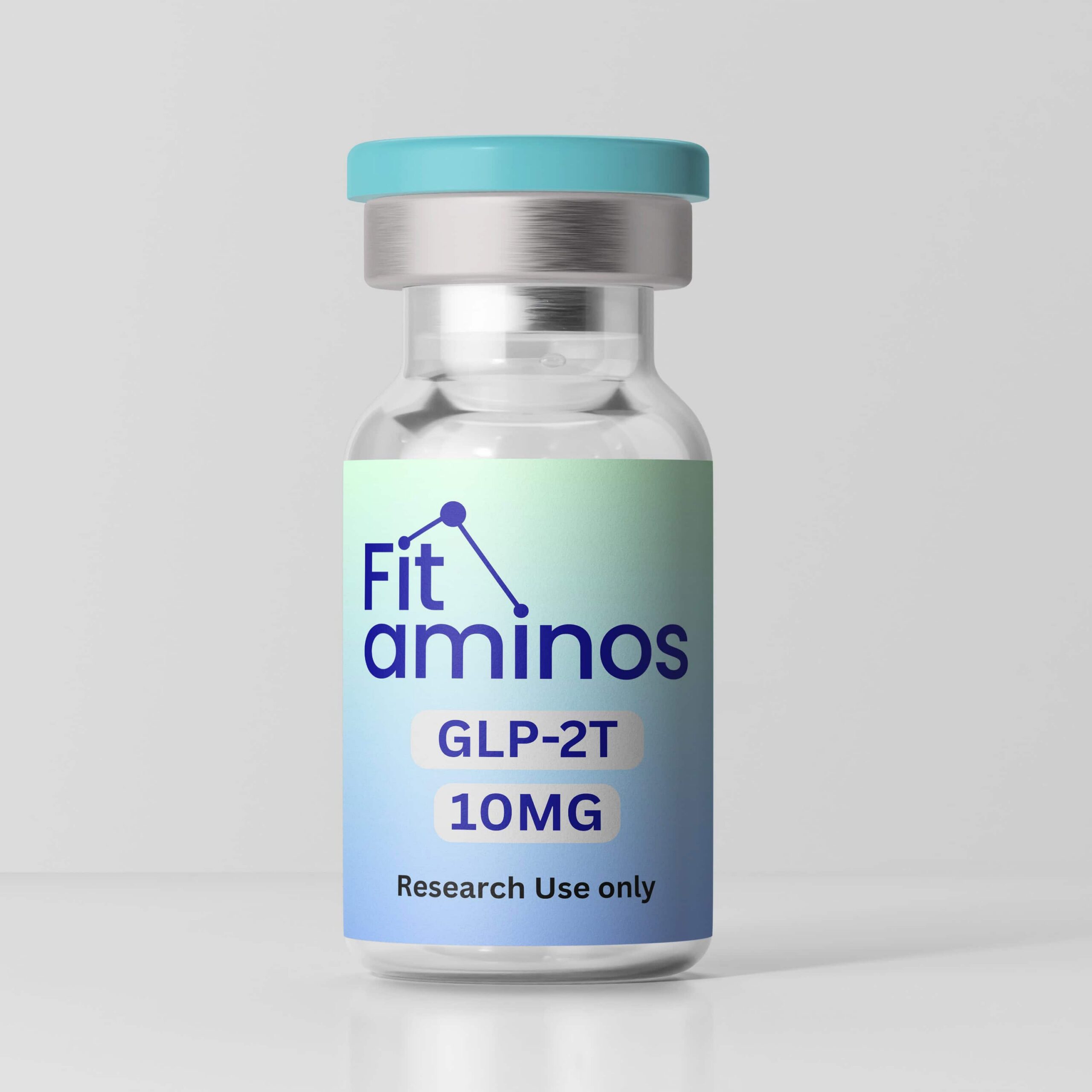
In the FitAminos research catalog, tirzepatide-class compounds ship as GLP-2T — a 10 mg lyophilized research vial.
How Tirzepatide Works — Dual Agonist Mechanism
Each leg of the mechanism contributes a distinct effect in research:
- GLP-1 receptor activation — glucose-dependent insulin secretion, slowed gastric emptying, central-nervous-system appetite suppression. Same receptor older drugs (semaglutide, liraglutide) hit.
- GIP receptor activation — additional insulin-secretion enhancement and adipose-tissue signaling. This is the leg that’s new in tirzepatide vs the GLP-1-only class.
- Combined effect — the dual signal produces greater weight reduction and HbA1c improvement in head-to-head trials than GLP-1 monotherapy at matched doses.
Tirzepatide Dosage Chart for Research-Protocol Math
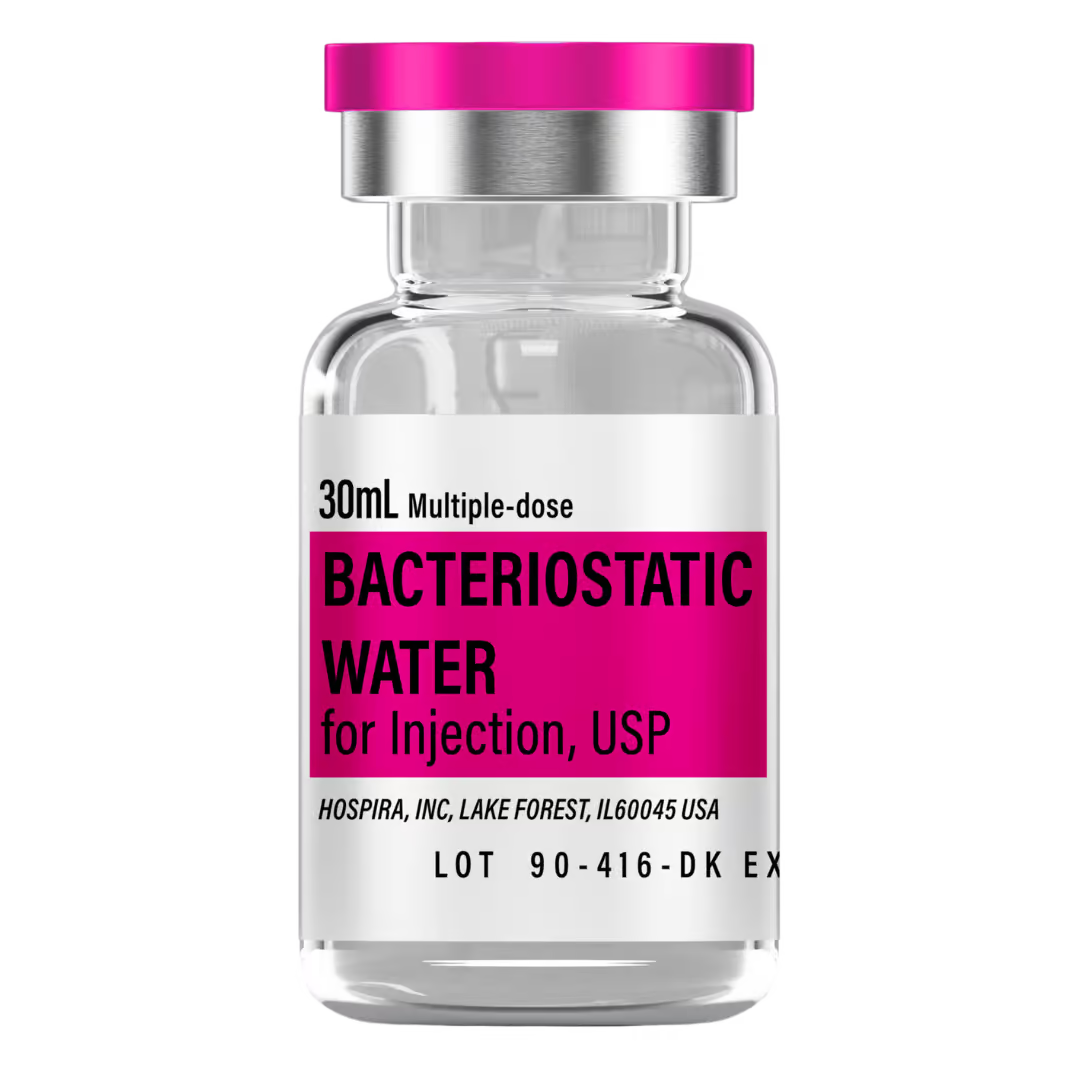
Tirzepatide research protocols use a titration ladder — starting at a low weekly dose and stepping up every few weeks to allow tolerance to build. The standard research vials ship at 5, 10, 15, or 30 mg of lyophilized peptide per vial. The chart below assumes the most common reconstitution: 10 mg vial reconstituted with 2 mL of bacteriostatic water, producing a 5 mg/mL solution.
| Weekly Research Dose | mcg | mL on Syringe | U-100 Units |
|---|---|---|---|
| 2.5 mg (starting dose) | 2,500 mcg | 0.50 mL | 50 units |
| 5.0 mg | 5,000 mcg | 1.00 mL | 100 units |
| 7.5 mg | 7,500 mcg | 1.50 mL | 150 units |
| 10 mg | 10,000 mcg | 2.00 mL | 200 units |
| 12.5 mg | 12,500 mcg | 2.50 mL | 250 units |
| 15 mg (max studied) | 15,000 mcg | 3.00 mL | 300 units |
If a different reconstitution volume is used — say a 30 mg vial reconstituted with 3 mL of bacteriostatic water — the concentration shifts to 10 mg/mL, which halves the syringe draw at every dose. Use the PeptidesUnleashed peptide calculator to recompute the unit count for any custom reconstitution ratio. The companion guide on peptide dosage math walks through the worked example for tirzepatide specifically.
Tirzepatide Reconstitution Step-by-Step
Reconstitution is the same workflow as any research peptide — see the full guide at how to reconstitute peptides. The tirzepatide-specific version:
- Gather supplies. Tirzepatide vial (5–30 mg), bacteriostatic water, U-100 insulin syringes, alcohol pads, clean surface.
- Disinfect. Fresh alcohol pad on both vial stoppers, air-dry 30 seconds.
- Pick the reconstitution volume. For a 10 mg vial: 2 mL BAC water gives 5 mg/mL; 1 mL gives 10 mg/mL (smaller syringe draw per dose); 4 mL gives 2.5 mg/mL (easier to measure tiny doses). For a 30 mg vial: 3 mL gives 10 mg/mL, which is the most common research-protocol ratio.
- Draw the BAC water and inject it slowly down the inside wall of the tirzepatide vial. Avoid direct impact on the lyophilized powder cake.
- Swirl, don’t shake. 60–90 seconds of gentle rotation until fully dissolved.
- Label and refrigerate. Lot, reconstitution date, total volume, concentration. Store at 2–8 °C. Most published protocols use the reconstituted solution within 28 days.
Once reconstituted, doses are administered subcutaneously once weekly in published research protocols. Site rotation reduces localized irritation across the protocol window.
Tirzepatide Side Effects Documented in Research
The tirzepatide side-effect profile is well-characterized from large clinical trials and post-marketing data. The most commonly reported effects:
- Gastrointestinal effects. Nausea is the most frequently reported side effect, especially during dose-titration weeks. Vomiting, diarrhea, constipation, and abdominal discomfort all appear at meaningful rates in trial data. These typically diminish as tolerance builds at the lower titration steps.
- Decreased appetite. Expected mechanism-of-action effect, but in trial data, marked enough to cause unintended caloric deficits in some participants.
- Injection-site reactions. Redness, itching, or irritation at the subcutaneous injection site. Typically mild and resolved by site rotation.
- Hypoglycemia risk in combination protocols. Tirzepatide alone is generally low-hypoglycemia (insulin secretion is glucose-dependent), but combined with sulfonylureas or insulin, blood-sugar drops become a meaningful concern.
- Gallbladder events. Cholelithiasis and acute cholecystitis appear at elevated rates compared to placebo in trials — likely linked to rapid weight loss rather than the drug itself.
- Pancreatitis signal. A small number of acute pancreatitis cases have been reported. Class-wide concern for GLP-1 / GIP agonists.
- Thyroid C-cell findings in rodent studies. Like other GLP-1 receptor agonists, tirzepatide carries a black-box warning derived from rodent thyroid C-cell tumor findings. Human relevance remains unclear.
These are clinical-trial human safety findings. In research-vial use outside a clinical setting, the same side-effect profile is the baseline expectation. Tirzepatide should not be administered to humans outside a licensed prescriber’s protocol.
Tirzepatide vs Semaglutide
Semaglutide is the most direct comparison — it’s a GLP-1-only agonist, the predecessor compound in the same metabolic-receptor space. Head-to-head trial data published in The New England Journal of Medicine (Frias et al., SURPASS-2) compared tirzepatide and semaglutide directly in type 2 diabetes patients.
| Dimension | Tirzepatide | Semaglutide |
|---|---|---|
| Receptor targets | GLP-1 + GIP (dual) | GLP-1 only |
| Dosing frequency | Once weekly | Once weekly (subcutaneous) |
| Typical dose range | 2.5–15 mg weekly | 0.25–2.4 mg weekly |
| HbA1c reduction (SURPASS-2, 40-week) | −2.01 to −2.30% | −1.86% |
| Body weight reduction (SURPASS-2, 40-week) | −7.6 to −11.2 kg | −5.7 kg |
| Typical research vial size | 5, 10, 15, 30 mg | 2, 5, 10 mg |
The headline read: at matched study durations, tirzepatide produces greater HbA1c improvement and greater weight reduction than semaglutide in head-to-head comparison. The GI side-effect profile is broadly similar.
Tirzepatide vs Retatrutide
Retatrutide is the next-generation compound — a triple agonist that activates GLP-1, GIP, AND glucagon receptors. Tirzepatide is dual; retatrutide is triple.
The glucagon agonism is what makes retatrutide a step beyond tirzepatide in published phase 2 trial data — it produces additional energy-expenditure effects on top of the appetite-and-glucose effects shared with tirzepatide. Trial-published weight reduction at 48 weeks at the highest tested dose: −24.2% body weight on retatrutide versus −15.2% on the highest tirzepatide doses in similar populations.
For the full breakdown, see the retatrutide pillar guide.
Frequently Asked Questions
What is tirzepatide?
Tirzepatide is a synthetic 39-amino-acid peptide that activates both the GLP-1 and GIP receptors. It’s classified as a dual incretin receptor agonist and is studied for glycemic control and body-weight reduction.
What is the typical tirzepatide dosage?
Published research protocols use a weekly titration ladder: 2.5 mg starting dose, stepping up to 5 mg, 7.5 mg, 10 mg, 12.5 mg, and 15 mg (max studied) over 16+ weeks.
How is tirzepatide reconstituted?
A 10 mg vial reconstituted with 2 mL of bacteriostatic water produces 5 mg/mL. A 2.5 mg dose = 0.5 mL = 50 units on a U-100 insulin syringe. See the peptide calculator for custom ratios.
How does tirzepatide differ from semaglutide?
Tirzepatide is a dual GLP-1 + GIP agonist; semaglutide is GLP-1 only. In head-to-head trials, tirzepatide produces greater HbA1c reduction and greater weight reduction than semaglutide at comparable trial durations.
What are the most common tirzepatide side effects?
Nausea, vomiting, diarrhea, constipation, decreased appetite, and injection-site reactions — most concentrated during dose-titration weeks. Gallbladder events and a small pancreatitis signal are documented in trial data.
Is tirzepatide a research peptide or a prescription drug?
Both, depending on the regulatory context. It is approved as a prescription drug for type 2 diabetes and for chronic weight management under brand names that include Mounjaro and Zepbound. In a research context, it ships as a lyophilized research vial for non-human study only.
What size syringe is used for tirzepatide?
U-100 insulin syringes are the research-protocol standard. 1 mL = 100 units; each unit = 0.01 mL.
How long is reconstituted tirzepatide stable?
Most published research protocols use the reconstituted vial within 28 days when refrigerated at 2–8 °C. Verify per the vendor’s vial-specific documentation.
Where does tirzepatide ship in the FitAminos catalog?
As GLP-2T — a 10 mg lyophilized research vial. See the FitAminos peptide catalog.
Final Notes
Tirzepatide is one of the most active research-and-clinical areas in metabolic peptide science right now. The dual GLP-1 / GIP agonism produces measurably different outcomes than older GLP-1-only compounds, and the published phase 3 trial data is substantial. For protocol planning around tirzepatide research vials, the key levers are: pick a reconstitution ratio that lands typical doses in a measurable syringe-unit range (2.5–15 mg per dose maps cleanly to a 5 mg/mL or 10 mg/mL concentration), use the titration ladder rather than starting at the max dose, and rotate injection sites.
For the rest of the metabolic-peptide pillar set, see the retatrutide research peptide guide (triple agonist, the next-generation compound), the peptides for men’s weight loss and muscle support overview (audience-driven hub), and the peptide calculator for protocol math.
Disclaimer: This guide is for educational and research purposes only. Tirzepatide is a prescription drug for human medical use; research-context content is not a recommendation for off-label, personal, or non-clinical administration. Not for personal weight-loss use outside a licensed prescriber’s protocol.
