KLOW (80 mg Vial) – Dosage Protocol
Contents
- Quickstart Highlights
- Dosing & Reconstitution Guide
- Standard / Gradual Approach (3.0 mL = ~26.7 mg/mL Total)
- Reconstitution Steps
- Supplies Needed
- Protocol Overview
- Dosing Protocol
- Storage Instructions
- Important Notes
- How This Works
- Potential Benefits & Side Effects
- Lifestyle Factors
- Injection Technique
- Recommended Source
- Important Note
- References
Quickstart Highlights
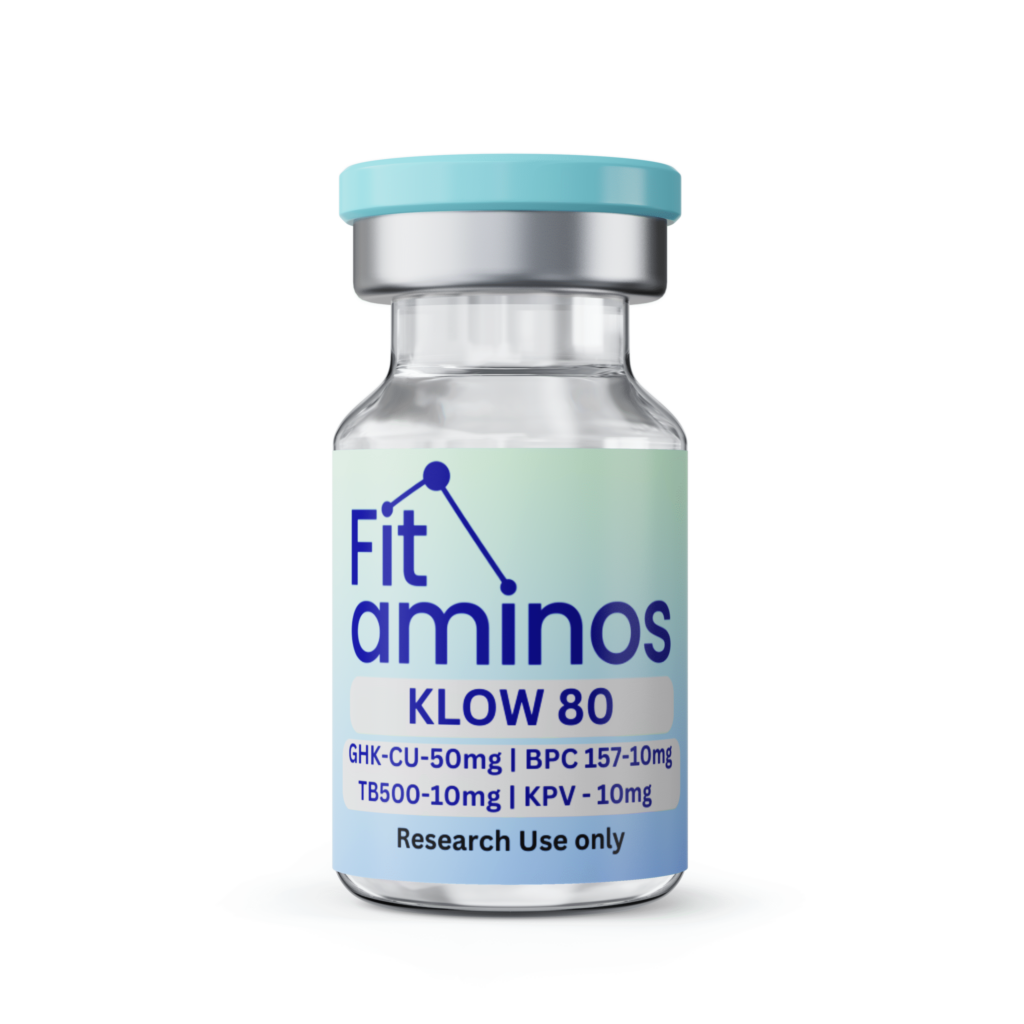
KLOW is a multi-peptide formulation combining TB-500 (10 mg), BPC-157 (10 mg), KPV (10 mg), and GHK-Cu (50 mg), delivering a total of 80 mg per vial. This blend is designed to support tissue repair, inflammation control, and regenerative processes through complementary mechanisms.
Each component contributes uniquely—TB-500 supports cellular migration and repair, BPC-157 is associated with soft tissue recovery, KPV helps regulate inflammatory pathways, and GHK-Cu plays a role in collagen production and tissue remodeling.
- Reconstitution: Add 3.0 mL bacteriostatic water → ~26.7 mg/mL total concentration
- Component ratio: Equal low-dose peptides + higher GHK-Cu concentration
- Typical daily dose: ~2.67 mg once daily
- Measurement: 1 unit (0.01 mL) ≈ 267 mcg total peptide
- Administration: Once daily (subcutaneous)
- Storage: Refrigerate after mixing; avoid repeated freeze–thaw cycles
Dosing & Reconstitution Guide
Educational guide for reconstitution and daily dosing
Standard / Gradual Approach (3.0 mL = ~26.7 mg/mL Total)
| Protocol | Daily Dose (mcg) | Units (per injection) (mL) |
|---|---|---|
| Standard | 2.67 mg | 10 units (0.10 mL) |
Frequency: Once daily (subcutaneous)
This dosing provides approximately:
- ~1.66 mg GHK-Cu
- ~0.33 mg TB-500
- ~0.33 mg BPC-157
- ~0.33 mg KPV
*Important to take Zinc Supplement to help balance added copper in system.
Reconstitution Steps
- Draw 3.0 mL bacteriostatic water using a sterile syringe
- Inject slowly into the vial (avoid direct powder impact)
- Gently swirl until dissolved (do not shake)
- Store refrigerated at 2–8°C
- Use within 4 weeks
Important: This guide is for educational purposes only and is not medical advice. For research use only. Not for human consumption.
Supplies Needed
This plan is based on an 8–16 week daily protocol with gradual dose titration.
Peptide Vials (KLOW, 80 mg each)
- 8 weeks: approximately 2 vials
- 12 weeks: approximately 3 vials
- 16 weeks: approximately 4 vials
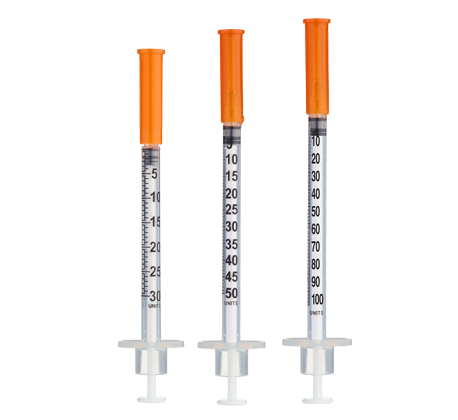
Insulin Syringes (U-100)
- Weekly usage: 7 syringes (one per day)
- 8 weeks: 56 syringes
- 12 weeks: 84 syringes
- 16 weeks: 112 syringes
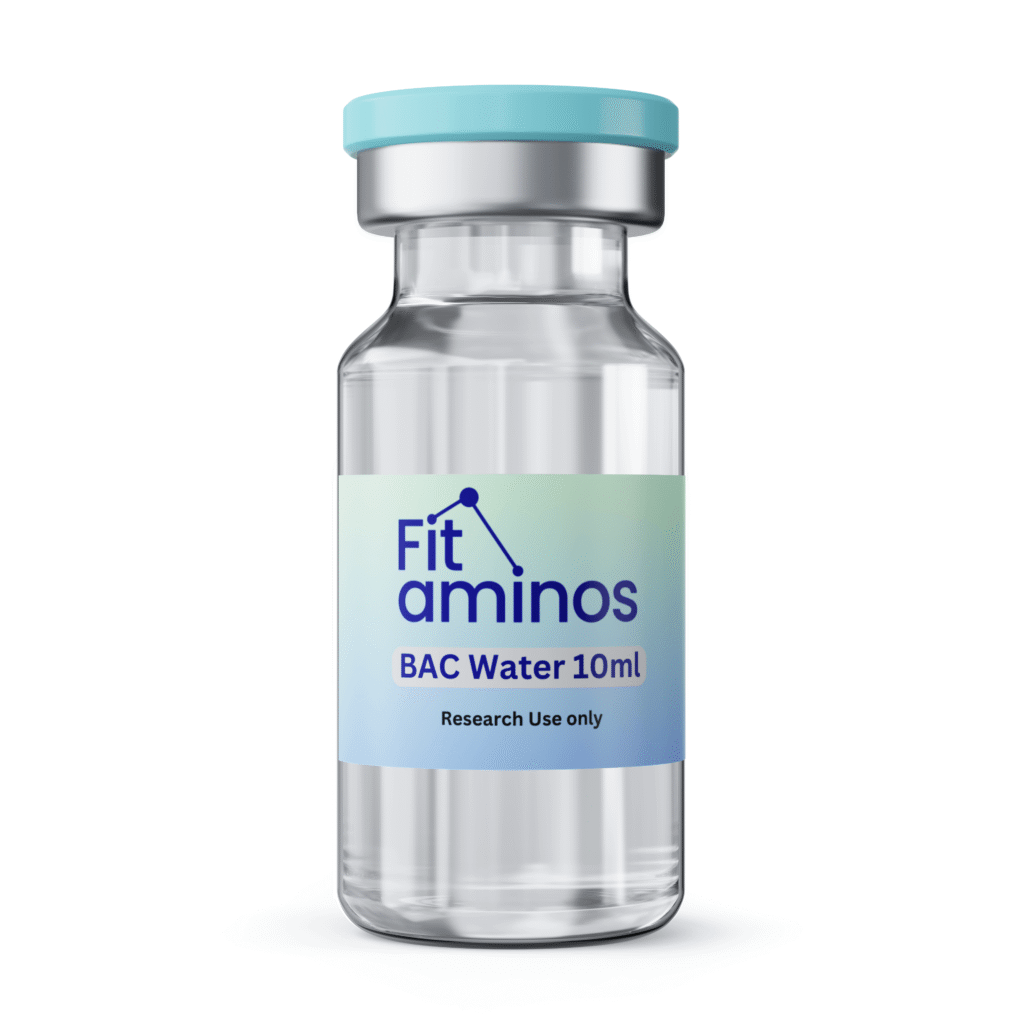
Bacteriostatic Water (10 mL bottles)
Use approximately 3.0 mL per vial for reconstitution.
- 8 weeks (2 vials): 6 mL → 1 bottle (10 mL)
- 12 weeks (3 vials): 9 mL → 1 bottles (10 mL each)
- 16 weeks (4 vials): 12 mL → 2 bottles (10 mL each)
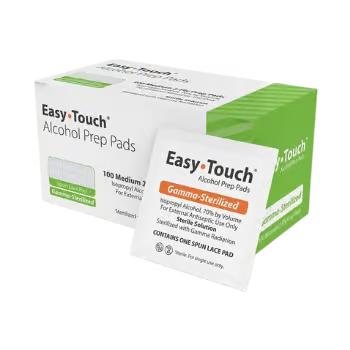
Alcohol Swabs
Use one swab for the vial stopper and one for the injection site per administration.
- Weekly usage: 14 swabs (2 per day)
- 8 weeks: 112 swabs → recommended 2 boxes (100-count each)
- 12 weeks: 168 swabs → recommended 2 boxes (100-count each)
- 16 weeks: 224 swabs → recommended 3 boxes (100-count each)
Protocol Overview
- Goal: Support recovery, tissue regeneration, and inflammation control
- Schedule: Daily injections for 8–12 weeks
- Approach: Gradual dose escalation, then maintenance phase
- Reconstitution: 3.0 mL per vial for accurate dosing
- Storage: Refrigerated after mixing
Dosing Protocol
A consistent once-daily dosing structure designed for balanced peptide administration.
- Daily Dose: 2.67 mg (equivalent to 10 units / 0.10 mL), maintained throughout the full cycle
- Frequency: Administer once daily via subcutaneous injection, ideally at the same time each day
- Cycle Duration: 4-16 weeks of continuous use, followed by a 2–4 week break to assess response and support receptor recovery
- Injection Volume: Approximately 0.10 mL per dose, well within typical comfort limits for subcutaneous delivery (generally under 1.0–1.5 mL)
- Syringe Guidance: A 0.3 mL (30-unit) U-100 insulin syringe is recommended for improved accuracy when measuring small volumes
Storage Instructions
Proper storage is essential to maintain peptide stability and integrity.
- Lyophilized (Unmixed): Store in a freezer at approximately −20°C (−4°F) for long-term preservation. If freezing is not available, refrigeration (2–8°C) is acceptable for shorter durations. Keep in a dry, dark environment away from moisture.
- After Reconstitution: Store the solution in a refrigerator at 2–8°C (35.6–46.4°F) at all times. Do not freeze once mixed.
- Shelf Life: Use within 28 days after reconstitution for optimal stability and reliability. Discard any remaining solution after this period.
Important Notes
Key considerations for consistency, handling, and research accuracy.
- Always use a new, sterile insulin syringe for each administration; do not reuse needles
- Follow proper aseptic technique: clean both the vial stopper and injection site with separate alcohol swabs and allow to dry fully
- Rotate injection sites (abdomen, thighs, upper arms) to reduce irritation and avoid tissue buildup
- Administer injections slowly and steadily, allowing a few seconds before withdrawing the needle
- Keep a record of dosing, timing, and injection sites to maintain consistency throughout the protocol
- Do not use the solution if it appears cloudy, discolored, or contains visible particles
- Store and handle peptides according to recommended conditions to preserve stability
How This Works
KLOW 80 is an advanced peptide blend designed to support recovery, tissue repair, and overall structural health through multiple complementary pathways.
- GHK-Cu is known for its role in collagen production, skin health, and cellular repair. It helps support stronger, healthier tissue and overall structural integrity.
- BPC-157 is commonly associated with supporting blood flow, connective tissue repair, and recovery throughout the body, especially in areas under stress or strain.
- TB-500 supports cell movement and flexibility, which plays a key role in how the body repairs damaged tissue and adapts during recovery.
- KPV is known for its ability to support a balanced inflammatory response, helping create an environment where the body can recover more efficiently.
Together, these peptides work as a coordinated system, supporting tissue repair, recovery, and overall cellular function from multiple angles — making KLOW 80 a comprehensive option for full-body support.
Key Benefits & Overview
Key Benefits & Overview — KLOW 80
- Tissue Repair & Recovery Support: KLOW 80 is designed to support the body’s natural repair process. GHK-Cu supports skin and tissue remodeling, while TB-500 and BPC-157 help drive recovery through improved cell movement and tissue regeneration. KPV adds support by helping create an optimal environment for healing.
- Inflammatory Response Balance: Each peptide in this blend plays a role in supporting a balanced inflammatory response. KPV is especially known for helping regulate inflammation, which can support faster and more efficient recovery.
- Collagen & Structural Support: GHK-Cu supports collagen production and skin health, while BPC-157 and TB-500 contribute to connective tissue strength and repair. Together, they help support stronger, more resilient tissue.
- Skin, Hair & Nail Support: Supports healthier skin with improved tone, elasticity, and hydration. Also helps promote thicker hair and stronger nails over time.
- Cell Movement & Circulation Support: TB-500 supports cellular movement and flexibility, while BPC-157 is linked to improved blood flow. Together, they help the body repair and rebuild more efficiently.
- Full-Body Recovery Support: This blend works across multiple systems, including muscles, joints, skin, and connective tissue, making it a comprehensive option for overall recovery and regeneration.
- Tolerability: Generally well tolerated when used appropriately. Some individuals may experience mild redness or irritation at the application site.
Considerations
- Mild injection-site irritation may occur
- Limited large-scale human data available
- Effects may vary depending on protocol and lifestyle
Lifestyle Factors
- Pair with a balanced, protein-forward diet tailored to support tissue repair and recovery.
- Combine resistance training and mobility work to reinforce musculoskeletal adaptations.
- Prioritize sleep and stress management to optimize the body’s natural regenerative processes.
- Stay well-hydrated to support peptide absorption and overall metabolic function.
Injection Technique
General guidance for subcutaneous administration:
- Clean the vial stopper and injection area with alcohol and allow to dry
- Gently pinch the skin and insert the needle at a 45–90° angle
- Inject slowly and steadily without aspirating
- Hold the needle in place for a few seconds before removing
- Rotate injection sites (abdomen, thighs, upper arms) to reduce irritation
Recommended Source
We recommend Fit Aminos for high-purity research peptide products KLOW 80
Why Fit Aminos?
- High-purity, lab-tested peptide batches with quality verification.
- Consistent handling and preparation processes designed to support reliable research protocols.
- Transparent sourcing and dependable fulfillment for research-grade compounds.
Shop for KLOW 80 at Fit Aminos
Important Note
This content is intended for educational and research purposes only and does not constitute medical advice, diagnosis, or treatment. KLOW 80 remains an investigational peptide with limited human clinical data. For research use only. Not for human consumption.
References
PubMed— Thymosin beta 4 accelerates wound healing (Philp et al., 1999)
PubMed— Thymosin β4 promotes dermal healing in preclinical models and clinical trials
PMC— Emerging use of BPC-157 in orthopaedic sports medicine: systematic review
PMC— Pharmacokinetics, distribution, metabolism, and excretion of BPC-157 in rats and dogs
PMC— PepT1-mediated tripeptide KPV uptake reduces intestinal inflammation