
AOD9604 (5mg Vial) Dosage Protocol
Contents
- Quickstart Highlights
- Dosing & Reconstitution Guide
- Standard / Gradual Approach (2 mL = ~2.5 mg/mL)
- Reconstitution Steps
- Supplies Needed
- Protocol Overview
- Dosing Protocol
- Storage Instructions
- Important Notes
- How This Works
- Potential Benefits & Side Effects
- Lifestyle Factors
- Injection Technique
- Recommended Source
- Important Note
- References
Quickstart Highlights
AOD9604 is a synthetic peptide derived from the C-terminal fragment of human growth hormone (hGH), specifically amino acids 176–191. In research environments, this peptide has been investigated for its potential role in lipid metabolism and fat-oxidation pathways without activating the growth-promoting mechanisms associated with full-length growth hormone.
Researchers often explore AOD9604 in studies related to metabolic signaling, body composition, and energy regulation. Unlike traditional growth hormone compounds, AOD9604 is designed to focus primarily on lipolytic activity while avoiding effects on IGF-1 or glucose metabolism observed with full hGH.
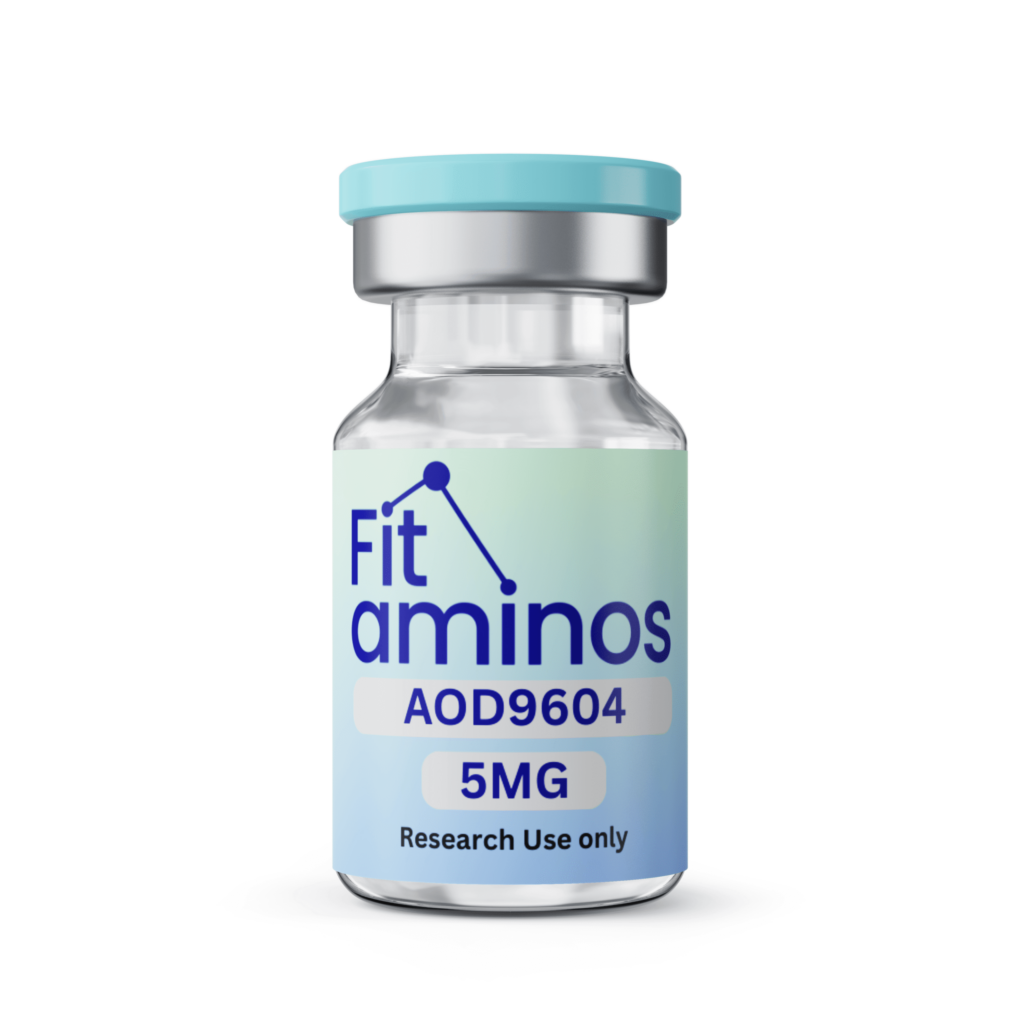
- Vial contents: 5 mg AOD9604
Reconstitution: Add 2 mL bacteriostatic water - Concentration:
2.5 mg per mL (2500 mcg/mL) - Typical research range:
200–500 mcg per administration - Easy measuring: At 2.5 mg/mL, 1 unit = 0.01 mL ≈ 2.5 mcg on a U-100 insulin syringe.
- Storage: Lyophilized: freeze at −20 °C (−4 °F); after reconstitution, refrigerate at 2–8 °C (35.6–46.4 °F); avoid freeze–thaw cycles.
Dosing & Reconstitution Guide
Educational guide for reconstitution and daily dosing
Standard / Gradual Approach (2 mL = ~2.5 mg/mL)
| Week | Daily Dose (mcg) | Units (per injection) (mL) |
|---|---|---|
| Weeks 1–2 | 200 mcg (0.2 mg) | 8 units (0.08 mL) |
| Weeks 3–4 | 400 mcg (0.4 mg) | 16 units (0.16 mL) |
| Weeks 5–8+ | 600 mcg (0.6 mg) | 24 units (0.24 mL) |
Reconstitution Steps
- Draw 2.0 mL bacteriostatic water with a sterile syringe.
- Inject slowly down the vial wall; avoid foaming.
- Gently swirl/roll until dissolved (do not shake).
- Label and refrigerate at 2–8 °C (35.6–46.4 °F), protected from light.
Important: This guide is for educational purposes only and is not medical advice. For research use only. Not for human consumption.
Supplies Needed
Plan based on an 8–16 week daily protocol with gradual titration.
Peptide Vials (AOD9604 – 5 mg each)
Assuming a maintenance dose of 400–500 mcg per day.
8 weeks
≈ 5 vials (about 28 mg total used)
12 weeks
≈ 7 vials (about 42 mg total used)
16 weeks
≈ 10 vials (about 56 mg total used)
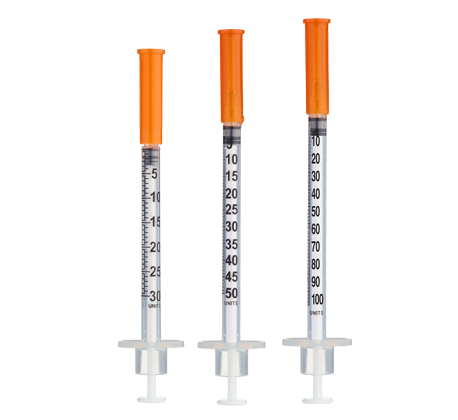
Insulin Syringes (U-100)
Per week: 7 syringes (1 per day)
- 8 weeks: 56 syringes
- 12 weeks: 84 syringes
- 16 weeks: 112 syringes
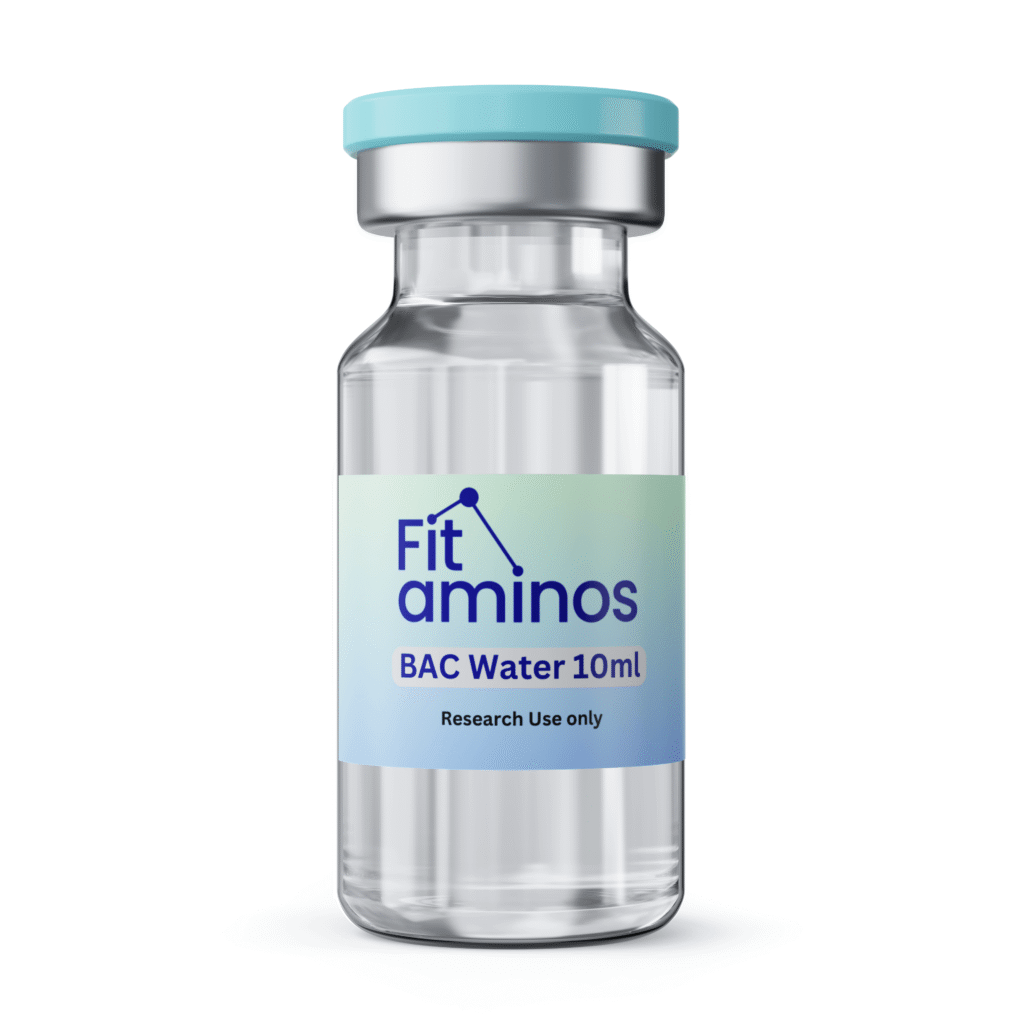
Bacteriostatic Water (10 mL bottles)
Use 2 mL per vial for reconstitution.
- 8 weeks (5 vials)
10 mL → 1 × 10 mL bottle - 12 weeks (7 vials)
14 mL → 2 × 10 mL bottles - 16 weeks (10 vials)
20 mL → 2 × 10 mL bottles
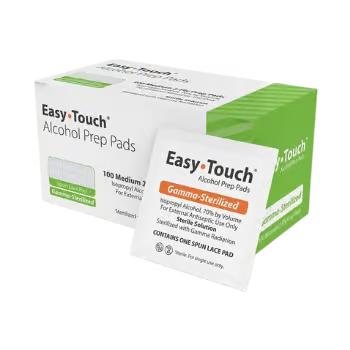
Alcohol Swabs
One swab for the vial stopper + one for the injection site each day.
- Per week: 14 swabs (2/day)
- 8 weeks: 112 swabs → recommend 2 × 100-count boxes
- 12 weeks: 168 swabs → recommend 2 × 100-count boxes
- 16 weeks: 224 swabs → recommend 3 × 100-count boxes
Protocol Overview
Concise summary of the once-daily regimen.
- Goal: Support metabolic and lipolytic signaling pathways associated with fat-oxidation research.
- Schedule: Daily subcutaneous administration for 8–12 weeks (extend to 16 weeks if desired depending on research protocol).
- Dose Range: 200–500 mcg daily with gradual titration during the first few weeks.
- Reconstitution: 2.0 mL bacteriostatic water per 5 mg vial (~2.5 mg/mL concentration) for clear and accurate unit measurements.
- Storage: Lyophilized peptide should be stored frozen or refrigerated in a dry environment.
Dosing Protocol
Suggested daily titration approach.
Start: 200 mcg daily; increase by approximately 100–200 mcg every 1–2 weeks as tolerated.
Target: 400–500 mcg daily by Weeks 3–6, depending on research protocol.
Frequency: Once per day (subcutaneous administration).
Cycle Length: 8–12 weeks; optional extension up to 16 weeks depending on study design.
Timing: Often administered in the morning on an empty stomach (Fasted); maintain a consistent time each day and rotate injection sites.
Storage Instructions
Proper storage preserves peptide quality.
Lyophilized: Store at −20 °C (−4 °F) in a dry, dark environment. Protect the vial from moisture and direct light before reconstitution.
Reconstituted: After adding bacteriostatic water, store the vial refrigerated at 2–8 °C (35.6–46.4 °F). Avoid repeated freeze–thaw cycles and handle the vial carefully to maintain stability.
Allow the vial to reach room temperature before opening to help minimize condensation exposure.
Important Notes
Practical considerations for consistency and safety.
- Practical considerations for consistency and safe research handling.
- Use a new sterile insulin syringe for each administration and dispose of used syringes in an appropriate sharps container.
- Rotate injection sites (abdomen, thighs, or upper arms) to help reduce local irritation.
- Inject slowly and wait a few seconds before withdrawing the needle to ensure accurate delivery.
- Track daily dosage and injection sites to maintain consistency throughout the research protocol.
- Research involving AOD9604 is still evolving, and available human data remain limited; all experimental protocols should be conducted responsibly and in accordance with applicable research guidelines.
How This Works
AOD9604 is a synthetic peptide derived from the C-terminal fragment of human growth hormone (hGH), specifically amino acids 176–191. This region of the hormone has been studied for its role in regulating lipid metabolism and fat-oxidation signaling pathways.
Preclinical research suggests that AOD9604 may stimulate lipolysis (the breakdown of stored fat) while also helping inhibit lipogenesis, the biological process responsible for storing new fat. Unlike full-length growth hormone, AOD9604 has been designed to focus on metabolic pathways without significantly stimulating growth-related signaling or increasing IGF-1 levels.
Because of these characteristics, AOD9604 has been explored in research investigating body-composition regulation, metabolic activity, and adipose tissue signaling. However, available human data remain limited, and additional controlled studies are needed to fully understand its mechanisms and potential applications.
Potential Benefits & Side Effects
Studied for its potential role in lipolysis and fat-metabolism signaling pathways in metabolic research models.
- Preclinical studies suggest AOD9604 may support fat oxidation and regulation of adipose tissue metabolism without stimulating growth-related pathways associated with full human growth hormone.
- Early clinical investigations evaluating AOD9604 for metabolic research have reported generally favorable tolerability profiles at studied doses.
- Mild injection-site reactions such as redness or slight irritation may occur with subcutaneous administration.
- Long-term human safety and efficacy remain under investigation, and additional controlled studies are needed to better understand its mechanisms and outcomes.
Lifestyle Factors
Complementary strategies to support metabolic research outcomes:
- Follow a balanced, protein-focused diet with adequate micronutrients to support healthy metabolism.
- Combine resistance training and aerobic activity to help reinforce fat oxidation and overall body-composition goals.
- Prioritize quality sleep (7–9 hours) and stress management to optimize natural metabolic processes.
- Maintain consistent hydration and meal timing to support research protocols involving metabolic peptides.
Injection Technique
General subcutaneous guidance for research protocols:
- Clean the vial stopper and injection site with an alcohol swab and allow to dry.
- Pinch a skinfold and insert the needle at a 45–90° angle into subcutaneous tissue.
- Do not aspirate; inject slowly and steadily to ensure proper delivery.
- Rotate injection sites systematically (abdomen, thighs, upper arms) to help reduce local irritation or tissue buildup.
- Dispose of used syringes immediately in an approved sharps container following proper safety guidelines.
Recommended Source
We recommend Fit Aminos for high-purity AOD9604 (5 mg) research peptide products.
Why Fit Aminos?
- High-purity, lab-tested peptide batches with quality verification.
- Consistent handling and preparation processes designed to support reliable research protocols.
- Transparent sourcing and dependable fulfillment for research-grade compounds.
Shop AOD9604 at Fit Aminos
Important Note
This content is intended for educational and research purposes only and does not constitute medical advice, diagnosis, or treatment. AOD9604 remains an investigational peptide with limited human clinical data. For research use only. Not for human consumption.
References
Journal of Endocrinology and Metabolism (2014)
— A comprehensive analysis of the safety profile and metabolic effects of AOD9604, explored as a novel nutraceutical ingredient; detailed investigation on its mechanism of action along with extensive metabolic studies conducted to assess its efficacy and potential health benefits.
FDA Pharmacy Compounding Advisory Committee (2024)
— This document serves as a comprehensive meeting memorandum regarding the AOD‑9604 bulk drug substance, providing an in-depth regulatory and safety overview that outlines the pertinent details and considerations associated with its use and regulation.
Journal of Endocrinology and Metabolism (2013)
— A comprehensive study investigating the safety and tolerability of AOD9604 in human subjects; findings indicated no significant increase in IGF‑1 levels, and the treatment exhibited a safety profile similar to that of a placebo, suggesting it may be a viable option for further clinical exploration.
Endocrinology (OUP)
— Effects of hGH and AOD9604 on lipid metabolism in obese mice; β‑adrenergic pathway mechanisms
Gastroenterology
— Drug treatment of the overweight patient; AOD‑9604 RCT summary and clinical efficacy