
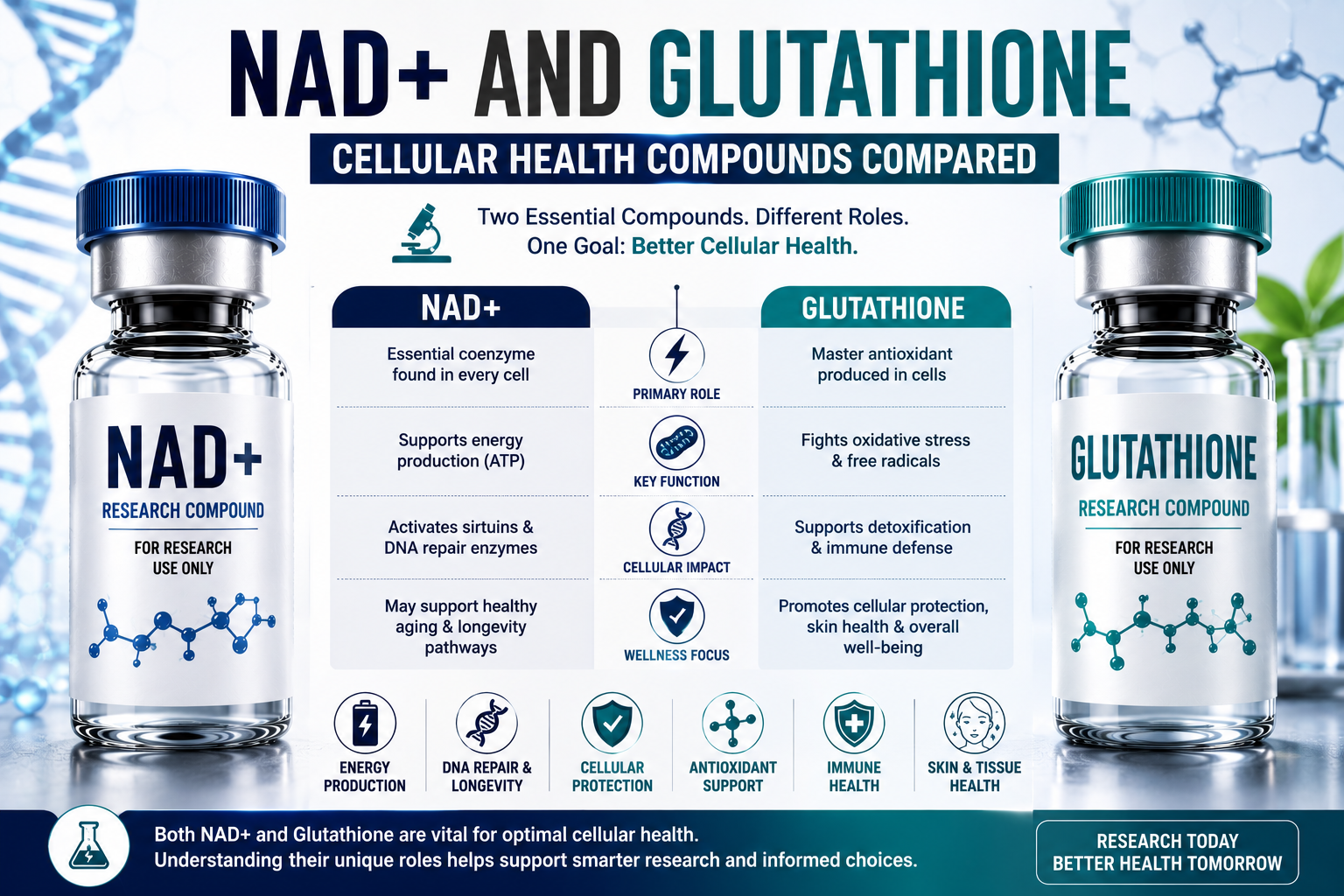
Interest in NAD+ and glutathione has grown rapidly as researchers explore new ways to understand cellular health and healthy aging. Although these two compounds are often mentioned together, they perform very different biological functions. NAD+ primarily supports energy production and cellular metabolism, while glutathione serves as one of the body’s most important antioxidants, protecting cells from oxidative damage.
Because both compounds naturally decline with age or during periods of physiological stress, scientists are investigating whether supporting healthy NAD+ and glutathione levels may contribute to improved cellular resilience. However, current research remains ongoing, and many potential applications have not yet been confirmed through large clinical trials.
This guide explains the differences between NAD+ and glutathione, how each works inside the body, where their functions overlap, and what current research says about their potential roles in cellular health and wellness.
What Is NAD+?
Nicotinamide adenine dinucleotide (NAD+) is a coenzyme found in every living cell. It is essential for hundreds of biochemical reactions that convert nutrients into usable cellular energy.
NAD+ is involved in:
- ATP (energy) production
- Mitochondrial function
- DNA repair
- Cellular metabolism
- Enzyme activity
- Healthy aging research
Scientists have observed that NAD+ levels gradually decrease with age. This decline has led to growing interest in compounds that may help maintain healthy NAD+ levels, including nicotinamide riboside (NR) and nicotinamide mononucleotide (NMN).
Unlike glutathione, NAD+ is not primarily an antioxidant. Instead, it enables cells to produce energy and maintain normal metabolic processes.
What Is Glutathione?
Glutathione is a naturally occurring tripeptide made from three amino acids:
- Glutamine
- Cysteine
- Glycine
It is often referred to as the body’s “master antioxidant” because it plays a central role in defending cells against oxidative stress.
Glutathione helps:
- Neutralize free radicals
- Protect DNA from oxidative damage
- Support liver detoxification
- Maintain immune function
- Regenerate vitamins C and E
- Preserve cellular redox balance
Unlike NAD+, glutathione primarily protects cells from damage rather than producing energy.
How NAD+ Supports Cellular Energy
Every cell depends on NAD+ to convert carbohydrates, fats, and proteins into ATP, the body’s primary energy currency.
NAD+ participates in metabolic pathways such as:
- Glycolysis
- The Krebs cycle
- Oxidative phosphorylation
Researchers also study NAD+ because it activates proteins called sirtuins, which regulate cellular maintenance, stress responses, and DNA repair.
Healthy NAD+ availability may support:
- Mitochondrial performance
- Cellular repair
- Metabolic efficiency
- Healthy aging processes
Although promising, many longevity-related findings have primarily been observed in laboratory and animal studies.
How Glutathione Protects Against Oxidative Stress
Cells constantly produce free radicals during normal metabolism. Environmental pollutants, UV radiation, smoking, inflammation, and intense exercise can increase these unstable molecules.
Glutathione protects cells by:
- Neutralizing reactive oxygen species (ROS)
- Repairing oxidized proteins
- Supporting antioxidant enzymes
- Maintaining normal cellular signaling
- Protecting mitochondrial membranes
Without adequate glutathione, oxidative damage may accumulate more rapidly.
Researchers continue studying glutathione’s role in maintaining long-term cellular health.
Key Differences Between NAD+ and Glutathione
Although both compounds are essential for healthy cells, their primary roles differ significantly.
| Feature | NAD+ | Glutathione |
|---|---|---|
| Main Role | Cellular energy production | Antioxidant defense |
| Primary Function | Supports metabolism | Neutralizes free radicals |
| Location | Every living cell | Every living cell |
| Research Focus | Healthy aging, metabolism | Oxidative stress, cellular protection |
| Supports | ATP production, DNA repair | Detoxification, immune function |
| Naturally Declines With Age | Yes | Yes |
These complementary functions explain why researchers often study NAD+ and glutathione together rather than viewing them as competing compounds.
Can NAD+ and Glutathione Complement Each Other?
One reason researchers frequently discuss NAD+ and glutathione together is that healthy cells require both efficient energy production and protection against oxidative damage.
NAD+ helps cells generate energy for normal biological functions, while glutathione helps protect those same cells from damage caused by free radicals.
For example:
- Energy production naturally creates reactive oxygen species.
- Glutathione helps neutralize those reactive molecules.
- Lower oxidative stress may support healthier mitochondrial function.
- Healthy mitochondria rely on sufficient NAD+ for efficient energy production.
This interconnected relationship has made both compounds important topics in longevity and wellness research.
However, evidence supporting combined supplementation for specific health outcomes remains limited, and more high-quality human studies are needed.
Research Areas for NAD+ and Glutathione
Scientists are investigating the potential roles of NAD+ and glutathione in several areas of health research.
Healthy Aging
Age-related declines in both NAD+ and glutathione have prompted studies examining whether maintaining their levels may support cellular resilience during aging.
Metabolic Health
Researchers are exploring how NAD+ influences glucose metabolism and mitochondrial efficiency, while glutathione may help reduce oxidative stress associated with metabolic disorders.
Brain Health
Both compounds are being studied for their potential roles in supporting neuronal function and protecting brain cells from oxidative damage.
Exercise Recovery
Physical activity increases energy demands and oxidative stress. NAD+ supports energy production, while glutathione helps limit oxidative injury following intense exercise.
Skin Health
Glutathione has received attention for its antioxidant effects on skin cells, while NAD+ is being investigated for its involvement in cellular repair and DNA maintenance.
Although early findings are encouraging, most of these applications require further clinical validation.
Current Scientific Evidence
Research supporting NAD+ and glutathione continues to grow.
Laboratory studies demonstrate important biological functions for both compounds, while human research suggests they play essential roles in maintaining normal cellular processes.
However, several questions remain unanswered:
- Which delivery methods are most effective?
- What doses provide meaningful biological effects?
- Are long-term supplementation strategies safe?
- Which populations may benefit most?
Future clinical trials will help answer these questions.
Safety and Research Limitations
Both NAD+ precursors and glutathione generally show favorable safety profiles in clinical research.
However, limitations include:
- Small study populations
- Short study durations
- Differences in supplement formulations
- Limited long-term safety data
- Variable absorption between delivery methods
For these reasons, researchers caution against overstating current findings until additional evidence becomes available.
Frequently Asked Questions
Is NAD+ an antioxidant like glutathione?
No. NAD+ primarily supports cellular energy production and metabolism, while glutathione functions as a powerful intracellular antioxidant.
Which is more important for cellular health?
Both are essential. NAD+ helps cells generate energy, whereas glutathione protects cells from oxidative damage. Their roles are complementary rather than interchangeable.
Do NAD+ and glutathione decline with age?
Research suggests that levels of both compounds tend to decrease as people age, which is one reason they are widely studied in longevity research.
Can NAD+ and glutathione be studied together?
Yes. Scientists frequently investigate them together because healthy energy metabolism and antioxidant defense are closely connected within cells.
Is supplementation proven to slow aging?
No. While research is promising, there is currently no conclusive evidence that NAD+ or glutathione supplementation alone can slow or reverse human aging.
Final Thoughts
NAD+ and glutathione are two of the most important naturally occurring compounds involved in cellular health, but they serve distinct purposes. NAD+ enables cells to produce energy, repair DNA, and regulate metabolism, while glutathione protects cells from oxidative stress and supports antioxidant defenses.
Rather than competing with one another, these compounds work in complementary ways to help maintain normal cellular function. This relationship has made them central topics in research on healthy aging, metabolic health, exercise recovery, and overall wellness.
Although scientific interest continues to grow, much of the evidence comes from laboratory studies and early clinical research. Larger, long-term human trials are still needed to determine the effectiveness, optimal dosing, and long-term safety of supplementation strategies targeting NAD+ and glutathione. For now, they should be viewed as promising areas of research rather than proven treatments for specific health conditions.
References
- Covarrubias, A. J., Perrone, R., Grozio, A., & Verdin, E. (2021). NAD+ metabolism and its roles in cellular processes during ageing. Nature Reviews Molecular Cell Biology, 22(2), 119–141. https://doi.org/10.1038/s41580-020-00313-x
- Forman, H. J., Zhang, H., & Rinna, A. (2009). Glutathione: Overview of its protective roles. Molecular Aspects of Medicine, 30(1–2), 1–12. https://doi.org/10.1016/j.mam.2008.08.006
- Ballatori, N., Krance, S. M., Notenboom, S., Shi, S., Tieu, K., & Hammond, C. L. (2009). Glutathione dysregulation and the etiology and progression of human diseases. Biological Chemistry, 390(3), 191–214. https://doi.org/10.1515/BC.2009.033
- National Center for Biotechnology Information. NAD+ metabolism and glutathione research. https://www.ncbi.nlm.nih.gov/
- Office of Dietary Supplements, National Institutes of Health. https://ods.od.nih.gov/
