
Inflammation plays a central role in many chronic diseases, from inflammatory bowel disease (IBD) and skin disorders to arthritis and respiratory conditions. While many anti-inflammatory drugs can reduce symptoms, long-term use often comes with unwanted side effects.
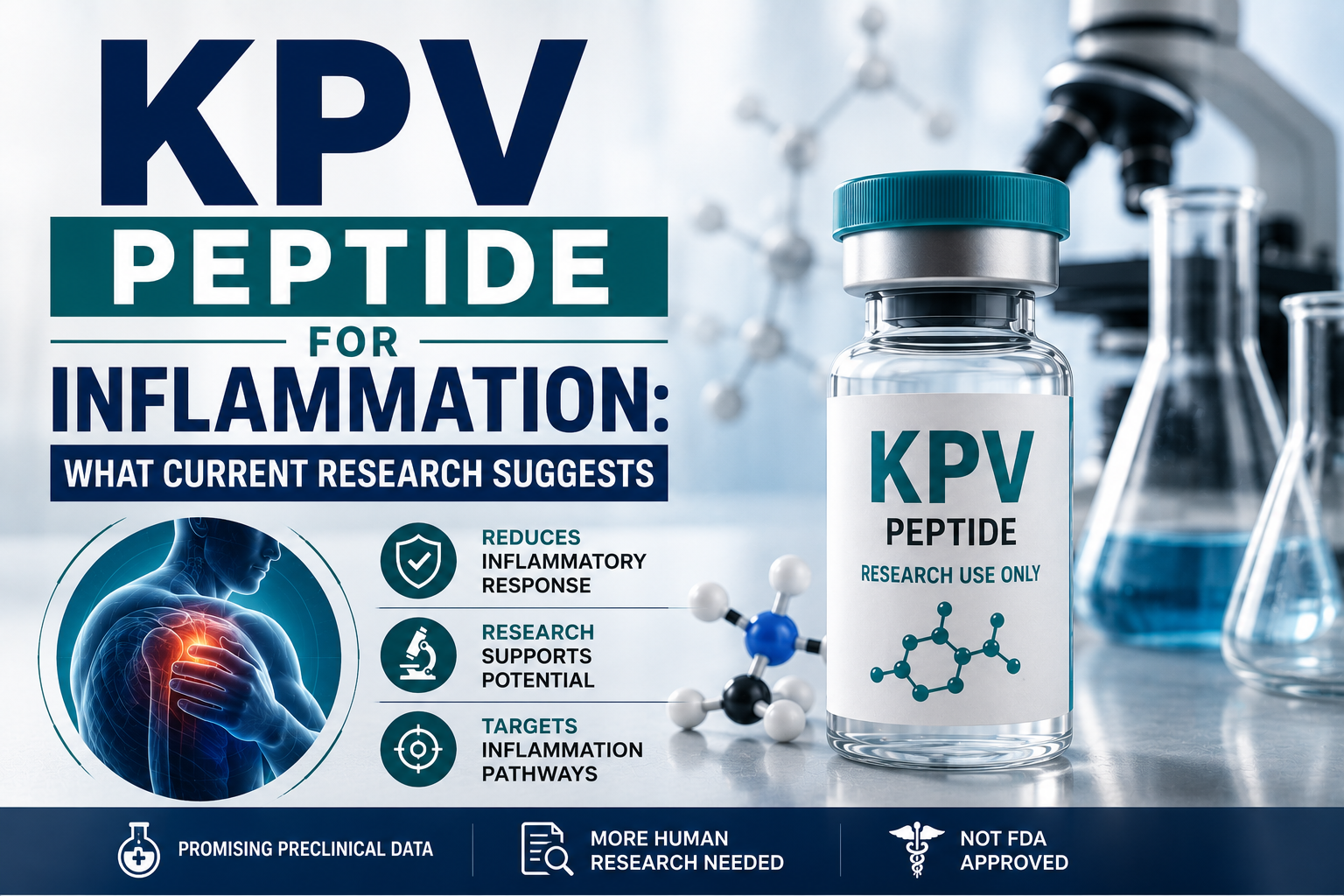
One research compound receiving increasing scientific attention is KPV peptide for inflammation. Derived from the naturally occurring hormone alpha-melanocyte-stimulating hormone (α-MSH), KPV has demonstrated potent anti-inflammatory activity in laboratory and animal studies. However, despite promising findings, human clinical evidence remains limited.
This article explores what current research suggests about KPV peptide for inflammation, how it works, and where the science stands today.
What Is KPV Peptide?
KPV (Lysine-Proline-Valine) is a three-amino-acid peptide derived from the C-terminal portion of α-MSH, a hormone involved in immune regulation, pigmentation, and inflammation.
Unlike the full α-MSH molecule, KPV appears to retain many of its anti-inflammatory properties while lacking many of the hormonal effects associated with melanocortin receptor activation.
Researchers are studying KPV because of its ability to:
- Reduce inflammatory signaling
- Suppress excessive immune responses
- Protect epithelial tissues
- Support gut and skin health in experimental models
At present, KPV remains an investigational peptide and is not approved as a treatment for inflammatory diseases.
How KPV Peptide for Inflammation Works
Current research suggests that KPV peptide for inflammation works differently from many traditional anti-inflammatory drugs.
Instead of broadly suppressing the immune system, KPV appears to regulate specific inflammatory pathways.
1. Inhibits NF-κB Signaling
NF-κB is considered one of the body’s primary inflammatory switches.
When activated, it increases production of inflammatory molecules including:
- TNF-α
- IL-1β
- IL-6
- IL-8
Laboratory studies show that KPV can reduce NF-κB activation, resulting in lower production of these inflammatory cytokines.
2. Reduces Pro-Inflammatory Cytokines
Animal and cell culture research demonstrates that KPV decreases several cytokines involved in chronic inflammation, including:
| Cytokine | Role in Inflammation |
|---|---|
| TNF-α | Promotes systemic inflammation |
| IL-1β | Activates immune cells |
| IL-6 | Drives chronic inflammatory responses |
| IL-8 | Recruits inflammatory cells |
Reducing these signaling molecules may explain why KPV has shown benefits across multiple inflammatory disease models.
3. Cellular Uptake Through PepT1
Unlike many peptides that rely primarily on receptor activation, KPV can enter cells through the PepT1 peptide transporter.
Once inside the cell, it interferes directly with inflammatory signaling pathways rather than acting only on surface receptors. This unique mechanism has been demonstrated particularly in intestinal epithelial cells.
Potential Research Applications of KPV Peptide for Inflammation
Although no approved medical indications exist, researchers have investigated KPV across several inflammatory conditions.
Inflammatory Bowel Disease (IBD)
Among the strongest preclinical evidence for KPV comes from inflammatory bowel disease research.
Mouse studies have reported:
- Reduced colon inflammation
- Improved intestinal tissue structure
- Lower inflammatory cytokine production
- Reduced disease severity
These findings suggest KPV may help regulate intestinal inflammation without generalized immune suppression, though human trials are still needed.
Skin Inflammation
Researchers have also investigated KPV in models of inflammatory skin disease.
Laboratory studies indicate KPV may reduce:
- TNF-α signaling
- ICAM-1 expression
- Dermal inflammatory responses
Potential future research areas include eczema, psoriasis, acne, and wound healing.
Airway Inflammation
Experimental studies involving airway epithelial cells found that KPV suppresses inflammatory signaling associated with asthma and lung inflammation.
Researchers observed reductions in NF-κB activation and inflammatory chemokines involved in airway damage.
Fibrosis Research
Because chronic inflammation often leads to fibrosis, investigators are also exploring melanocortin peptides—including KPV—for their possible role in preventing excessive scar formation.
Most evidence currently comes from broader α-MSH research rather than direct KPV studies.

Advantages Suggested by Current Research
Preclinical studies indicate several potential advantages of KPV peptide for inflammation:
| Potential Advantage | Research Status |
|---|---|
| Targeted anti-inflammatory activity | Supported in laboratory studies |
| Reduced NF-κB activation | Strong preclinical evidence |
| Lower cytokine production | Demonstrated in cell and animal studies |
| May avoid broad immune suppression | Investigational |
| Small peptide with good tissue penetration | Preclinical evidence |
| No pigmentation effects seen with α-MSH | Supported by mechanism studies |
Current Limitations of KPV Research
Despite encouraging laboratory findings, several important limitations remain.
Limited Human Clinical Trials
Most published evidence comes from:
- Cell culture experiments
- Animal studies
- Mechanistic laboratory research
Large randomized human clinical trials are currently lacking.
Unknown Long-Term Safety
Researchers have not yet established:
- Long-term safety
- Optimal dosing
- Best delivery methods
- Drug interactions
- Effects during prolonged use
Therefore, claims about clinical effectiveness should be interpreted cautiously.
Regulatory Status
KPV remains an investigational research peptide.
It has not been approved by the U.S. Food and Drug Administration (FDA) or most international regulatory agencies as a treatment for inflammatory diseases.
KPV Compared with Other Anti-Inflammatory Peptides
| Peptide | Primary Research Focus | Main Mechanism |
|---|---|---|
| KPV | Inflammation regulation | NF-κB inhibition, cytokine reduction |
| BPC-157 | Tissue repair | Angiogenesis and growth factor modulation |
| TB-500 | Tissue regeneration | Cell migration and wound repair |
| GHK-Cu | Skin repair and regeneration | Copper-dependent tissue remodeling |
These peptides are sometimes discussed together in research settings, but direct comparative human studies are minimal.
Safety Considerations
Current evidence suggests KPV has a favorable profile in laboratory and animal models.
However, because comprehensive human safety studies are unavailable, researchers cannot yet determine:
- Long-term adverse effects
- Rare complications
- Appropriate therapeutic dosing
- Safety in pregnancy
- Safety in autoimmune disorders
More clinical research is necessary before definitive conclusions can be drawn.
What Does Current Research Suggest?
Overall, current research suggests that the KPV peptide for inflammation possesses significant anti-inflammatory properties in preclinical models.
The evidence indicates that KPV may:
- Inhibit NF-κB signaling
- Reduce inflammatory cytokines
- Improve intestinal inflammation
- Reduce skin inflammation
- Protect epithelial tissues
- Support resolution of inflammatory responses
However, these findings come primarily from laboratory and animal studies. While the mechanistic data are compelling, robust human clinical trials are needed to determine whether these effects translate into safe and effective treatments for patients.
Frequently Asked Questions
What is KPV peptide?
KPV is a three-amino-acid fragment of α-MSH that is being studied for its anti-inflammatory and immunomodulatory properties.
How does KPV reduce inflammation?
Research suggests KPV suppresses NF-κB signaling and lowers production of inflammatory cytokines such as TNF-α, IL-1β, and IL-6 while entering cells through the PepT1 transporter.
Is KPV approved for treating inflammatory diseases?
No. KPV is an investigational peptide and is not approved by major regulatory agencies for the treatment of inflammatory conditions.
What conditions are researchers studying KPV for?
Current research includes inflammatory bowel disease, skin inflammation, airway inflammation, wound healing, and other inflammation-driven disorders.
Does KPV suppress the entire immune system?
Current preclinical evidence suggests KPV modulates specific inflammatory pathways rather than causing broad immune suppression, but additional human studies are required to confirm this.
References (APA Style)
- Dalmasso, G., et al. (2008). PepT1-mediated tripeptide KPV uptake reduces intestinal inflammation. Gastroenterology. https://pmc.ncbi.nlm.nih.gov/articles/PMC2431115/ (PMC)
- Getting, S. J., et al. (2003). Dissection of the anti-inflammatory effect of the core and C-terminal peptides of α-MSH. Journal of Pharmacology and Experimental Therapeutics. https://jpet.aspetjournals.org/article/S0022-3565%2824%2930846-8/abstract (J Pharmacol Exp Ther)
- Hill, R. P., et al. (2006). Melanocyte stimulating hormone peptides inhibit TNF-α signaling in dermal fibroblasts. Journal of Investigative Dermatology. https://www.sciencedirect.com/science/article/abs/pii/S0196978105004559 (ScienceDirect)
- Kannengiesser, K., et al. (2008). Melanocortin-derived tripeptide KPV has anti-inflammatory potential in murine models of inflammatory bowel disease. Inflammatory Bowel Diseases. https://pubmed.ncbi.nlm.nih.gov/18092346/ (PubMed)
- Land, S. C., et al. (2012). Mechanism of KPV action and a role for MC3R agonists. British Journal of Pharmacology. https://pubmed.ncbi.nlm.nih.gov/22837805/ (PubMed)
- Wang, W., et al. (2019). Melanocortin regulation of inflammation. Frontiers in Endocrinology. https://www.frontiersin.org/journals/endocrinology/articles/10.3389/fendo.2019.00683/full (frontiersin.org)
