
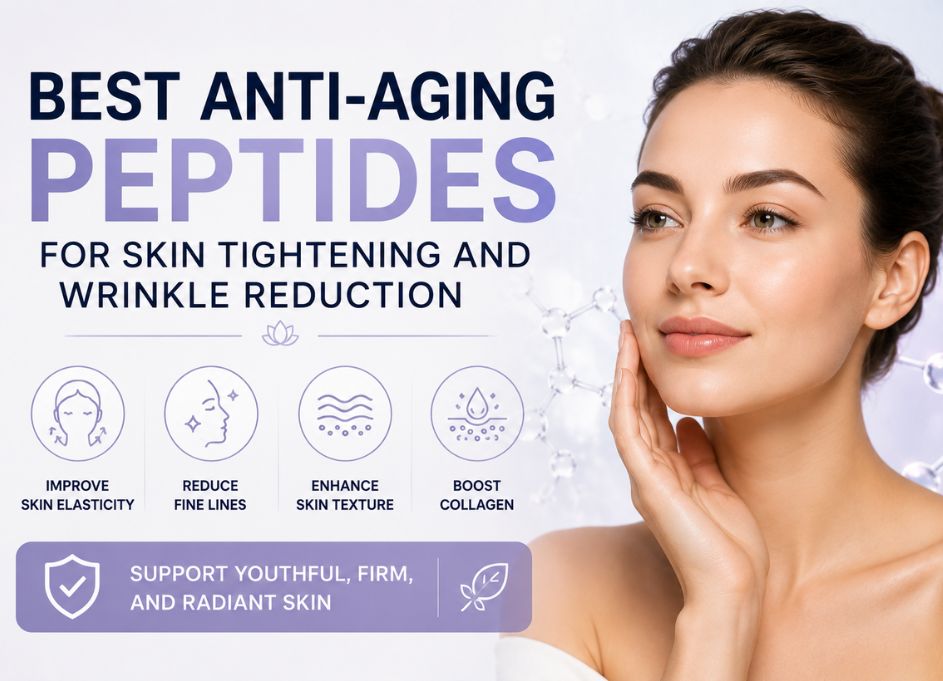
Aging skin is a natural part of life, but many people look for ways to maintain firmer, smoother, and healthier-looking skin as they age. Among the most discussed compounds in anti-aging research are peptides. These small chains of amino acids play important roles in cell signaling, collagen production, tissue repair, and skin regeneration.
In recent years, researchers have explored several peptides for their potential effects on skin elasticity, wrinkle reduction, collagen synthesis, and overall skin appearance. While research is ongoing, some peptides have shown promising results in laboratory and clinical studies.
This article by Peptides Unleashed explores the best anti-aging peptides for skin tightening and wrinkle reduction, the science behind their potential benefits, and what current research suggests about their role in skin health.
Understanding How Peptides Support Skin Health
The skin naturally loses collagen, elastin, and moisture with age. This process contributes to:
- Fine lines and wrinkles
- Reduced skin elasticity
- Sagging skin
- Uneven texture
- Slower tissue repair
Peptides act as signaling molecules that can encourage various biological processes associated with skin maintenance and repair. Some peptides may stimulate collagen production, while others may support wound healing, reduce inflammation, or improve cellular communication.
Because collagen is a major structural protein in the skin, peptides that influence collagen synthesis have attracted significant interest in anti-aging research.
Why Collagen Matters for Younger-Looking Skin
Collagen provides structure and firmness to the skin. Beginning in early adulthood, collagen production gradually declines. Research suggests that this decline accelerates with age and exposure to environmental factors such as ultraviolet radiation, pollution, and smoking.
As collagen levels decrease, skin becomes thinner, less elastic, and more prone to wrinkles. Many peptide-based approaches focus on supporting collagen production and protecting existing skin structures.
BPC-157 and Skin Repair Research
What Is BPC-157?
BPC-157 is a synthetic peptide derived from a naturally occurring protein found in the stomach. Researchers have primarily studied it for tissue repair and regenerative properties.
Potential Skin Benefits
Although most BPC-157 studies focus on tendon, muscle, and wound healing, researchers have observed mechanisms that may be relevant to skin health.
Potential research-supported actions include:
- Promotion of tissue repair
- Support for blood vessel formation
- Enhanced healing responses
- Reduction of inflammatory activity
Improved healing and tissue regeneration may indirectly contribute to healthier skin structure and appearance.
Current Research Status
Most available evidence comes from animal and laboratory studies. Human research specifically examining wrinkle reduction and skin tightening remains limited.
GHK-Cu: The Most Studied Skin-Rejuvenation Peptide
What Is GHK-Cu?
GHK-Cu (Copper Peptide) is one of the most researched peptides in dermatology and cosmetic science. It naturally occurs in human plasma and has been studied extensively for skin regeneration and wound repair.
How GHK-Cu May Support Anti-Aging
Research suggests GHK-Cu may:
- Stimulate collagen production
- Promote elastin synthesis
- Improve skin density
- Support tissue remodeling
- Enhance wound healing
- Reduce visible signs of photoaging
Several studies have reported improvements in skin firmness, elasticity, and overall appearance when copper peptide formulations are used consistently.
Why GHK-Cu Stands Out
Among anti-aging peptides, GHK-Cu has one of the strongest scientific foundations. Researchers continue investigating its ability to influence genes associated with tissue repair and skin regeneration.
Key Research Highlights
| Potential Benefit | Research Findings |
|---|---|
| Collagen Support | Increased collagen synthesis observed |
| Skin Firmness | Improvements reported in skin appearance |
| Tissue Repair | Supports wound-healing pathways |
| Elasticity | May improve skin flexibility and resilience |
Epitalon and Cellular Aging Research
What Is Epitalon?
Epitalon is a synthetic peptide developed from naturally occurring pineal gland peptides. Researchers study it primarily for longevity and cellular aging.
Potential Role in Skin Aging
Epitalon has attracted attention because of its potential effects on:
- Cellular health
- Oxidative stress
- DNA protection
- Telomere-related mechanisms
Since skin aging is closely connected to cellular aging processes, some researchers believe Epitalon may eventually have applications in skin longevity strategies.
Research Limitations
Most evidence remains preliminary. Direct studies examining wrinkle reduction and skin tightening in humans are limited.
Thymosin Beta-4 and Tissue Regeneration
What Is Thymosin Beta-4?
Thymosin Beta-4 is a naturally occurring peptide involved in tissue repair and cell migration.
Potential Skin Benefits
Research suggests it may:
- Support wound healing
- Promote tissue regeneration
- Improve cellular repair processes
- Reduce inflammatory responses
Because healthy tissue regeneration is important for maintaining youthful skin, Thymosin Beta-4 continues to attract interest among regenerative medicine researchers.
Scientific Perspective
While promising, more human research is needed before definitive conclusions can be made regarding cosmetic anti-aging applications.
Matrixyl Peptides for Wrinkle Reduction
What Is Matrixyl?
Matrixyl refers to a family of cosmetic peptides widely used in skincare formulations. These peptides are specifically designed to encourage collagen production and improve skin appearance.
Research-Supported Benefits
Studies have reported that Matrixyl peptides may:
- Reduce wrinkle depth
- Improve skin firmness
- Increase collagen production
- Enhance skin hydration
- Improve overall texture
Matrixyl remains one of the most commonly used peptide ingredients in anti-aging skincare products.
Matrixyl Benefits Overview
| Skin Concern | Potential Benefit |
|---|---|
| Fine Lines | May reduce appearance |
| Wrinkles | Supports smoother skin |
| Elasticity | May improve firmness |
| Texture | Enhances skin quality |
Growth Hormone-Releasing Peptides and Skin Appearance
What Are Growth Hormone-Releasing Peptides?
Certain peptides, including CJC-1295 and Ipamorelin, are researched for their ability to stimulate growth hormone release.
Potential Anti-Aging Effects
Researchers have proposed that increased growth hormone signaling may contribute to:
- Improved skin thickness
- Enhanced collagen production
- Better tissue repair
- Improved body composition
However, direct evidence supporting their use specifically for wrinkle reduction remains limited.
Important Considerations
Most anti-aging claims surrounding growth hormone-related peptides require additional clinical validation.
How Peptides Compare for Skin Tightening
| Peptide | Collagen Support | Skin Tightening Potential | Research Strength |
|---|---|---|---|
| GHK-Cu | High | High | Strong |
| Matrixyl | High | Moderate to High | Strong |
| BPC-157 | Moderate | Moderate | Emerging |
| Thymosin Beta-4 | Moderate | Moderate | Emerging |
| Epitalon | Indirect | Potential | Preliminary |
Factors That Influence Skin Aging Beyond Peptides
Even the most promising peptide research cannot overcome poor lifestyle habits. Several factors significantly affect skin aging:
Sun Protection
Ultraviolet exposure remains one of the leading causes of premature skin aging.
Nutrition
A diet rich in antioxidants, protein, vitamins, and minerals supports healthy skin structure.
Sleep Quality
Sleep plays an important role in tissue repair and recovery.
Hydration
Adequate hydration helps maintain skin function and appearance.
Smoking Avoidance
Smoking accelerates collagen breakdown and contributes to premature wrinkles.
Frequently Asked Questions
Which peptide has the strongest evidence for skin rejuvenation?
GHK-Cu currently has some of the strongest research supporting skin regeneration, collagen production, and improvements in skin appearance.
Can peptides completely remove wrinkles?
No. Current research suggests peptides may help improve skin quality, elasticity, and wrinkle appearance, but they do not completely eliminate wrinkles.
Are peptides better than retinol?
Peptides and retinol work through different mechanisms. Many skincare formulations combine both ingredients to target multiple aspects of skin aging.
How long does peptide research suggest results may take?
In studies involving topical cosmetic peptides, improvements are often reported after several weeks to months of consistent use.
Is collagen production important for skin tightening?
Yes. Collagen provides structural support that contributes to firmer, smoother, and more resilient skin.
Conclusion
Peptides represent one of the most exciting areas of anti-aging and skin-rejuvenation research. Among the available options, GHK-Cu and Matrixyl currently have the strongest evidence supporting their potential role in wrinkle reduction, collagen production, and skin tightening. Other peptides such as BPC-157, Epitalon, and Thymosin Beta-4 continue to generate scientific interest because of their regenerative and tissue-repair properties.
While peptides show promise, healthy lifestyle habits, proper skincare, sun protection, and evidence-based dermatological care remain essential components of maintaining youthful skin. As research continues to evolve, peptides may play an increasingly important role in future anti-aging strategies.
References
- Pickart L, Margolina A. The Human Tripeptide GHK and Tissue Remodeling. Journal of Biomaterials Science.
https://pmc.ncbi.nlm.nih.gov/articles/PMC6073405/ - Robinson LR, et al. Topical Palmitoyl Pentapeptide Provides Improvement in Photoaged Human Facial Skin.
https://pubmed.ncbi.nlm.nih.gov/16414908/ - Gorouhi F, Maibach HI. Role of Topical Peptides in Preventing or Treating Aged Skin.
https://pubmed.ncbi.nlm.nih.gov/21103865/ - Gold MH, et al. Peptide-Based Skin Care Products and Their Role in Anti-Aging Research.
https://pubmed.ncbi.nlm.nih.gov/22151943/
