

Peptides are often marketed as shortcuts to muscle growth, sometimes even as “legal steroids.” That framing is wrong on both counts. Peptides are not anabolic steroids, and they do not force muscle growth by themselves. They are signaling molecules — short amino acid chains that influence growth hormone release, recovery, inflammation control, and tissue repair. Used correctly inside an already-working training and nutrition program, certain peptides can meaningfully improve recovery capacity and the body’s response to training. Used as a substitute for the actual work, they deliver nothing.
This pillar guide covers what peptides actually do for muscle growth, the families of peptides researchers and athletes use for this purpose, how to think about dosing, the realistic timeline for results, the side-effect and regulatory picture, and a decision framework for picking a starting point. Every section links to a deeper companion guide — see In this series at the bottom for the full cluster.
This is research and educational content. Peptides referenced here are research compounds; many are not FDA-approved for muscle growth and several are banned by WADA, USADA, and most sports federations. Nothing on this page is a recommendation to use these compounds in humans outside a licensed clinical or research context.
What Peptides Actually Do for Muscle Growth
Peptides are short chains of amino acids — typically 2 to 50 — that act as biological messengers. Instead of directly building muscle tissue (which is what anabolic steroids try to do via androgen receptors), peptides operate one level upstream. They tell the body to release more growth hormone, repair more aggressively, regulate inflammation differently, or migrate cells to a damaged area faster. The downstream result can be improved recovery, better training capacity, and over months, more muscle — but only if the training stimulus and nutrition are there to convert that signaling into actual hypertrophy.
The mechanisms peptides influence on the muscle-growth side fall into four categories:
- Growth hormone release. Peptides like sermorelin, ipamorelin, and CJC-1295 act on the pituitary to increase natural GH secretion. GH itself supports lipolysis (fat burning) and IGF-1 production, which downstream supports protein synthesis.
- Protein synthesis signaling. IGF-1 (insulin-like growth factor 1) and its long-acting analogs are key drivers of muscle cell proliferation and repair.
- Muscle recovery and repair. BPC-157 and TB-500 are the most-studied recovery peptides. They don’t add muscle directly, but they shorten recovery windows between sessions, which lets you train harder more often.
- Inflammation control. Chronic inflammation is hypertrophy’s enemy. Peptides like KPV and GHK-Cu blunt inflammatory signaling and accelerate tissue remodeling.
Notice what’s NOT on this list: directly stimulating muscle protein synthesis through the androgen receptor. That’s what steroids do, and that’s why steroids produce larger, faster muscle gains. Peptides are slower and milder. The trade-off is a different side-effect profile — peptides typically don’t shut down endogenous testosterone, don’t aromatize, and don’t carry the same liver or cardiovascular risk profile. Different tool, different use case.
The Three Pillars Muscle Growth Actually Requires
Before any peptide does anything, three non-negotiables have to be in place. If any one is missing, peptides won’t compensate for it.
- Progressive mechanical tension. Muscles grow in response to being loaded close to failure across enough volume to drive adaptation. Without progressive overload, there is no hypertrophy signal for any peptide to amplify.
- Adequate protein and calories. Muscle is built from amino acids in a caloric surplus (or maintenance, at minimum). 1.6–2.2 g of protein per kg of body weight per day is the well-established research-backed range. Below that, hypertrophy stalls regardless of training quality.
- Sufficient recovery. Sleep, training spacing, and stress management determine how fully the body executes the repair-and-rebuild cycle. Peptides can support recovery, but they can’t replace 7–9 hours of quality sleep.
Peptides accelerate the response to good inputs. They cannot create a response where none exists. Researchers and athletes who get serious results from peptide protocols are universally the ones who already had their training, nutrition, and recovery dialed in — they’re amplifying an existing system, not bootstrapping from zero.
Peptide Families That Support Muscle Growth
1. Growth Hormone Secretagogues
These peptides increase natural GH release from the pituitary. They don’t add muscle directly — they raise GH, which raises IGF-1, which downstream supports protein synthesis and recovery. The effect is slow and accumulates over weeks to months.
Key compounds: Sermorelin, CJC-1295 (with or without DAC), Ipamorelin, MK-677 (ibutamoren). Ipamorelin is the cleanest profile — it’s selective for GH and doesn’t significantly raise cortisol or prolactin. CJC-1295 extends the pulse duration. The classic stack is CJC-1295 + Ipamorelin, where the CJC widens the GH window and ipamorelin amplifies the pulse height.
For protocol-specific dosing, see Ipamorelin dosage and timing for bodybuilding and the MK-677 dosage and results guide.
2. IGF-Related Peptides
IGF-1 (insulin-like growth factor 1) is one of the most direct drivers of muscle hypertrophy. Some research peptides administer IGF-1 analogs directly; others (like MK-677) raise it indirectly through GH.
Key compounds: IGF-1 LR3 (long-acting IGF-1 analog), MGF (mechano-growth factor) and PEG-MGF (a more stable, longer-acting MGF variant). PEG-MGF is studied specifically for localized muscle repair after mechanical stress — see the dedicated PEG-MGF peptide for muscle growth guide.
Direct IGF-1 administration carries more pronounced metabolic effects than GH-secretagogue routes and is more strictly regulated. Most published bodybuilding-research protocols favor GH secretagogues over direct IGF-1 for this reason.
3. Repair Peptides (BPC-157 and TB-500)
These don’t add muscle — they accelerate recovery. The result over time is more frequent productive training sessions, which is itself a hypertrophy lever.
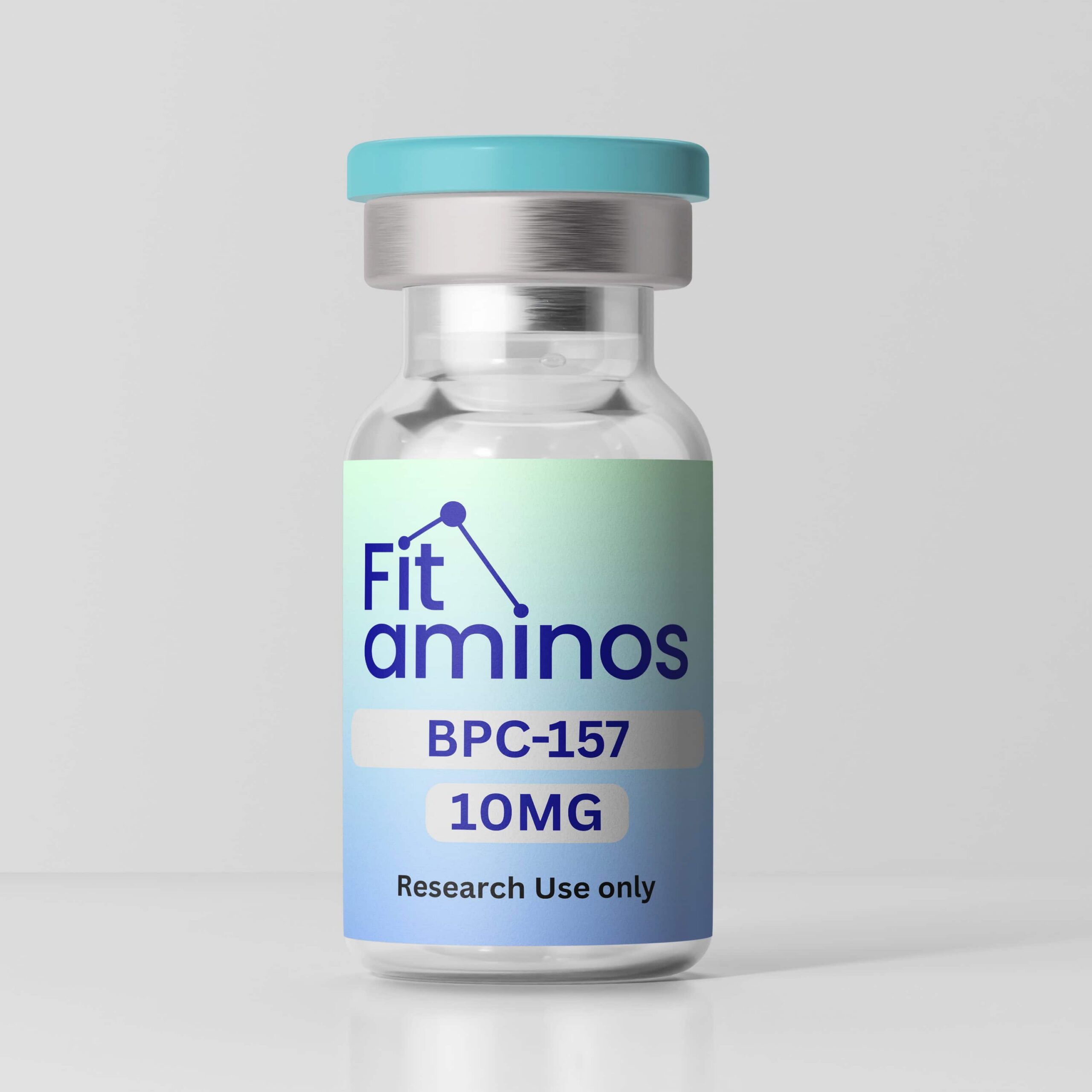
Key compounds: BPC-157 (15-amino-acid peptide from gastric protective protein; soft-tissue repair) and TB-500 (Thymosin Beta-4 fragment; cell migration and muscle repair). They’re often stacked because their mechanisms are complementary — BPC-157 handles angiogenesis and connective tissue, TB-500 handles cell migration and broader tissue regeneration.
Deep dives: BPC-157 for muscle growth, TB-500 benefits, and TB-500 dosage for bodybuilding.
4. Myostatin Inhibitors
Myostatin is a protein that limits muscle growth — the body’s brake. Inhibiting it removes the brake. The category has produced some of the most dramatic muscle-growth research images in the literature, but it’s also the most experimental and least understood in human protocols.
Key compounds: Follistatin 344, YK-11, ACE-031. Detailed mechanism + safety review at Follistatin 344 peptide overview.
Myostatin inhibitors are not recommended for amateur protocols. Long-term myostatin suppression has unknown systemic effects.
5. Anti-Inflammatory Peptides
Chronic inflammation actively limits hypertrophy. Acute training-induced inflammation is part of the adaptation signal, but persistent low-grade inflammation from poor sleep, stress, or under-recovery blunts the response.
Key compounds: KPV (anti-inflammatory tripeptide), GHK-Cu (copper peptide; also collagen synthesis), and TB-500 (overlaps with this category). These are usually used situationally — during heavy training phases, after injury, or when recovery markers are off.
Decision Framework: Which Family for Which Goal
Dosing Fundamentals
Every peptide protocol comes down to four numbers: vial size (mg), bacteriostatic water volume (mL), target dose (mcg), and the resulting syringe draw (units on a U-100 insulin syringe). The math is the same across every compound — see the full walkthrough in the peptide dosage calculator guide, and the peptide calculator for in-protocol math.
Two principles cut across every muscle-growth peptide protocol:
- Start at the low end of the published research range and step up. Side-effect sensitivity is individual. Researchers who titrate slowly catch problems before they cascade.
- Pulse dosing usually beats steady dosing for GH-axis peptides. The pituitary responds to discrete pulses better than constant elevation. That’s why ipamorelin and CJC-1295 protocols are typically dosed 1–2x daily rather than continuously.
Concrete examples — these are the most-asked dosing combinations:
- CJC-1295 + Ipamorelin: full breakdown at CJC-1295 and Ipamorelin dosage for muscle gain and fat loss.
- Ipamorelin solo: timing matters more than dose magnitude — see Ipamorelin dosage calculator and timing for bodybuilding.
- Tesamorelin (GHRH analog used in some research-bodybuilding protocols): how to calculate Tesamorelin dosage for bodybuilding.
- MK-677 (oral, daily): MK-677 dosage and results guide.
- BPC-157 for muscle growth context: BPC-157 for muscle growth.
- TB-500 dosing specifically in a bodybuilding context: TB-500 dosage for bodybuilding.
- Gonadorelin protocols (used to maintain endogenous testosterone production during longer research peptide cycles): Gonadorelin in bodybuilding.
Realistic Timeline and What to Expect
One of the biggest expectation mismatches with peptides is timing. Steroid users see meaningful body composition changes inside 4–6 weeks. Peptides operate on a fundamentally different timeline:
- Weeks 1–2: Sleep quality often improves on GH-secretagogue protocols (the earliest noticeable effect). Recovery feels slightly faster on BPC-157 / TB-500. No visible body composition change.
- Weeks 3–6: Subjective recovery improvement is more reliable. Training capacity may inch up. Body composition shifts (more lean retention during cuts; better recovery during builds) start to show up.
- Weeks 8–12: Photographs start to differ from the baseline if (a) training and nutrition are dialed in and (b) the protocol is being run correctly. This is the window where serious researchers evaluate whether the protocol is working.
- Months 3–6: Sustained body composition trajectory becomes clear. This is also when side-effect patterns (water retention, joint stiffness, blood-sugar effects on MK-677) become reliably trackable.
Anyone selling “explosive 4-week muscle gains” from peptides is selling something other than what the published research actually shows. The realistic frame is: peptides accelerate a slow process; they don’t shortcut it.
Safety, Side Effects, and Legal Status
Every peptide family has its own side-effect profile, but a few themes cut across:
- Injection-site reactions (redness, swelling, mild irritation) are the most commonly reported across most peptides. Site rotation handles most of it.
- Water retention is common on GH-secretagogue protocols. Usually mild; usually resolves in the first 2–3 weeks.
- Numbness or tingling (carpal-tunnel-style) is reported on higher-dose GH protocols. Often resolves with dose reduction.
- Elevated blood glucose is a documented MK-677 effect. Worth tracking with periodic glucose monitoring if you carry diabetes risk factors.
- HPG-axis effects. Most research peptides for muscle growth don’t suppress endogenous testosterone (a key advantage over steroids), but the longer the protocol runs, the more worth monitoring.
For deeper safety dives, see Safe peptides for muscle building in 2026 — a bodybuilder-focused safety reference.
Legal and regulatory status varies dramatically by compound. Most are legal to possess and sell as research compounds in the United States but are NOT approved by the FDA for muscle growth, performance enhancement, or any human-administration use. Several (including IGF-1 LR3, MGF/PEG-MGF, GHRH analogs, ibutamoren) are explicitly banned by WADA, USADA, and most professional sports federations. Possession of injectable peptides for personal use sits in a gray legal area in many U.S. states and is more clearly illegal in some countries (UK, Australia). Always check current regulations for your jurisdiction before any acquisition.
Who Should NOT Use These Peptides
The honest answer is: most people. Peptides are not a beginner tool. Specifically, anyone with the following profiles should not be running muscle-growth peptide protocols:
- Under 25 (HPG axis still developing).
- Without 2+ years of consistent training history and a clear handle on what their body responds to without supplementation.
- With unmanaged blood pressure, blood glucose, cardiovascular disease, or active cancer risk.
- Without baseline bloodwork and a plan to repeat it mid-cycle.
- Without sourcing access to third-party-tested research compounds (purity matters enormously; underground compounds can be misdosed or contaminated).
- Anyone subject to drug testing for sport (WADA / USADA / NCAA — many peptides above are explicitly banned).
- Pregnant or planning pregnancy.
Common Mistakes
- Using peptides to compensate for bad training, nutrition, or sleep. The most expensive form of self-deception in the space. Peptides amplify a working system; they don’t bootstrap one.
- Running too many compounds at once. Starting with 3+ peptides simultaneously makes it impossible to attribute effects or side effects. Start with one or two. Document for 6–8 weeks. Then layer.
- Dosing on weight rather than research-protocol ranges. Peptides don’t scale linearly with body mass the way some drugs do. Stay within the published research range until you have clear personal data.
- Skipping bloodwork. Without baseline + mid-cycle bloodwork, you have no idea whether the protocol is doing what you think it’s doing or quietly creating problems.
- Treating peptides as a permanent supplement. Long-term continuous use of GH-axis peptides is poorly characterized in humans. Most protocols run 8–16 weeks then cycle off.
- Sourcing from non-COA-verified vendors. If you can’t get a third-party Certificate of Analysis for the specific lot you’re handling, you’re guessing what’s in the vial.
Frequently Asked Questions
Do peptides actually build muscle?
Not directly. They support the conditions that allow muscle growth — improved recovery, hormonal signaling, training capacity, and inflammation control. Without progressive training and adequate nutrition, peptides do nothing.
Are peptides safer than anabolic steroids?
Generally yes — most muscle-growth peptides don’t suppress endogenous testosterone, don’t aromatize, and don’t carry the same liver or cardiovascular risk profile. But “safer” is not the same as “safe.” Misuse still carries real risk.
How long before peptide results appear?
Usually 8–12 weeks before visible body composition changes are reliable, assuming training and nutrition are in place. Sleep and subjective recovery improvements often appear in weeks 1–2.
Can peptides replace testosterone replacement therapy (TRT)?
No. They act on different pathways. Peptides influence GH and IGF-1; TRT raises testosterone directly. See can peptide therapy increase testosterone? for the full breakdown.
Are peptides legal?
Most are legal to acquire as research compounds in the United States but are not FDA-approved for muscle growth. Several are banned by WADA / USADA. Regulations vary by country.
What’s the best starter peptide for muscle growth?
For recovery-focused protocols, BPC-157. For long-term mass focus, the CJC-1295 + Ipamorelin combination. Both have the cleanest published-research safety profiles in their categories.
How do I know my peptides are real?
Third-party Certificates of Analysis (COAs) per lot. Reputable vendors publish them. If you can’t find a COA for the specific lot you have, don’t inject it.
Can women use these peptides?
Most are studied predominantly in male research populations. Dose ranges may need adjustment downward, and bloodwork monitoring should track estrogen-related markers in addition to standard panels. See the peptides for women overview for women-specific considerations.
In This Series
The Peptides for Muscle Growth cluster covers every individual peptide and protocol referenced above in depth:
- BPC-157 for Muscle Growth — How It Works, Benefits, Safety
- TB-500 Benefits: Healing, Recovery, Muscle Growth
- TB-500 Dosage for Bodybuilding
- CJC-1295 + Ipamorelin Dosage for Muscle Gain and Fat Loss
- Ipamorelin Dosage Calculator and Timing for Bodybuilding
- How to Calculate Tesamorelin Dosage for Bodybuilding
- MK-677 Dosage and Results Guide
- PEG-MGF Peptide for Muscle Growth — Dosage, Benefits, Risks
- Follistatin 344 Peptide Overview — Mechanism, Benefits, Safety
- Gonadorelin in Bodybuilding — Dosage, Side Effects, Risks
- Safe Peptides for Muscle Building in 2026 — Practical Guide
- Best Peptides for Men — Weight Loss, Muscle Growth, and More
Final Thoughts
Peptides are a real category of tools for researchers and serious athletes thinking about muscle growth — but they sit at the end of a long list of things that have to be in place first. Training stimulus, protein intake, sleep, recovery, baseline bloodwork, and an honest read on whether peptide-level intervention is actually warranted all come before reaching for a vial. When they fit, they fit best in protocols that mix one GH secretagogue with one repair peptide for an 8–16 week window, dosed conservatively, tracked with bloodwork, and cycled with deliberate off-periods.
For protocol math, use the peptide reconstitution calculator. For the broader research-only context on the compounds above, the linked cluster guides cover each compound in depth. For the basics of getting from a freeze-dried vial to a measured injection, see how to reconstitute peptides.
Disclaimer: This guide is for research and educational purposes only. Peptides referenced are research compounds. Many are banned by WADA/USADA and not FDA-approved for muscle growth or human performance use. Nothing on this page is a recommendation to use these compounds in humans outside a licensed clinical or research context.
