
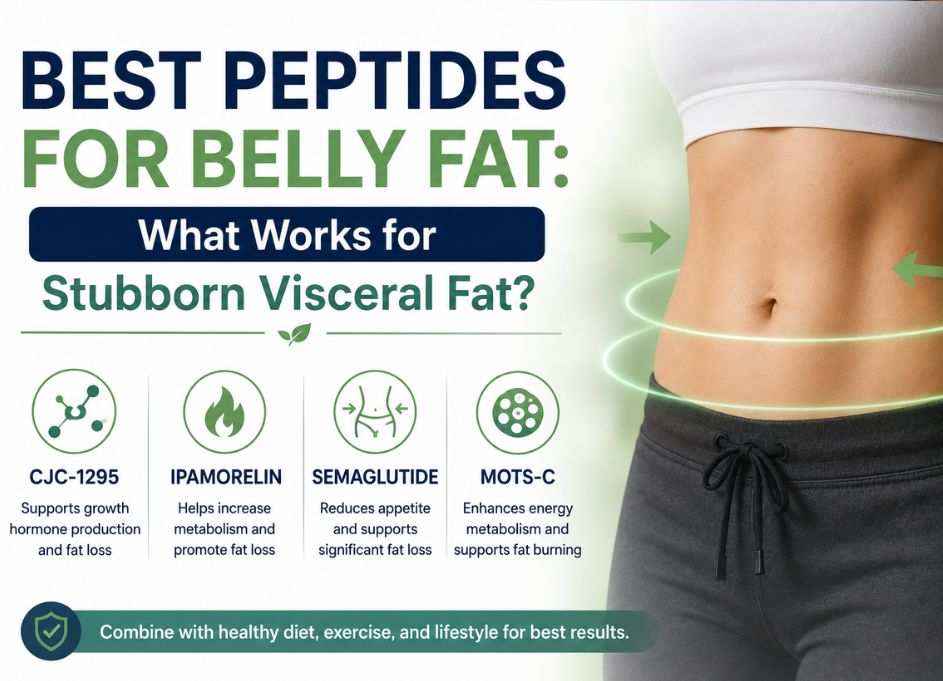
Stubborn belly fat is one of the most difficult types of fat to lose. Many people successfully reduce their overall body weight but continue to struggle with excess fat around the abdomen. This challenge is often linked to visceral fat, a deeper type of fat stored around internal organs such as the liver, pancreas, and intestines.
Unlike subcutaneous fat that sits beneath the skin, visceral fat is associated with serious health concerns including insulin resistance, type 2 diabetes, cardiovascular disease, and chronic inflammation. As a result, researchers have increasingly focused on treatments that may help reduce abdominal fat and improve metabolic health.
One area attracting significant attention is peptide therapy. Certain peptides influence appetite regulation, growth hormone production, and energy metabolism, making them promising candidates for weight-management research. While peptides are not a replacement for proper nutrition and exercise, some have demonstrated encouraging results in clinical studies.
This article by Peptides Unleashed explores the best peptides for stubborn belly fat, how they work, and what current research says about their effectiveness.
Understanding Belly Fat and Visceral Fat
Not all body fat is the same. The body stores fat in different locations, and each type affects health differently.
Subcutaneous vs. Visceral Fat
| Fat Type | Location | Health Impact |
|---|---|---|
| Subcutaneous Fat | Beneath the skin | Generally less harmful |
| Visceral Fat | Around internal organs | Higher risk of metabolic disease |
Visceral fat produces inflammatory compounds and hormones that can interfere with normal metabolic processes. High levels of visceral fat have been associated with:
- Type 2 diabetes
- Heart disease
- High blood pressure
- Fatty liver disease
- Metabolic syndrome
- Increased inflammation
Because of these risks, reducing visceral fat can improve both appearance and long-term health.
How Peptides May Help Reduce Belly Fat
Peptides are short chains of amino acids that act as signaling molecules throughout the body. Some peptides influence hormones involved in appetite control, blood sugar regulation, fat metabolism, and growth hormone release.
Potential Benefits of Fat-Loss Peptides
Certain peptides may help:
- Reduce appetite and food cravings
- Improve insulin sensitivity
- Increase feelings of fullness
- Support fat metabolism
- Preserve lean muscle mass during weight loss
However, peptides work best when combined with a calorie-controlled diet, regular exercise, quality sleep, and healthy lifestyle habits.
Semaglutide
What Is Semaglutide?
Semaglutide is a GLP-1 receptor agonist that was initially developed to help manage type 2 diabetes. It has become one of the most widely studied compounds for weight management.
How Semaglutide Works
Semaglutide mimics a naturally occurring hormone called glucagon-like peptide-1 (GLP-1). This hormone helps regulate appetite and food intake.
As a result, users often experience:
- Reduced hunger
- Increased satiety
- Lower calorie consumption
- Improved blood sugar control
Research Findings
A landmark clinical trial published in the New England Journal of Medicine found that participants receiving semaglutide achieved an average weight loss of nearly 15% over 68 weeks.
Researchers also reported improvements in:
- Waist circumference
- Metabolic markers
- Blood glucose regulation
Semaglutide Overview
| Category | Evidence |
|---|---|
| Weight Loss | Very Strong |
| Appetite Control | Very Strong |
| Belly Fat Reduction | Strong |
| Metabolic Health | Strong |
Tirzepatide
What Is Tirzepatide?
Tirzepatide is a newer peptide-based therapy that activates both GLP-1 and GIP receptors. This dual-action approach has generated significant interest among obesity researchers.
How Tirzepatide Works
By targeting two metabolic pathways simultaneously, tirzepatide may provide stronger appetite suppression and improved insulin sensitivity compared to traditional GLP-1 therapies.
Research Findings
Clinical studies have reported average weight reductions exceeding 20% in some participants.
Researchers observed:
- Significant body-fat reduction
- Improved blood sugar control
- Reduced waist circumference
- Better metabolic outcomes
Tirzepatide Overview
| Category | Evidence |
|---|---|
| Weight Loss | Very Strong |
| Appetite Suppression | Very Strong |
| Visceral Fat Reduction | Strong |
| Clinical Research | Extensive |
Tesamorelin
What Is Tesamorelin?
Tesamorelin is a growth hormone-releasing hormone (GHRH) analog designed to stimulate the body’s natural production of growth hormone.
Why Tesamorelin Is Unique
Unlike many peptides studied primarily for overall weight loss, tesamorelin has been specifically investigated for its effects on visceral fat.
Research Findings
Studies have demonstrated significant reductions in visceral adipose tissue among adults receiving tesamorelin therapy.
Researchers have also reported:
- Improved body composition
- Preservation of lean muscle mass
- Better metabolic health markers
Tesamorelin Overview
| Category | Evidence |
|---|---|
| Visceral Fat Reduction | Strong |
| Body Composition | Strong |
| Lean Muscle Preservation | Strong |
| Research Support | Strong |
AOD-9604
What Is AOD-9604?
AOD-9604 is a modified fragment of human growth hormone that was developed specifically to target fat metabolism pathways.
How It Works
Researchers believe AOD-9604 may:
- Stimulate fat breakdown
- Reduce fat storage
- Support weight-management efforts
Research Findings
Although research results have been mixed, several studies suggest that AOD-9604 may contribute to modest reductions in body fat when combined with healthy lifestyle changes.
AOD-9604 Overview
| Category | Evidence |
|---|---|
| Fat Metabolism Support | Moderate |
| Weight Management | Moderate |
| Appetite Suppression | Limited |
| Research Strength | Moderate |
CJC-1295 and Ipamorelin
Why Are These Peptides Often Combined?
CJC-1295 and Ipamorelin are commonly paired because both support natural growth hormone production through different mechanisms.
Potential Benefits
Growth hormone plays a role in:
- Fat metabolism
- Recovery
- Energy utilization
- Muscle preservation
Research Findings
Current evidence suggests these peptides may improve overall body composition and reduce body-fat percentage. However, research specifically targeting stubborn belly fat remains less extensive than studies involving GLP-1 therapies.
Comparing the Best Peptides for Belly Fat
| Peptide | Primary Function | Belly Fat Evidence | Research Strength |
|---|---|---|---|
| Semaglutide | Appetite Control | Strong | Very Strong |
| Tirzepatide | Appetite & Metabolism | Strong | Very Strong |
| Tesamorelin | Visceral Fat Reduction | Strong | Strong |
| AOD-9604 | Fat Metabolism | Moderate | Moderate |
| CJC-1295 | Growth Hormone Support | Limited | Moderate |
| Ipamorelin | Growth Hormone Support | Limited | Moderate |
Lifestyle Factors Still Matter
Even the most promising peptides are not magic solutions.
Research consistently shows that successful fat loss depends on several factors:
- Maintaining a calorie deficit
- Following a balanced diet
- Performing resistance training
- Engaging in regular cardiovascular exercise
- Prioritizing sleep quality
- Managing stress effectively
Peptides may support these efforts, but they cannot replace them.
Safety Considerations
The safety profile of peptide therapies varies depending on the specific compound.
Potential side effects may include:
- Nausea
- Digestive discomfort
- Injection-site irritation
- Temporary fatigue
- Hormonal fluctuations
Individuals considering peptide therapy should consult a qualified healthcare professional before starting any treatment.
Frequently Asked Questions
Which peptide is best for stubborn belly fat?
Current evidence suggests that semaglutide and tirzepatide provide the strongest overall weight-loss results, while tesamorelin shows some of the most direct evidence for reducing visceral fat.
Can peptides specifically target belly fat?
No peptide can target fat loss in only one area of the body. However, some peptides appear particularly effective at reducing visceral fat.
How long does it take to see results?
Most studies report noticeable changes within several weeks, with more significant improvements occurring after several months of consistent treatment.
Are growth hormone peptides effective for fat loss?
Growth hormone-releasing peptides such as CJC-1295 and Ipamorelin may improve body composition, though evidence is generally less extensive than that for GLP-1-based therapies.
Is visceral fat more dangerous than subcutaneous fat?
Yes. Visceral fat is strongly associated with diabetes, cardiovascular disease, metabolic syndrome, and chronic inflammation.
Conclusion
The growing field of peptide research has provided new insights into managing stubborn belly fat and improving metabolic health. Among currently available options, semaglutide and tirzepatide possess the strongest evidence for overall weight loss and reductions in abdominal fat. Tesamorelin also stands out due to its demonstrated effects on visceral fat reduction.
While these peptides show promise, long-term success still depends on sustainable lifestyle habits. A combination of proper nutrition, regular exercise, quality sleep, and professional medical guidance remains the most effective strategy for reducing belly fat and supporting overall health.
References
Wilding, J. P. H., Batterham, R. L., Calanna, S., Davies, M., Van Gaal, L. F., Lingvay, I., et al. (2021). Once-weekly semaglutide in adults with overweight or obesity. New England Journal of Medicine, 384(11), 989–1002. https://doi.org/10.1056/NEJMoa2032183
Jastreboff, A. M., Aronne, L. J., Ahmad, N. N., Wharton, S., Connery, L., Alves, B., et al. (2022). Tirzepatide once weekly for the treatment of obesity. New England Journal of Medicine, 387(3), 205–216. https://doi.org/10.1056/NEJMoa2206038
Stanley, T. L., & Grinspoon, S. K. (2015). Effects of growth hormone-releasing hormone on visceral adiposity. Current Opinion in Endocrinology, Diabetes and Obesity, 22(4), 287–292. https://pmc.ncbi.nlm.nih.gov/articles/PMC4589006/
National Institute of Diabetes and Digestive and Kidney Diseases. (2025). Definition and health risks of visceral fat. https://www.niddk.nih.gov
National Institutes of Health. (2025). Obesity and weight management research. https://www.nih.gov
