
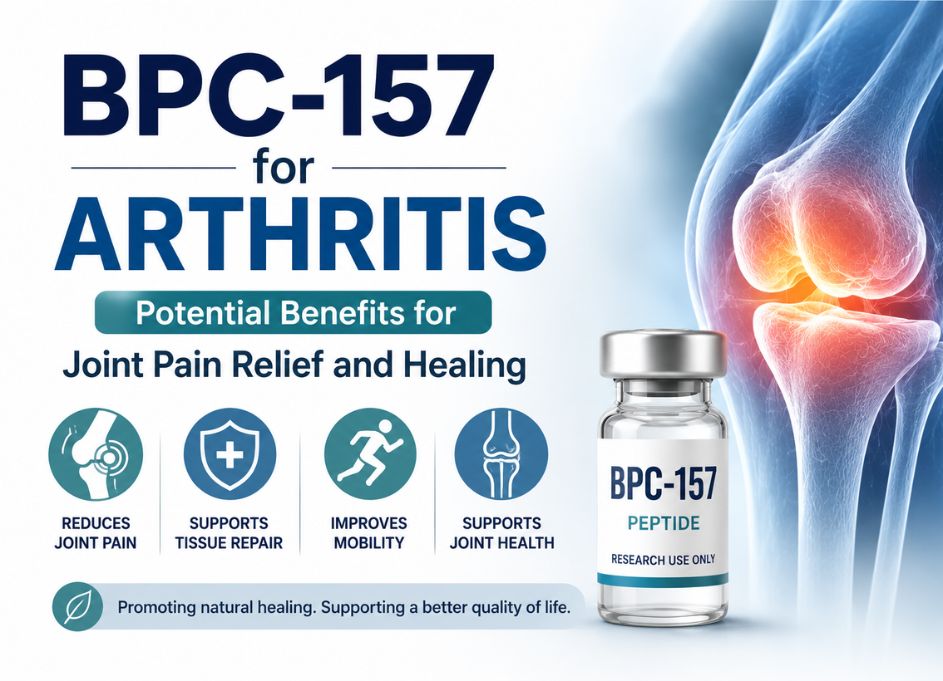
BPC-157 for Arthritis is one of the most common causes of chronic pain and disability worldwide. Characterized by joint inflammation, stiffness, swelling, and reduced mobility, arthritis can significantly affect a person’s quality of life. While conventional treatments such as anti-inflammatory medications, physical therapy, and joint replacement surgery help many patients manage symptoms, researchers continue to explore new approaches that may support joint healing and recovery.
One peptide attracting growing attention is BPC-157. Originally derived from a protective protein found in the human stomach, BPC-157 has been studied for its potential role in tissue repair, inflammation regulation, and recovery from injuries. Although research remains limited and most studies have been conducted in animals, early findings suggest that BPC-157 may have potential benefits for individuals dealing with arthritis-related joint issues.
What Is BPC-157?
BPC-157, short for Body Protection Compound-157, is a synthetic peptide consisting of 15 amino acids. It is derived from a naturally occurring protein found in gastric juice and has been investigated for its possible effects on healing various tissues, including muscles, tendons, ligaments, bones, and joints.
Researchers have been particularly interested in BPC-157 because of its apparent ability to promote tissue regeneration and support the body’s natural healing processes. These properties have made it a popular subject in experimental studies involving musculoskeletal injuries and inflammatory conditions.
Understanding Arthritis and Joint Damage
Arthritis is not a single disease but rather a group of conditions that affect the joints. The two most common forms are:
Osteoarthritis
Osteoarthritis occurs when the protective cartilage that cushions joints gradually wears down over time. This leads to pain, stiffness, swelling, and reduced joint function.
Rheumatoid Arthritis
Rheumatoid arthritis is an autoimmune disorder in which the immune system mistakenly attacks the joints, causing chronic inflammation and potential joint destruction.
Both forms of arthritis involve inflammation, tissue damage, and impaired mobility, making therapies that support healing and reduce inflammation particularly interesting to researchers.
How BPC-157 May Support Arthritis Management
Although human clinical evidence remains limited, several mechanisms identified in preclinical studies suggest that BPC-157 could potentially help support joint health.
Anti-Inflammatory Effects
Inflammation plays a major role in arthritis symptoms. Chronic inflammation contributes to pain, swelling, and progressive joint damage.
Animal studies have suggested that BPC-157 may help modulate inflammatory responses by influencing signaling pathways involved in tissue repair and immune regulation. Reduced inflammation could potentially translate into improved comfort and mobility.
Support for Cartilage Healing
Cartilage damage is a key feature of osteoarthritis. Since cartilage has limited regenerative capacity, injuries and degeneration often progress over time.
Research indicates that BPC-157 may stimulate cellular activities involved in tissue repair. Some studies suggest it may support the healing of damaged connective tissues, which has led scientists to investigate its possible role in cartilage preservation and recovery.
Enhanced Blood Vessel Formation
Healthy blood flow is essential for delivering oxygen and nutrients to damaged tissues.
BPC-157 has been shown in animal studies to promote angiogenesis, the formation of new blood vessels. Improved circulation may help support tissue recovery and reduce healing times following joint injuries.
Tendon and Ligament Recovery
Joint health depends not only on cartilage but also on the surrounding tendons and ligaments that provide stability.
Several studies have reported accelerated healing of tendon and ligament injuries in animal models treated with BPC-157. Since arthritis often affects the entire joint structure, supporting these tissues could contribute to better overall joint function.
Potential Pain Reduction
Many individuals with arthritis seek treatments that can reduce pain without relying solely on long-term medication use.
While BPC-157 is not classified as a painkiller, its potential anti-inflammatory and healing effects may indirectly contribute to reduced discomfort. However, more research is needed to determine whether these findings apply to humans.

What Does the Research Say?
Most available evidence for BPC-157 comes from laboratory and animal studies.
Researchers have observed promising results in models involving:
- Tendon injuries
- Ligament damage
- Muscle recovery
- Bone healing
- Inflammatory conditions
- Gastrointestinal tissue repair
Some studies suggest that BPC-157 may accelerate healing and improve functional recovery. However, there is currently a lack of large-scale human clinical trials specifically evaluating BPC-157 for arthritis treatment.
As a result, scientists emphasize that more research is necessary before definitive conclusions can be made regarding its effectiveness and safety in arthritis patients.
Potential Benefits for Arthritis Sufferers
Based on current research, potential benefits being investigated include:
- Reduced joint inflammation
- Improved tissue healing
- Enhanced recovery following joint injuries
- Better mobility and flexibility
- Support for connective tissue health
- Potential reduction in arthritis-related discomfort
It is important to understand that these benefits remain largely theoretical in human arthritis treatment until additional clinical evidence becomes available.
Safety and Side Effects
Because BPC-157 remains an investigational peptide, comprehensive long-term safety data in humans is limited.
Reported side effects in available studies appear relatively uncommon and generally mild, but research remains insufficient to establish a complete safety profile.
Potential concerns include:
- Injection site irritation
- Headaches
- Nausea
- Changes in blood pressure
- Unknown long-term effects
Anyone considering experimental peptides should consult a qualified healthcare professional before use.
Is BPC-157 Approved for Arthritis Treatment?
No. BPC-157 is not approved by the U.S. Food and Drug Administration (FDA) for the treatment of arthritis or any other medical condition.
It is primarily sold for research purposes and remains under scientific investigation. Healthcare providers generally cannot prescribe it as an approved arthritis therapy.
This distinction is important because marketing claims often exceed what current scientific evidence supports.
The Future of BPC-157 Research
Interest in regenerative medicine continues to grow, and peptides like BPC-157 are becoming increasingly important areas of study.
Future human clinical trials may help determine:
- Whether BPC-157 can improve arthritis symptoms
- Optimal dosing strategies
- Long-term safety
- Effectiveness compared to conventional treatments
- Potential use alongside existing arthritis therapies
Until these questions are answered, BPC-157 should be viewed as an experimental compound rather than a proven arthritis treatment.
Conclusion
BPC-157 is a promising research peptide that has demonstrated potential healing and anti-inflammatory properties in laboratory and animal studies. These findings have led researchers to investigate whether it may eventually play a role in supporting joint health, reducing inflammation, and improving recovery in individuals with arthritis.
While early evidence is encouraging, human clinical data remains limited. Currently, BPC-157 is not an approved treatment for arthritis, and more research is needed to establish its effectiveness and safety.
For individuals seeking arthritis relief, conventional medical treatments remain the standard of care. However, ongoing research into peptides such as BPC-157 may provide valuable insights into future approaches for joint healing and regenerative medicine.
References
- Sikiric, P., et al. (2020). Stable gastric pentadecapeptide BPC-157 and wound healing. Current Pharmaceutical Design.
https://pubmed.ncbi.nlm.nih.gov/32255729/ - Seiwerth, S., et al. (2022). BPC-157 and tissue healing mechanisms. Biomedicines.
https://www.ncbi.nlm.nih.gov/pmc/articles/PMC8504390/ - U.S. Food and Drug Administration (FDA). Peptides and unapproved drugs information.
https://www.fda.gov
