
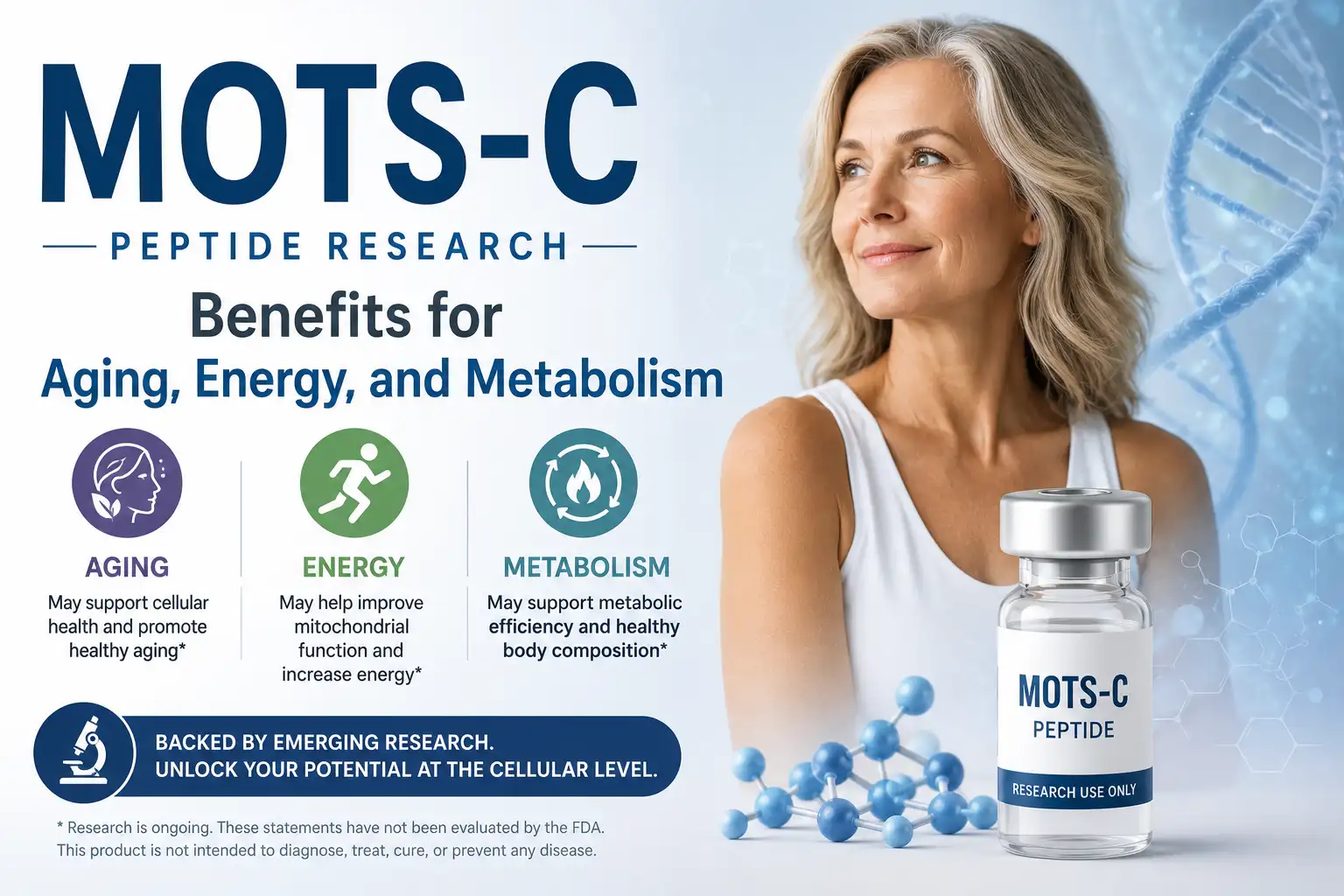
The peptide industry has expanded rapidly over the last few years, especially in the fields of longevity, metabolic optimization, and performance enhancement. Among the newest mitochondrial-derived peptides attracting scientific attention is MOTS-C. Researchers are studying this peptide for its potential effects on insulin sensitivity, energy production, fat metabolism, physical performance, and healthy aging.
Unlike many trendy compounds pushed online without evidence, MOTS-C actually has legitimate scientific interest behind it. However, there is also a lot of exaggeration surrounding its benefits. Many people market it as a “miracle anti-aging peptide,” but the reality is more complicated. Most research is still in early stages, and human clinical data remains limited.
Still, the science behind MOTS-C is genuinely interesting. Therefore, understanding how this peptide works and what current studies actually show is important before making unrealistic assumptions.

What Is MOTS-C?
MOTS-C is a mitochondrial-derived peptide composed of 16 amino acids. It is encoded within mitochondrial DNA rather than nuclear DNA, which makes it different from most peptides studied in medicine.
Mitochondria are responsible for producing cellular energy in the form of ATP. As people age, mitochondrial efficiency declines, which contributes to fatigue, slower metabolism, reduced muscle function, insulin resistance, and other age-related problems.
Researchers believe MOTS-C acts as a signaling molecule that helps regulate metabolic adaptation and cellular stress responses. In simple terms, it may help the body manage energy more efficiently during stress, exercise, and aging.
How MOTS-C Works
One of the primary mechanisms associated with MOTS-C involves activation of AMPK, a major cellular energy regulator.
AMPK \rightarrow \text{Improved Energy Regulation} + \text{Enhanced Fat Metabolism}
AMPK activation is associated with:
- Increased glucose uptake
- Better insulin sensitivity
- Improved fat oxidation
- Enhanced mitochondrial efficiency
- Cellular stress adaptation
When AMPK becomes activated, cells become more efficient at using nutrients and producing energy. This is one reason why researchers believe MOTS-C may have metabolic and longevity-related potential.
Science-Backed Benefits of MOTS-C
May Improve Insulin Sensitivity
One of the strongest areas of MOTS-C research involves glucose metabolism and insulin sensitivity. Animal studies have shown that MOTS-C may help skeletal muscles absorb glucose more effectively.
Insulin resistance is closely linked to obesity, metabolic syndrome, and type 2 diabetes. Consequently, improving insulin signaling may help support overall metabolic health.
Some studies suggest MOTS-C can reduce metabolic dysfunction caused by high-fat diets in laboratory models. Although this does not automatically translate into identical human results, it remains one of the peptide’s most promising research areas.
Potential Support for Fat Metabolism
Researchers are also investigating MOTS-C for its potential role in fat oxidation. Early evidence suggests the peptide may help the body use fat more efficiently as an energy source.
This does not mean MOTS-C magically burns fat without diet or exercise. That kind of marketing is nonsense. However, improved metabolic flexibility may support better energy utilization when combined with proper lifestyle habits.
In metabolic research, compounds that improve nutrient partitioning and mitochondrial efficiency are considered highly valuable because they may influence long-term metabolic health.
May Enhance Exercise Performance
Some animal studies have shown improvements in endurance and physical performance following MOTS-C administration. Scientists believe this may occur because of improved mitochondrial energy production and cellular adaptation to exercise stress.
Additionally, researchers observed that older mice receiving MOTS-C displayed improved physical capacity compared to untreated groups. These findings helped fuel interest in MOTS-C within longevity and athletic performance communities.
However, there is still a major gap between controlled laboratory findings and proven real-world athletic performance benefits in humans.
Potential Longevity and Anti-Aging Effects
Mitochondrial dysfunction is considered one of the hallmarks of aging. Since MOTS-C directly interacts with mitochondrial signaling pathways, researchers are exploring whether it may help slow certain age-related declines.
Studies suggest MOTS-C Peptide may support:
- Cellular stress resistance
- Metabolic balance
- Muscle function preservation
- Mitochondrial communication
- Reduced inflammatory signaling
These mechanisms are highly relevant in longevity science because aging is deeply connected to declining cellular energy production.
Still, it is important to stay realistic. No peptide currently “reverses aging.” That claim is marketing hype, not established science.
May Support Muscle Health During Aging
Loss of muscle mass and strength becomes increasingly common with age. Researchers believe mitochondrial dysfunction partly contributes to this decline.
Some studies suggest MOTS-C may help preserve muscle performance and physical function under stress conditions. Therefore, scientists are examining whether the peptide could eventually play a role in healthy aging therapies.
This does not mean MOTS-C replaces exercise or resistance training. Muscle preservation still depends heavily on physical activity, protein intake, sleep quality, and overall metabolic health.
Why Researchers Are Interested in Mitochondrial Peptides
Traditional anti-aging research often focused on hormones, antioxidants, or calorie restriction. However, modern longevity science increasingly targets mitochondria because they influence nearly every major biological process related to aging.
Mitochondrial peptides such as MOTS-C represent a newer category of signaling molecules that may help regulate cellular adaptation and energy efficiency.
As a result, pharmaceutical and biotech researchers are paying closer attention to these compounds.

Current Limitations of MOTS-C Research
Despite the excitement, there are serious limitations people need to understand.
Most Studies Are Preclinical
The majority of MOTS-C research comes from animal or laboratory studies rather than large human clinical trials.
That matters because many compounds that look promising in mice fail in humans.
Long-Term Safety Data Is Limited
Researchers still do not fully understand:
- Optimal dosing
- Long-term side effects
- Drug interactions
- Effects of prolonged use
- Safety in different populations
Anyone pretending MOTS-C is fully understood scientifically is overstating the evidence.
Quality Control Problems Exist
The peptide market is filled with questionable suppliers. Some products sold online may contain inaccurate dosages, contaminants, or entirely different compounds.
This is a major issue in the research peptide industry because regulation is inconsistent.
Potential Side Effects of MOTS-C
Human safety data remains limited, but reported side effects may include:
- Injection site irritation
- Headaches
- Fatigue
- Mild nausea
- Appetite changes
- Dizziness
Because research is still ongoing, self-experimentation carries risks that many people underestimate.
Is MOTS-C Legal?
The legal status of MOTS-C depends on the country and intended use. In many places, it is sold strictly as a research compound rather than an approved pharmaceutical drug.
Additionally, athletes should understand that some experimental peptides may violate anti-doping regulations.
Final Thoughts
MOTS-C is one of the most scientifically interesting mitochondrial peptides currently being studied for metabolism, energy regulation, and healthy aging. Early research suggests it may influence insulin sensitivity, fat metabolism, exercise performance, and mitochondrial health.
However, there is still a huge difference between promising research and clinically proven anti-aging therapy. Right now, MOTS-C remains experimental.
That does not make the research meaningless. In fact, mitochondrial peptides may eventually become an important area of metabolic medicine and longevity science. But people should avoid blindly believing exaggerated marketing claims that treat MOTS-C like a guaranteed shortcut to fat loss, muscle growth, or lifespan extension.
The science is promising. The hype is far ahead of the evidence.
References
- Lee C, Zeng J, Drew BG, et al. “The mitochondrial-derived peptide MOTS-c promotes metabolic homeostasis and reduces obesity and insulin resistance.” Cell Metabolism (2015).
Cell Metabolism Study - Reynolds JC, Lai RW, Woodhead JST, et al. “MOTS-c is an exercise-induced mitochondrial-encoded regulator of age-dependent physical decline and muscle homeostasis.” Nature Communications (2021).
Nature Communications Research - National Center for Biotechnology Information (NCBI) — MOTS-C peptide research database.
NCBI MOTS-C Research - Harvard T.H. Chan School of Public Health — Mitochondrial biology and metabolism research.
Harvard Public Health Research - Human Aging Genomic Resources — Aging and mitochondrial signaling pathways.
Human Aging Genomic Resources
