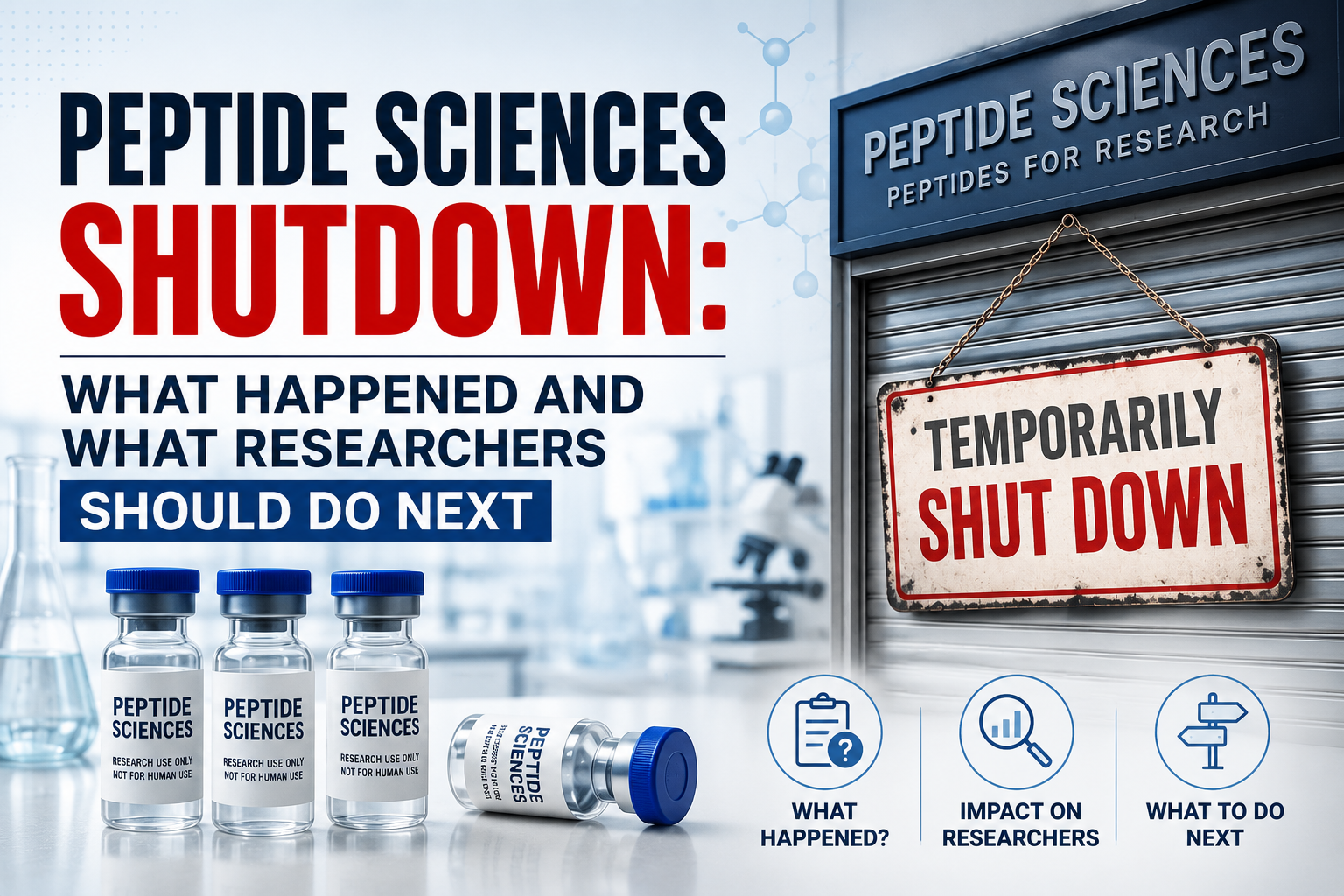
The research peptide industry was caught off guard when Peptide Sciences, one of the most recognized peptide suppliers in the United States, abruptly shut down operations. For years, the company served as a trusted source for research compounds such as BPC-157, TB-500, CJC-1295, Ipamorelin, Semaglutide, and numerous other peptides used in laboratory research.
The sudden closure has created uncertainty among researchers, laboratories, and peptide enthusiasts who relied on the company for quality-tested products. Questions are now being asked across the industry: Why did Peptide Sciences shut down? Was regulatory pressure involved? What does this mean for the future of peptide research?
This article explores the factors behind the shutdown, its impact on the peptide market, and the steps researchers should take moving forward.
The Rise of Peptide Sciences
Founded more than a decade ago, Peptide Sciences built a strong reputation by focusing on research-grade peptides and providing third-party testing documentation for many of its products.
Unlike many smaller peptide vendors, the company emphasized transparency and quality control. Researchers often viewed Peptide Sciences as one of the more reliable suppliers in a market that has historically struggled with inconsistent product quality.
Over time, the company’s catalog expanded to include a wide range of compounds, including:
Growth Hormone Secretagogues
Products such as CJC-1295, Ipamorelin, and Sermorelin became popular among researchers investigating growth hormone pathways and metabolic function.
Healing and Recovery Peptides
BPC-157 and TB-500 gained significant attention in research involving tissue repair, inflammation, and recovery mechanisms.
Metabolic and Weight Management Peptides
More recently, compounds such as Semaglutide and Tirzepatide became some of the industry’s most sought-after products due to growing interest in GLP-1 receptor agonists.
As demand increased, Peptide Sciences established itself as a major player in the research peptide market.
What Happened to Peptide Sciences?
In early 2026, customers visiting the Peptide Sciences website were met with an unexpected announcement indicating that the company had ceased operations.
The closure appeared sudden, with little advance notice given to customers or industry partners. Orders stopped being processed, products were removed from availability, and communication channels became limited.
Limited Official Information
One of the most surprising aspects of the shutdown is the lack of detailed public information.
Unlike companies that undergo mergers, acquisitions, or restructuring, Peptide Sciences did not provide a lengthy explanation regarding the reasons behind its decision. The company simply announced that operations would end, leaving researchers to speculate about the underlying causes.
Regulatory Challenges
Many industry observers believe increasing regulatory scrutiny played a significant role.
During the past several years, government agencies have intensified oversight of peptide suppliers, particularly those selling compounds that resemble pharmaceutical products.
Regulators have become increasingly concerned about:
- Product quality and purity
- Manufacturing standards
- Marketing practices
- Consumer safety concerns
- Distribution of unapproved compounds
These challenges have created a more difficult operating environment for peptide vendors.
How Regulatory Pressure Changed the Peptide Industry
The peptide industry has undergone major changes in recent years.
Increased FDA Enforcement
Federal regulators have focused more heavily on peptide-related products, particularly those marketed outside traditional pharmaceutical channels.
Several peptide compounds occupy a gray area between research chemicals and therapeutic agents. As a result, companies selling these products often face legal and compliance risks.
The GLP-1 Effect
The explosive popularity of weight-loss medications has brought additional attention to peptide suppliers.
Compounds such as Semaglutide and Tirzepatide have generated billions in pharmaceutical revenue. As these products gained mainstream adoption, regulatory agencies increased oversight of companies distributing similar research compounds.
Many analysts believe this heightened attention may have contributed to broader industry pressure.
Rising Compliance Costs
Operating a peptide company today requires significant investment in testing, documentation, legal review, and manufacturing compliance.
For some suppliers, maintaining these standards may no longer be economically viable.
Impact on Researchers
The shutdown has immediate consequences for many researchers.
Reduced Supplier Options
Peptide Sciences was one of the most recognizable names in the industry. Its departure reduces the number of established suppliers available to laboratories.
Researchers now face the challenge of identifying alternative sources while maintaining confidence in product quality.
Concerns About Product Quality
One reason many customers preferred Peptide Sciences was its emphasis on testing and documentation.
Finding suppliers with similar quality standards may prove difficult, especially as regulatory pressures continue to reshape the market.
Delays in Ongoing Research
Some laboratories may experience delays while validating new suppliers and ensuring continuity in their research programs.
Even temporary disruptions can affect long-term studies and project timelines.
What Researchers Should Do Next
The closure of a major supplier does not mean peptide research is ending. However, researchers should approach the transition carefully.
Verify Third-Party Testing
Before purchasing from any alternative supplier, researchers should review available Certificates of Analysis (COAs) and third-party testing documentation.
Quality verification remains one of the most important factors when evaluating research compounds.
Review Supplier Transparency
Reliable suppliers should clearly explain:
- Testing procedures
- Manufacturing standards
- Storage recommendations
- Product specifications
Transparency often serves as an indicator of overall quality.
Monitor Regulatory Developments
The peptide industry is evolving rapidly.
Researchers should stay informed about regulatory changes that may affect peptide availability, distribution, and research practices in the future.
Diversify Supply Sources
Relying on a single supplier can create vulnerabilities.
Establishing relationships with multiple reputable vendors may help reduce disruptions if additional companies exit the market.
What the Shutdown Means for the Future of Peptides
The closure of Peptide Sciences may represent a turning point rather than an isolated event.
As regulatory oversight increases, the industry is likely to become more structured and compliance-focused. Companies that invest heavily in quality assurance, documentation, and legal compliance may be better positioned to survive in the long term.
At the same time, researchers may benefit from improved standards and greater product consistency as the market matures.
The next few years could determine whether the peptide industry transitions toward stricter regulation or continues operating under the current research-chemical model.
Frequently Asked Questions
Why did Peptide Sciences shut down?
The company has not publicly disclosed a detailed reason. However, many industry observers believe increasing regulatory pressure and compliance challenges may have contributed to the decision.
Is the Peptide Sciences website still operating?
As of 2026, the company has ceased operations and is no longer selling products.
Does the shutdown affect peptide research?
Research itself continues, but some laboratories may need to identify alternative suppliers and verify product quality before proceeding with studies.
Are other peptide suppliers at risk?
The entire peptide industry faces increasing regulatory scrutiny. While not all suppliers are affected equally, companies may encounter greater compliance and legal challenges moving forward.
What should researchers look for in a new peptide supplier?
Researchers should prioritize third-party testing, transparent documentation, quality assurance procedures, and a strong industry reputation.
Conclusion
The shutdown of Peptide Sciences marks one of the most significant developments in the research peptide industry in recent years. As a trusted supplier for thousands of researchers, its sudden exit has raised important questions about regulation, compliance, and the future availability of research peptides.
While the exact reasons behind the closure remain unclear, the event highlights the growing pressures facing peptide vendors. Researchers who adapt by prioritizing quality control, supplier verification, and regulatory awareness will be best positioned to navigate the industry’s changing landscape.
As the peptide market evolves, the lessons learned from the Peptide Sciences shutdown may shape the future of peptide research for years to come.
This version is optimized for SEO, readability, and a blog-style structure with H1, H2, H3, and FAQ sections.
References
Adapt Peptides. (2026, March 18). Peptide Sciences shut down: What happened and what it means for researchers. Retrieved June 14, 2026, from https://adaptpeptides.com/peptide-sciences-shut-down/
Lunkwitz, K. (2026). Peptides, supply chain challenges, and industry changes [LinkedIn article]. LinkedIn. https://www.linkedin.com/
NutraIngredients-USA. (2025, December 19). An epidemic of unapproved research peptides? Industry experts weigh in. Retrieved June 14, 2026, from https://www.nutraingredients.com/
Reddit. (2026). Peptide Sciences has shut down operations [Online forum discussion]. Reddit. https://www.reddit.com/r/PeterAttia/comments/1rmpimr/peptide_sciences_has_shut_down_operations/
Stenberg, A. (2026). Peptide Sciences just shut down: Here are alternatives researchers are considering. LinkedIn. https://www.linkedin.com/
U.S. Food and Drug Administration. (2025). Human drug compounding and peptide-related regulatory guidance. Retrieved June 14, 2026, from https://www.fda.gov/
U.S. Food and Drug Administration. (2026). FDA warnings and enforcement actions related to unapproved drugs and peptides. Retrieved June 14, 2026, from https://www.fda.gov/
