
The skincare industry loves hype. Every year there’s a “miracle” ingredient that promises to erase wrinkles, tighten skin, and make you look 10 years younger. But when you strip away marketing nonsense, two ingredients consistently dominate the anti-aging conversation: peptides and retinol.
Here’s the reality these aren’t equal, and they don’t do the same thing. If you think they’re interchangeable, you’re already making a mistake. This guide by Peptides Unleashed breaks down what actually works, how they differ, and how to use them without wasting time or damaging your skin.
What Are Peptides?
Peptides are short chains of amino acids the building blocks of proteins like collagen and elastin. Since collagen loss is one of the main causes of aging skin (wrinkles, sagging, dullness), peptides are marketed as “collagen boosters.”
How Peptides Work
Peptides act as messengers. When applied to the skin, they signal your body to produce more collagen and repair damage. Think of them as a gentle nudge rather than a forced action.
Key Benefits of Peptides
- Improve skin elasticity
- Support collagen production
- Strengthen skin barrier
- Reduce fine lines over time
- Hydrate and soothe skin
The Hard Truth About Peptides
Peptides are slow. Very slow.
If you’re expecting dramatic results in a few weeks, you’re setting yourself up for disappointment. They’re best for maintenance, not transformation. They work, but subtly and mostly when used consistently over months.
What Is Retinol?
Retinol is a derivative of Vitamin A and one of the most researched anti-aging ingredients ever. Unlike peptides, retinol doesn’t “suggest” change it forces your skin to behave differently.
How Retinol Works
Retinol increases cell turnover. That means it speeds up the process of shedding old skin cells and generating new ones. It also stimulates collagen production at a deeper level.
Key Benefits of Retinol
- Reduces wrinkles and fine lines
- Improves skin texture and tone
- Fades hyperpigmentation
- Treats acne
- Boosts collagen production
The Hard Truth About Retinol
Retinol works but it comes with a price.
- Dryness
- Peeling
- Redness
- Sensitivity
If you use it incorrectly, you will damage your skin barrier. No debate.
Peptides vs Retinol: Key Differences
Let’s cut through the confusion.
| Feature | Peptides | Retinol |
|---|---|---|
| Speed of Results | Slow | Fast |
| Strength | Mild | Strong |
| Irritation Risk | Low | High |
| Skin Barrier Impact | Supports | Can damage if overused |
| Best For | Maintenance | Correction |
What This Means Practically
- If your skin is already aging badly (deep wrinkles, uneven tone), peptides alone won’t fix it.
- If your skin is sensitive or damaged, retinol can make things worse before they get better.
This is where most people mess up they choose based on hype, not their actual skin condition.
Which One Is Better for Anti-Aging?
Here’s the blunt answer:
- Retinol is more effective for visible anti-aging results
- Peptides are better for long-term skin health and support
If you’re serious about reducing wrinkles, retinol wins. No contest.
But if you destroy your skin barrier using retinol aggressively, you’ll end up looking worse, not better. So effectiveness means nothing without proper use.
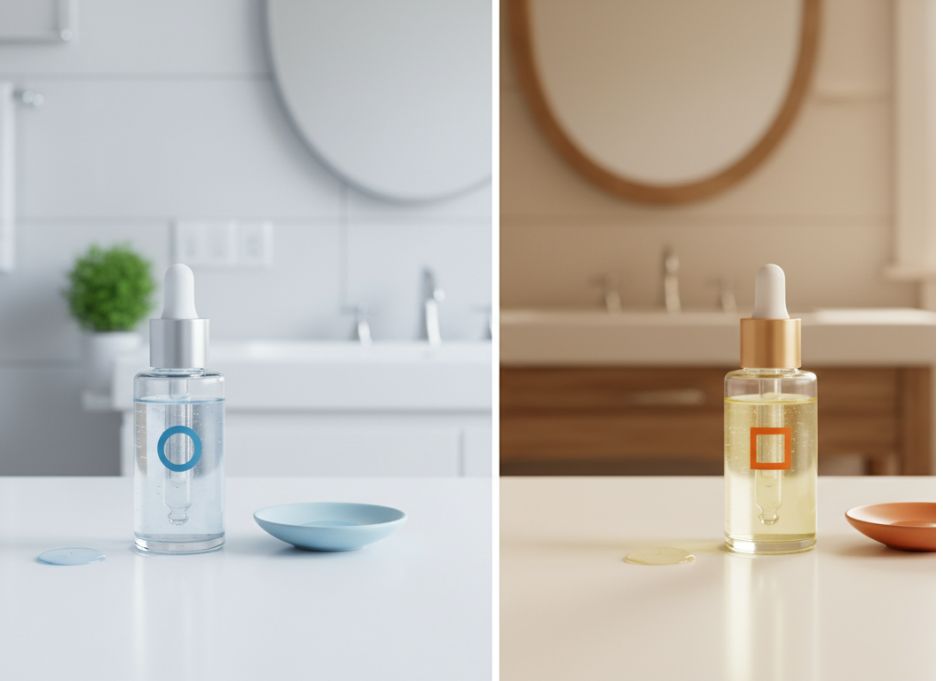
Can You Use Peptides and Retinol Together?
Yes and honestly, you probably should.
This is where things get interesting.
Why Combining Them Works
- Retinol stimulates collagen production aggressively
- Peptides support and repair the skin
So instead of choosing one, the smart approach is layering them correctly.
How to Use Them Together
Night Routine
- Cleanser
- Retinol (pea-sized amount)
- Peptide serum or moisturiser
- Hydrating cream
Morning Routine:
- Cleanser
- Peptides
- Moisturizer
- Sunscreen (non-negotiable)
Critical Rule
If you skip sunscreen while using retinol, you’re wasting your time. Worse, you’re increasing skin damage.
Who Should Use Peptides?
Peptides are ideal if:
- You have sensitive skin
- You’re new to skincare
- You want prevention, not correction
- Your skin barrier is weak
They’re also a good option if retinol has already wrecked your skin.
Who Should Use Retinol?
Retinol is for you if:
- You have visible wrinkles
- You’re dealing with acne or pigmentation
- You want faster results
- Your skin can tolerate active ingredients
But don’t jump in blindly. Start slow 2–3 times a week and build up.
Common Mistakes People Make
Let’s be direct. Most people fail with these ingredients because of basic mistakes.
Using Too Much Retinol
More is not better. It’s stupidity.
A pea-sized amount is enough for your entire face. Anything more increases irritation without improving results.
Expecting Instant Results from Peptides
Peptides are not Botox. Stop expecting miracles in 2 weeks.
Mixing Too Many Actives
Retinol + acids + vitamin C + everything else = damaged skin barrier.
Keep it simple.
Skipping Moisturiser
If you’re using retinol without hydration, you’re sabotaging your own progress.
Realistic Timeline of Results
If you want honesty instead of marketing lies, here’s what to expect:
Peptides
- 4–6 weeks: Slight improvement in hydration
- 8–12 weeks: Minor smoothing
- 3–6 months: Noticeable but subtle anti-aging effects
Retinol
- 2–4 weeks: Irritation phase (purging, dryness)
- 6–8 weeks: Smoother texture
- 3–6 months: Visible wrinkle reduction
If someone promises faster results than this, they’re selling you something not telling you the truth.
Side Effects and Safety
Peptides
- Generally safe
- Rare irritation
- Suitable for daily use
Retinol
- Irritation, redness, peeling
- Increased sun sensitivity
- Not recommended during pregnancy
If your skin is burning or flaking aggressively, stop. That’s not “adjustment” that’s damage.
Final Verdict
If you want the honest breakdown:
- Retinol = results, but risky if misused
- Peptides = safe, but slow
The smartest approach isn’t choosing one it’s using both strategically.
If you’re serious about anti-aging, stop chasing trends and build a routine that actually works. Consistency beats everything.
FAQs
Can peptides replace retinol?
No. Peptides cannot match the collagen-boosting power of retinol. They’re supportive, not transformative.
Is retinol safe for beginners?
Yes but only if you start slowly. Using it daily from day one is a guaranteed way to irritate your skin.
Can I use peptides every day?
Yes. Peptides are gentle and can be used twice daily without issues.
At what age should I start using retinol?
Typically mid-20s to early 30s, depending on skin condition. Starting too early without need is unnecessary.
Do peptides really build collagen?
They signal collagen production, but results are gradual and less dramatic than retinol.
Can I use retinol under my eyes?
Only if it’s specifically formulated for that area. Regular retinol can be too harsh.
What happens if I stop using retinol?
Your skin gradually returns to its natural aging process. You don’t lose everything instantly, but benefits fade over time.
References
- Baumann, L. (2007). Skin aging and its treatment. The Journal of Pathology, 211(2), 241–251.
https://doi.org/10.1002/path.2098 - Kafi, R., Kwak, H. S., Schumacher, W. E., Cho, S., Hanft, V. N., Hamilton, T. A., … & Voorhees, J. J. (2007). Improvement of naturally aged skin with vitamin A (retinol). Archives of Dermatology, 143(5), 606–612.
https://jamanetwork.com/journals/jamadermatology/fullarticle/419447 - Lupo, M. P. (2001). Antioxidants and vitamins in cosmetics. Clinics in Dermatology, 19(4), 467–473.
https://doi.org/10.1016/S0738-081X(01)00189-7 - Zhang, L., Falla, T. J. (2009). Potential applications of antimicrobial peptides in cosmetics. International Journal of Cosmetic Science, 31(2), 95–106.
https://doi.org/10.1111/j.1468-2494.2008.00463.x - Mukherjee, S., Date, A., Patravale, V., Korting, H. C., Roeder, A., & Weindl, G. (2006). Retinoids in the treatment of skin aging. Clinical Interventions in Aging, 1(4), 327–348.
https://www.ncbi.nlm.nih.gov/pmc/articles/PMC2699641/
