
L-Carnitine (500 mg Vial) – Dosage Protocol
Contents
- Quickstart Highlights
- Dosing & Reconstitution Guide
- Standard / Gradual Approach (5.0 mL = 100 mg/mL)
- Reconstitution Steps
- Supplies Needed
- Protocol Overview
- Dosing Protocol
- Storage Instructions
- Important Notes
- How This Works
- Potential Benefits & Side Effects
- Lifestyle Factors
- Injection Technique
- Recommended Source
- Important Note
- References
Quickstart Highlights
L-Carnitine is an amino acid–derived compound involved in transporting long-chain fatty acids into mitochondria, where they are utilized for energy production. It plays a key role in metabolic efficiency, particularly in fat oxidation and cellular energy pathways.
Subcutaneous administration is often preferred in research settings due to improved bioavailability compared to oral intake, while also bypassing gut-related metabolite formation.
- Reconstitution: Not Required
- Typical daily range: 50–100 mg once daily (with gradual titration)
- Advanced range: Up to 200 mg daily in higher-demand protocols
- Measurement: 1 unit (U-100 syringe) = 1 mg (0.01 mL)
- Storage: Refrigerate; use within 2–4 weeks
Dosing & Reconstitution Guide
Educational guide for reconstitution and daily dosing
Standard / Gradual Approach (5.0 mL = 100 mg/mL)
| Week | Daily Dose | Units (U-100) | Volume |
|---|---|---|---|
| Weeks 1–2 | 50 mg | 50 units | 0.50 mL |
| Weeks 3–8 | 100 mg | 100 units | 1.0 mL |
| Weeks 9–12 | 100 mg | 100 units | 1.0 mL |
Frequency: Once daily (subcutaneous)
Note: Larger doses (>1.0 mL) may be split into two injections for improved comfort.
Reconstitution Steps
- Not Required for this peptide
- Store refrigerated at 2–8°C
- Use within 4 weeks
Important: This guide is for educational purposes only and is not medical advice. For research use only. Not for human consumption.
Supplies Needed
Peptide Vials (500 mg each):
- 8 weeks: ~6 vials
- 12 weeks: ~9 vials
- 16 weeks: ~12 vials
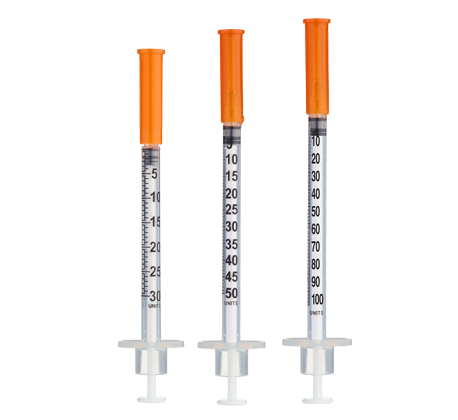
Insulin Syringes (U-100):
- 1 per day
- 8 weeks: 56 syringes
- 12 weeks: 84 syringes
- 16 weeks: 112 syringes
Bacteriostatic Water (10 mL bottles):
- Each vial requires 5.0 mL
- 8 weeks: ~30 mL → 3 bottles
- 12 weeks: ~45 mL → 5 bottles
- 16 weeks: ~60 mL → 6 bottles
Alcohol Swabs:
- 2 per day
- 8 weeks: 112 swabs
- 12 weeks: 168 swabs
- 16 weeks: 224 swabs
Protocol Overview
- Goal: Support fat metabolism and cellular energy production
- Schedule: Daily injections for 8–12 weeks
- Dose Range: 50–100 mg daily (up to 200 mg advanced)
- Reconstitution: 5.0 mL per vial (100 mg/mL)
- Storage: Refrigerated after mixing
Dosing Protocol
A consistent once-daily dosing structure designed for balanced peptide administration.
- Start with 50 mg daily (Weeks 1–2)
- Increase to 100 mg daily from Week 3 onward
- Advanced protocols may go up to 200 mg daily
- Inject once daily at a consistent time
- Rotate injection sites regularly
Storage Instructions
Proper storage is essential to maintain peptide stability and integrity.
- After Opened: Store the solution in a refrigerator at 2–8°C (35.6–46.4°F) at all times. Do not freeze once mixed.
- Shelf Life: Use within 28 days after opened for optimal stability and reliability. Discard any remaining solution after this period.
Important Notes
Key considerations for consistency, handling, and research accuracy.
- Always use a new, sterile insulin syringe for each administration; do not reuse needles
- Follow proper aseptic technique: clean both the vial stopper and injection site with separate alcohol swabs and allow to dry fully
- Rotate injection sites (abdomen, thighs, upper arms) to reduce irritation and avoid tissue buildup
- Administer injections slowly and steadily, allowing a few seconds before withdrawing the needle
- Keep a record of dosing, timing, and injection sites to maintain consistency throughout the protocol
- Do not use the solution if it appears cloudy, discolored, or contains visible particles
- Store and handle peptides according to recommended conditions to preserve stability
How This Works
L-Carnitine functions as a transport molecule, carrying long-chain fatty acids into mitochondria where they undergo β-oxidation to produce ATP (energy). This process becomes especially important during physical activity or caloric restriction.
In research models, L-Carnitine has been associated with improved fat utilization, enhanced endurance, and reduced fatigue. Subcutaneous delivery improves absorption efficiency compared to oral intake and avoids gut metabolism pathways that may reduce effectiveness.
Potential Benefits & Considerations
Potential Benefits
- Supports fat metabolism and energy production
- May assist in exercise performance and endurance
- Helps improve cellular energy efficiency
- Subcutaneous delivery offers higher bioavailability
Considerations
- Mild injection-site irritation may occur
- Higher doses may require split injections
- Results depend on overall diet and activity levels
- Research is ongoing; outcomes may vary
Lifestyle Factors
- Maintain a protein-rich diet to support metabolism
- Combine with resistance + cardio training
- Stay in a slight caloric deficit if fat loss is the goal
- Prioritize sleep (7–9 hours) for recovery
- Stay well hydrated to support metabolic processes
Injection Technique
General guidance for subcutaneous administration:
- Clean the vial stopper and injection area with alcohol and allow to dry
- Gently pinch the skin and insert the needle at a 45–90° angle
- Inject slowly and steadily without aspirating
- Hold the needle in place for a few seconds before removing
- Rotate injection sites (abdomen, thighs, upper arms) to reduce irritation
Recommended Source
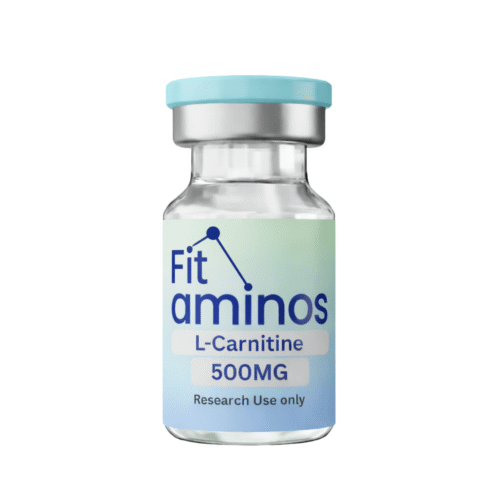
We recommend Fit Aminos for high-purity research peptide products L-Carnitine (500 mg Vial)
Why Fit Aminos?
- High-purity, lab-tested peptide batches with quality verification.
- Consistent handling and preparation processes designed to support reliable research protocols.
- Transparent sourcing and dependable fulfillment for research-grade compounds.
Important Note
This content is intended for educational and research purposes only and does not constitute medical advice, diagnosis, or treatment. L-Carnitine (500 mg Vial) remains an investigational peptide with limited human clinical data. For research use only. Not for human consumption.
References
Journal of the International Society of Sports Nutrition (2020)
— Sawicka AK et al. The bright and the dark sides of L-carnitine supplementation: a systematic review (dose ranges, mechanisms, and metabolic effects)
Clinical Nutrition ESPEN (2020)
— Talenezhad N et al. Meta-analysis of 37 RCTs: L-carnitine supplementation yields ~1.2 kg weight loss at ~2,000 mg/day oral dosing with diminishing returns above that dose (PMID: 32359762)
Clinical Pharmacokinetics (2003)
— Evans AM & Fornasini G. Pharmacokinetics of L-carnitine: oral bioavailability only 5–18% at high doses (1–6 g) vs. much higher absorption from IV/parenteral routes (PMID: 12908852)
Molecular Nutrition & Food Research (2018)
— Zhao Y et al. Subcutaneous L-carnitine bypasses gut bacterial TMAO production and does not promote atherosclerosis in ApoE−/− mice, unlike oral dosing (PMID: 29178259)
American Journal of Kidney Diseases (2001)
— Brass EP et al. IV L-carnitine (10–40 mg/kg after dialysis, 3×/week for 24 weeks) increased plasma carnitine, reduced fatigue, preserved exercise capacity in hemodialysis patients with excellent safety profile (PMID: 11325685)