

Research peptides are short chains of amino acids sold strictly for laboratory research—not for human consumption.
That distinction isn’t marketing fluff. It’s legal, scientific, and regulatory.
What Exactly Are Peptides?
Peptides are short chains of amino acids, the same building blocks that make up proteins. The difference is length:
- Peptides = typically 2–50 amino acids
- Proteins = longer, more complex chains
In the human body, peptides act as signaling molecules, controlling processes like:
- Hormone release
- Cell communication
- Immune responses
- Tissue repair
Some well-known peptide-based drugs include insulin and GLP-1 analogs—but those are pharmaceutical-grade and fully regulated, not “research peptides.”
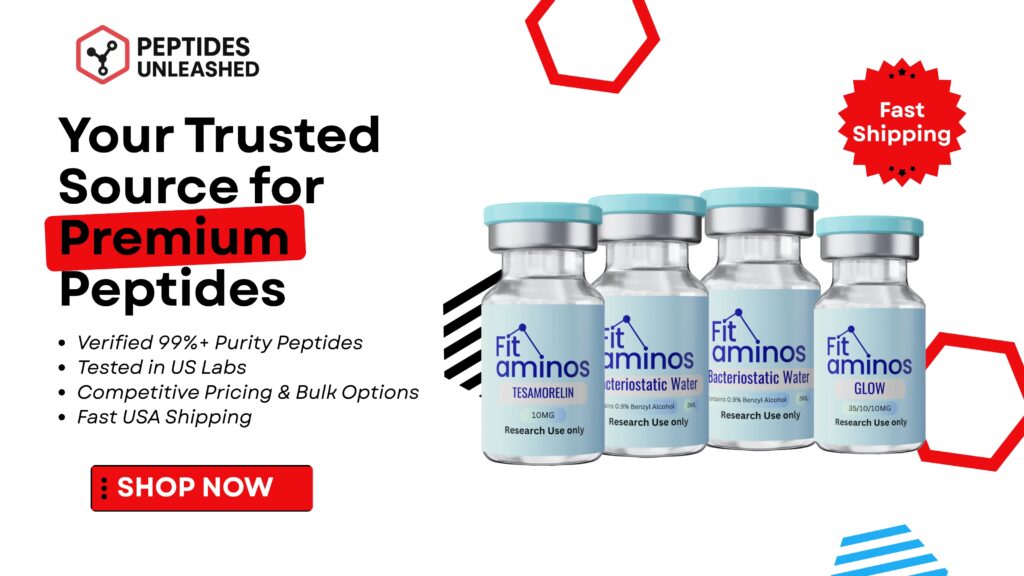
What Makes a Peptide a “Research Peptide”?
The term “research peptide” doesn’t describe the molecule itself—it describes how it’s sold and used.
A peptide becomes a research peptide when it is:
- Sold for in vitro or preclinical studies only
- Labeled “not for human consumption”
- Not approved by regulatory authorities
These peptides are typically used in:
- Cell culture experiments
- Animal studies
- Early-stage drug discovery
The Role of Regulatory Bodies
Organizations like the U.S. Food and Drug Administration strictly regulate substances intended for human use.
For a peptide to be approved as a drug, it must go through:
- Preclinical testing
- Clinical trials (Phase 1–3)
- Regulatory review
- Manufacturing under GMP standards
Most research peptides never reach this stage, which is why they remain unapproved.
Research Peptides vs Pharmaceutical Peptides
This is where people get confused—and where many sellers take advantage.
| Feature | Research Peptides | Pharmaceutical Peptides |
|---|---|---|
| Purpose | Lab research | Human treatment |
| Regulation | Not approved | FDA/EMA approved |
| Manufacturing | Often non-GMP | GMP-certified |
| Safety Data | Limited | Extensive clinical data |
| Availability | Online vendors | Prescription-based |
Brutal truth:
Calling a research peptide “pharma-grade” without regulatory approval is misleading at best.
Common Types of Research Peptides
You’ll often see certain peptides repeatedly marketed online. Here are a few categories:
Growth Hormone Secretagogues
- Designed to stimulate growth hormone release
- Common in experimental endocrinology studies
Healing and Regeneration Peptides
- Studied for tissue repair and recovery
- Mostly limited to animal research
Metabolic Peptides
- Investigated for fat metabolism and glucose control
Important:
Just because something is studied doesn’t mean it’s safe or effective in humans.

How Research Peptides Are Made
Even research peptides are synthesized using advanced chemistry.
Typical process:
- Solid-phase peptide synthesis (SPPS)
- Purification (usually HPLC)
- Analytical testing (mass spectrometry)
However, unlike pharmaceutical production, many research peptides:
- Are not made under strict GMP conditions
- May vary in quality between suppliers
- Lack full traceability
Risks and Safety Concerns
Here’s where you need to be realistic.
Unknown Safety Profile
Most research peptides:
- Haven’t undergone human trials
- Have limited toxicity data
Quality Variability
Without GMP standards:
- Purity can vary
- Contamination is possible
- Label accuracy is not guaranteed
Legal Gray Areas
Selling and buying research peptides is often:
- Legal for research use
- Illegal for human consumption
Misuse can create regulatory and legal problems.
Why “Research Use Only” Exists
That label isn’t just a suggestion—it’s a legal shield.
Companies use it to:
- Avoid regulatory classification as drugs
- Limit liability
- Sell compounds not approved for humans
Translation:
It’s not there to protect you—it’s there to protect the seller.
The Biggest Myths About Research Peptides
Let’s clear up the nonsense.
Myth 1: “They’re basically the same as pharma peptides”
No. Without clinical trials and GMP manufacturing, they are fundamentally different.
Myth 2: “High purity means safe”
Wrong. Purity doesn’t guarantee:
- Safety
- Stability
- Correct dosing
Myth 3: “Everyone is using them safely”
There is no large-scale, verified human safety data for most research peptides.
Who Actually Uses Research Peptides?
Legitimate users include:
- Academic researchers
- Pharmaceutical companies (early-stage research)
- Biotechnology labs
Not:
- Casual online buyers
- Fitness influencers
- Dropshipping businesses
Final Take
Research peptides are tools for science—not consumer products.
If you’re treating them like supplements or quick-profit products, you’re misunderstanding the entire category.
- They are unapproved
- They are unregulated for human use
- They carry real risks
And most importantly:
The gap between a research peptide and a pharmaceutical drug is massive—and expensive to cross.
References
- U.S. Food and Drug Administration. (2024). Drug development process. Retrieved from https://www.fda.gov
- World Health Organization. (2023). Guidelines on good manufacturing practices. Retrieved from https://www.who.int
- Peptide therapeutics. (2022). Overview of peptide-based drug development. Retrieved from https://www.ncbi.nlm.nih.gov
