
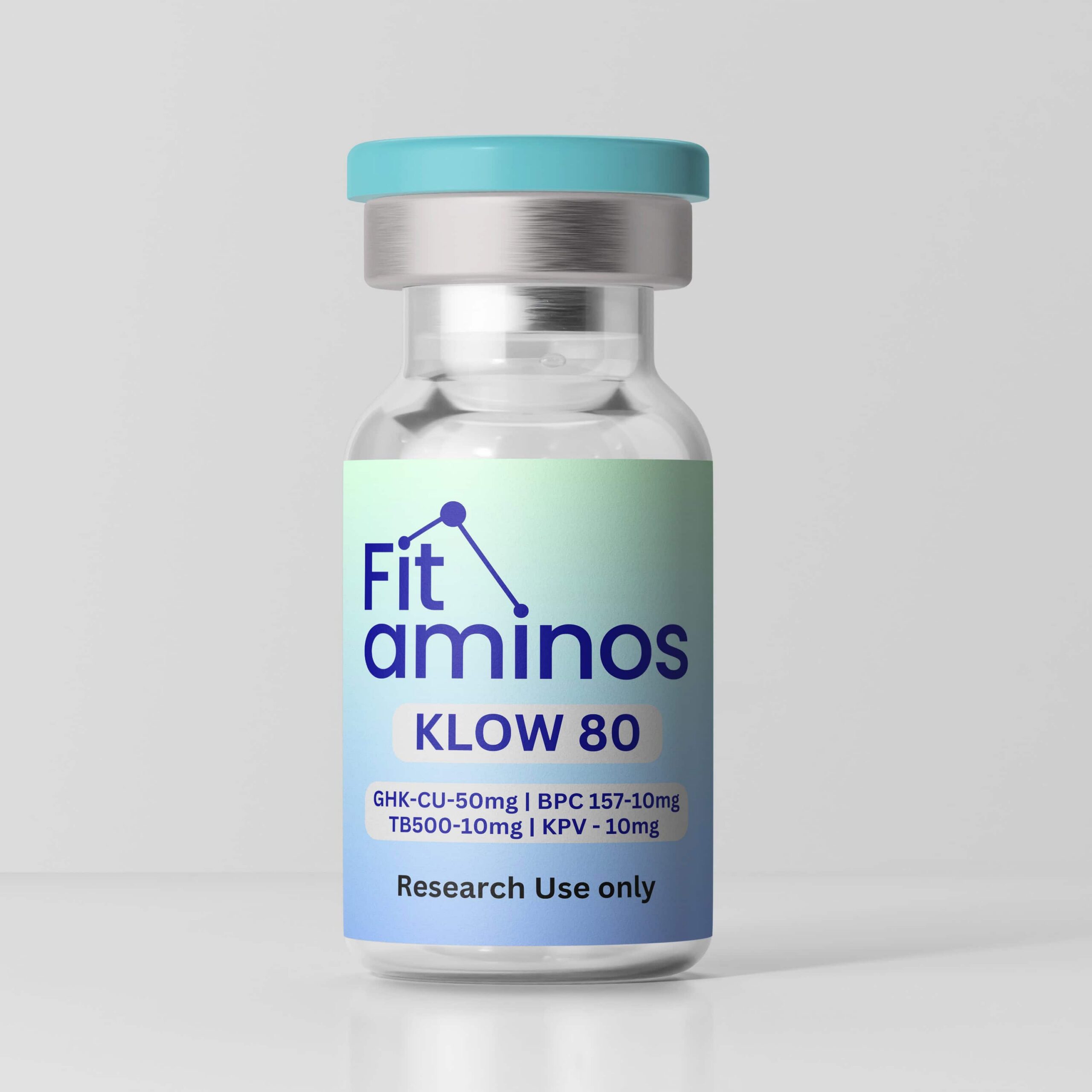
Quick answer: KLOW is a research peptide blend that combines four peptides in one 80 mg vial: GHK-Cu (50 mg), BPC-157 (10 mg), TB-500 (10 mg) and KPV (10 mg). Each component has been studied in preclinical models of tissue repair, collagen production and inflammation. The blend itself has not been tested in clinical trials and is not approved for human use.
This guide covers what KLOW is, what each of its peptides does, the benefits reported in preclinical research, what the evidence does and does not show, and the side-effect and safety picture. For dosing and reconstitution of the 80 mg vial, see the KLOW 80 mg dosage protocol. Research use only.
What Is KLOW Peptide?
KLOW is a four-component research blend built around tissue repair and regenerative biology. Its peptides (KPV, BPC-157, TB-500 and GHK-Cu) come pre-mixed in a single 80 mg lyophilized vial. It is also sold as KLOW-80 or KLOW 80 mg.
Each ingredient has its own preclinical literature. The point of the blend is convenience and consistency: one vial gives all four peptides at a fixed ratio, instead of four separate vials.
- GHK-Cu: 50 mg (collagen synthesis, copper-peptide signaling)
- TB-500: 10 mg (actin regulation, cell migration)
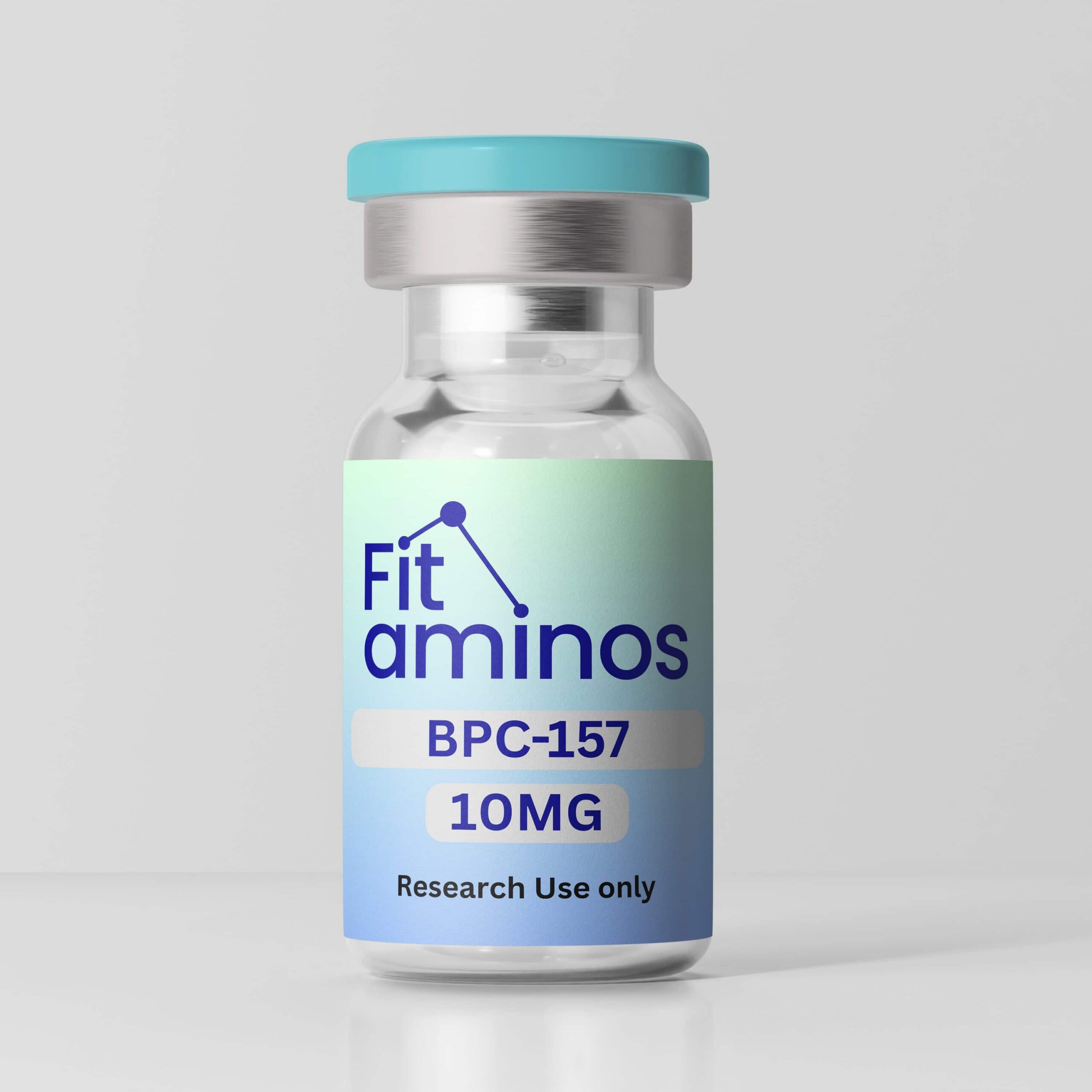
- BPC-157: 10 mg (soft-tissue repair, angiogenesis)
- KPV: 10 mg (NF-κB pathway, inflammation control)
What’s in the KLOW Peptide Blend?
The composition is fixed across vials, so every reconstituted amount contains the same ratio of the four peptides.
| Component | Amount per Vial | Primary Research Focus |
|---|---|---|
| GHK-Cu | 50 mg | Collagen synthesis, copper-mediated signaling, skin remodeling |
| TB-500 (Thymosin Beta-4 fragment) | 10 mg | Actin sequestration, cell migration, muscle and tendon repair models |
| BPC-157 | 10 mg | Soft-tissue repair, angiogenic response, GI-tract studies |
| KPV (Lys-Pro-Val) | 10 mg | Anti-inflammatory signaling via the melanocortin and NF-κB pathways |
| Total peptide content | 80 mg | Combined recovery and repair research |
KLOW Peptide Benefits in Preclinical Research
The benefits linked to KLOW come from studies of its individual peptides, mostly in animal and cell models. The idea behind the blend is that the four mechanisms cover different stages of tissue repair. Reported findings for the components include:
- Tissue repair. BPC-157 and TB-500 have each been associated with faster healing in animal models of tendon, ligament and muscle injury.2
- Collagen production and skin remodeling. GHK-Cu is one of the most-studied copper peptides for collagen synthesis and dermal repair.1
- Inflammation control. KPV reduced intestinal inflammation in mouse colitis models, acting through the NF-κB pathway.4
- Blood-vessel formation (angiogenesis). BPC-157 and GHK-Cu both show angiogenic activity in preclinical studies, which is part of the wound-healing process.1,3
- Post-procedure recovery research. Because GHK-Cu dominates the blend, KLOW draws interest from skin-recovery research (for example after microneedling or laser models).
None of these are human clinical claims. The evidence comes from animal models, cell culture and small preclinical studies of the separate peptides, not of the blend.
KLOW Results: What the Research Shows
People searching for KLOW results usually want to know what the blend actually does. The honest answer has two parts:
- What exists: preclinical research on each of the four peptides, summarized above and in the references below.
- What doesn’t exist: published clinical trials of the four-peptide KLOW blend. There is no controlled data showing that the combination works better than its components, or what results it produces in people.
Before-and-after claims for KLOW found online are anecdotal and are not evidence. Treat any specific result or timeline with caution.
KLOW Components: How Each Peptide Works
GHK-Cu (50 mg per vial)
GHK-Cu is a copper-binding tripeptide (glycyl-L-histidyl-L-lysine) studied for decades in dermal repair and collagen synthesis.1 It is the largest component of the KLOW blend by mass. Research on skin remodeling, hair-follicle signaling and post-laser recovery often uses GHK-Cu as a primary endpoint. For more detail, see the GHK-Cu dosage chart and calculator.
TB-500 (10 mg per vial)
TB-500 is a synthetic fragment of Thymosin Beta-4. Its mechanism centers on actin sequestration and cell migration,2 which is why it appears often in muscle, tendon and cardiac repair research. In KLOW, it covers the cell-migration side of repair while BPC-157 covers the blood-vessel side.
BPC-157 (10 mg per vial)
BPC-157 is a 15-amino-acid peptide derived from a protective protein found in gastric juice. Preclinical work covers soft-tissue repair, blood-vessel formation and GI-mucosa protection.3 See the BPC-157 dosage calculator for single-peptide details.
KPV (10 mg per vial)
KPV is a tripeptide (Lys-Pro-Val) and the C-terminal fragment of alpha-MSH. It is studied for anti-inflammatory effects through the melanocortin system and NF-κB inhibition.4 Of the four peptides in KLOW, KPV is the main anti-inflammatory contributor. See the KPV dosage protocol for single-peptide reference.
Is KLOW Safe? Side Effects in Preclinical Research
KLOW has not been tested for safety in humans. The side-effect picture comes from preclinical studies of its individual peptides:
- Injection-site irritation. The most commonly reported finding across BPC-157, TB-500 and KPV studies. Usually mild and localized.
- Transient redness or warmth at the injection site. Often associated with the GHK-Cu component.
- Copper balance. GHK-Cu carries copper, so long study windows consider copper–zinc balance.
- Possible fatigue. Reported infrequently at higher TB-500 doses.
- Allergic or hypersensitivity reactions. Rare, but a baseline consideration for any peptide.
- Unknown long-term effects. The combination has not been studied over long periods, and its long-term safety is unknown.
Because the data are preclinical only, any conclusion about human safety would be speculation. KLOW is not approved for personal, clinical or athletic use.
KLOW Dosage
Dosing and reconstitution for the 80 mg vial (water volume, concentration, syringe units and storage) are covered on the dedicated KLOW 80 mg vial dosage protocol page. To recalculate for a different amount of bacteriostatic water, use the peptide calculator.
KLOW vs Single Peptides and GLOW
Single-peptide research is cleaner when the goal is to isolate one mechanism, for example collagen output from GHK-Cu alone. KLOW makes more sense when the goal is to study combined, multi-pathway recovery, because the fixed ratio keeps the four variables constant.
KLOW is often compared with GLOW, a related blend focused more on skin and dermal recovery. See GLOW 70 vs KLOW 80, the GLOW peptide protocol and the recovery peptide blends comparison.
Where to Source the KLOW Peptide Blend for Research
Research-grade KLOW vials are available from peptide research suppliers that publish third-party Certificates of Analysis (COAs). One vendor PeptidesUnleashed has documented in detail is the FitAminos KLOW-80 research vial, which publishes per-lot COAs showing purity and composition. Whichever supplier is used, check that the COA matches the vial’s lot number.
Frequently Asked Questions About KLOW Peptide
What is KLOW peptide?
KLOW is a research blend of KPV, BPC-157, TB-500 and GHK-Cu in a single 80 mg vial. It is studied for combined tissue repair, inflammation control and regenerative effects.
What does KLOW peptide do?
In preclinical research, its components are associated with tissue repair (BPC-157, TB-500), collagen production (GHK-Cu) and reduced inflammation (KPV). These effects have not been confirmed for the blend in human trials.
Is KLOW safe?
Its safety in humans is unknown. Preclinical studies of the components mainly report injection-site irritation and redness. KLOW is not approved for human use.
What results has KLOW shown?
There are no published clinical trials of the KLOW blend, so there are no verified results in people. The available evidence covers the four peptides separately, mostly in animal and cell models.
What is the difference between KLOW and GLOW?
Both are multi-peptide blends built around GHK-Cu. KLOW adds KPV for inflammation control and is aimed at broader recovery research, while GLOW is aimed more at skin and dermal recovery. See GLOW 70 vs KLOW 80.
Which peptide in KLOW has the strongest anti-inflammatory effect?
KPV, based on NF-κB pathway and melanocortin research.
Where can I find KLOW dosing information?
See the KLOW 80 mg vial dosage protocol.
Is KLOW allowed in sports?
No. KLOW components are not approved for athletes or performance use. Several, including BPC-157 and TB-500, are on the World Anti-Doping Agency prohibited list.
Final Thoughts on the KLOW Peptide Blend
KLOW packages GHK-Cu, BPC-157, TB-500 and KPV at a fixed ratio, which makes it a convenient tool for studying multi-pathway recovery. The preclinical evidence for each component is substantial, but there is no clinical evidence for the blend itself. KLOW remains a research-only compound and is not approved for human use.
The references below are component-level. There are no published clinical trials of the four-component blend, so no reference here should be read as evidence for the combination.
References
- Pickart L, Vasquez-Soltero JM, Margolina A. GHK peptide as a natural modulator of multiple cellular pathways in skin regeneration. BioMed Research International. 2015;2015:648108. PubMed 26236730 (GHK-Cu component)
- Goldstein AL, Hannappel E, Kleinman HK. Thymosin β4: actin-sequestering protein moonlights to repair injured tissues. Trends in Molecular Medicine. 2005;11(9):421-429. PubMed 16099219 (TB-500 component)
- Sikiric P, Seiwerth S, Rucman R, et al. Stress in gastrointestinal tract and stable gastric pentadecapeptide BPC 157. Finally, do we have a solution? Current Pharmaceutical Design. 2017;23(27):4012-4028. PubMed 28228068 (BPC-157 component)
- Dalmasso G, Charrier-Hisamuddin L, Nguyen HT, et al. PepT1-mediated tripeptide KPV uptake reduces intestinal inflammation. Gastroenterology. 2008;134(1):166-178. PubMed 18061177 (KPV component)
Where to source KLOW-80
Fit Aminos stocks KLOW-80, a research blend of GHK-Cu, BPC-157, TB-500 and KPV in a single vial.
View KLOW-80 on Fit Aminos
We are affiliated with Fit Aminos and may earn from purchases made through this link.