
Thymosin Alpha-1 (TA1) is one of the most extensively studied immune-support peptides today. It’s not a fad biohack it’s been in medical research and use for 30+ years, with thousands of patients showing meaningful benefits.
What’s powerful about TA1 is its ability to work with your body, not against it. Rather than suppressing or overstimulating the immune system, it helps rebalance and optimize immune function.
Whether you’re battling chronic infections, dealing with immune weakness, or simply interested in strengthening your body’s natural defense mechanisms, understanding how TA1 works could open new doors for lasting health support.
Quick Takeaways
- Immune Balancer: TA1 is a naturally occurring 28-amino-acid peptide that helps balance and strengthen your immune system without overactivation.
- Clinically Backed: Research shows effectiveness in viral infections (like hepatitis), sepsis, and as an adjunct in cancer all with relatively mild side effects.
- Dosing: Typical human protocols use 1.6 mg injected subcutaneously twice weekly, often lasting months depending on the indication.
- Safety: Thousands of patients have used TA1 in clinical settings, with an excellent safety record over long periods.
What Is Thymosin Alpha-1 Peptide?
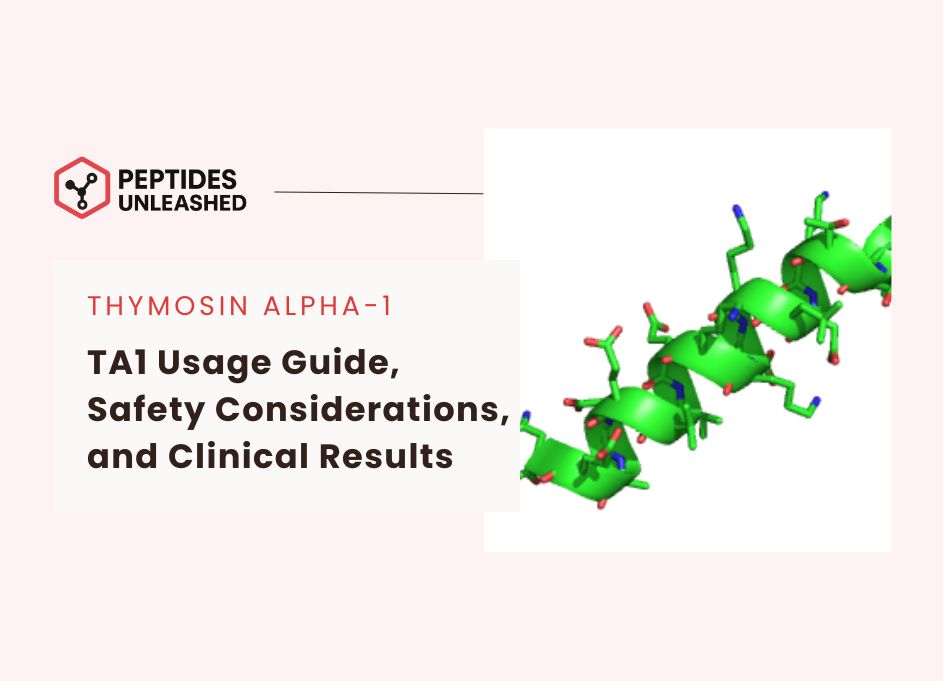
TA1 is a small peptide just 28 amino acids long that is naturally produced by our thymus gland. The thymus, located in the chest, plays a vital role in educating immune cells (especially T-lymphocytes) to recognize and respond to threats.
Scientists first isolated TA1 from calf thymus decades ago, and its synthetic form, known as Thymalfasin, has since been developed for therapeutic use. Over 30 countries now use it in clinical settings, particularly for liver disease and immune-based therapies.
TA1’s structure is highly flexible, which is actually an advantage. This flexibility allows it to bind to different receptors in immune cells and adapt its activity depending on what your immune system needs at a given moment.
Rather than acting like a blunt tool, TA1 is more like a fine-tuner it supports what your body is already doing, instead of forcing something entirely new.
How Thymosin Alpha-1 Works in the Immune System
TA1 helps your immune function through several coordinated biological pathways it doesn’t just crank up the immune response, but optimizes and coordinates it.
Toll-Like Receptor Activation
One of its key actions is activating Toll-Like Receptors (TLRs) on immune cells. These receptors function like your body’s alarm system detecting threats and triggering immune activation.
- TA1 has been shown to bind to TLR2, TLR3, TLR4, TLR7, and TLR9, which then activates downstream signaling via NF-κB and IRF3 pathways. Source: Pubmed
- Through these pathways, TA1 ramps up cytokine production (like interferons) and boosts antigen presentation, making your immune response more efficient.
Improved Function for Key Immune Cells
- T-Cells: TA1 helps both CD4+ (helper) and CD8+ (cytotoxic) T-cells mature and function more effectively. These are the frontline troops in adaptive immunity.
- Natural Killer (NK) Cells: It enhances the surveillance capacity of NK cells, helping them target infected or abnormal cells more efficiently.
- Dendritic Cells: As the “scouts” of the immune system, dendritic cells capture pathogens and alert T-cells. TA1 improves their ability to detect and report threats.
By working across these different cell types, TA1 ensures your immune system is alert, coordinated, and responsive, without tipping into harmful overactivation.
Key Clinical Benefits Backed by Research
Here’s where the science gets real. TA1 isn’t just theoretical there’s strong clinical evidence for its use in various immune-related conditions.
Viral Infections
Chronic Hepatitis B (HBV)
- In a randomized controlled trial, TA1 at 1.6 mg twice weekly for 26 weeks led to a complete virological response (loss of HBV DNA and HBeAg) in ~40.6% of patients, significantly higher than control.
- Another study found that TA1 had better tolerability than interferon-α, with fewer side effects while still reducing viral replication.
- A longer-term pilot study also showed a sustained response: after two years, many patients maintained normalized ALT and reduced HBV DNA.
These data suggest TA1 can be a viable adjunct to standard hepatitis therapies, especially for patients who struggle with side effects.
Sepsis and Immune Dysregulation
- Early meta-analyses (of smaller RCTs) indicated that TA1 reduced 28-day mortality in septic patients.
- However a large, double-blind, phase 3 trial of over 1,100 sepsis patients found no statistically significant mortality benefit overall (hazard ratio ≈ 0.99).
- A more recent systematic review and meta-analysis (2025) noted the same: potential benefit, but significant variability among subgroups, and more research is needed.
- Another meta-analysis combined TA1 with ulinastatin in severe sepsis and found an association with lower 28-day mortality, though the data quality was mixed.
Bottom line: TA1 may help in sepsis, but large trials are mixed and its impact likely depends on patient factors (age, comorbidities, timing).
Typical Dosage & Administration of TA1
Getting the dose and route right is crucial for TA1’s effectiveness and safety.
- The standard clinical dose in many studies is 1.6 mg, injected subcutaneously (under the skin) twice weekly. (U.S. Food and Drug Administration)
- This protocol has been used in viral hepatitis and long-term immune support settings.
- For some acute or more severe conditions, protocols may differ, but the twice-weekly regimen is the most validated.
Administration tips:
- Use a fine needle (e.g., 29–31 gauge) for subcutaneous injections.
- Rotate injection sites (abdomen, thigh, flank) to reduce irritation.
- Store the reconstituted peptide properly usually in the fridge, avoiding freeze-thaw cycles.
Safety Profile: What the Research Shows
One reason TA1 is appealing: its safety record is strong, especially compared to many immune therapies.
- In chronic hepatitis trials, TA1 was well tolerated significantly fewer adverse effects than interferon-α.
- Across sepsis studies and meta-analyses, no serious unexpected safety issues emerged. (
- According to FDA documentation, typical clinical use (up to 1.6 mg twice weekly) has been used without severe toxicity. (U.S. Food and Drug Administration)
Still, some cautions:
- As with any immunomodulator, immune overreaction or misregulation is a theoretical risk, particularly in people with autoimmune disease.
- Long-term safety in special populations (children, pregnant/lactating women) isn’t fully established.
- Because TA1 affects immune signaling, combining it with other immune-active drugs should be done carefully under medical supervision.
Who Might Benefit Most from TA1 and Who Should Think Twice
Good Candidates
TA1 may be particularly helpful for people who:
- Are dealing with chronic viral infections (e.g., hepatitis B)
- Are in immune recovery phases, such as post-chemotherapy or serious illness
- Suffer from frequent infections, low-grade immune dysfunction, or slow healing (Also read: The Breakthrough Combo for Faster Healing)
- Use it as an adjunct immune support during cancer therapy (under a doctor’s guidance)
Use With Caution / Avoid If
Consider avoiding or carefully monitoring TA1 if:
- You have an autoimmune disease because immune modulation can go either way
- You’re immunosuppressed, especially post-transplant since its immune-boosting effects may be risky
- You’re pregnant or breastfeeding, unless under very close clinical supervision
- You’re a minor pediatric use isn’t well studied
How to Monitor Your Progress on TA1
When you start TA1, regular monitoring helps you and your doctor understand whether it’s working and safe.
Key things to track:
| Metric | Frequency | Why It Matters |
| Complete Blood Count (CBC) | Every 3–6 months | Monitors overall immune cell populations |
| Liver Function Tests (ALT/AST) | Every 3–6 months | Relevant especially for hepatitis treatment or long-term use |
| Cytokine / Immune Markers | Every 6–12 months (if accessible) | Helps assess immune modulation (CD4, CD8, ILs, etc.) |
| Symptom Tracking / Diary | Ongoing | Your experience (sickness frequency, recovery time, energy) often gives the best clue |
Subjective signs you’re doing well:
- You’re getting sick less often
- When you do get ill, recovery is faster
- Your general well-being is improving (more energy, fewer infections)
Warning signs to watch for:
- New or worsening symptoms
- Unusual fatigue or constant “malaise”
- Persistent problems at injection sites
- Lab changes (especially in liver tests) consult your doctor
The Real Value: Is TA1 Worth It?
Using Thymosin Alpha-1 is not cheap or trivial but for the right person, it can provide strong value:
- Medical cost savings: Fewer infections may mean fewer hospital visits, fewer antibiotics, less time lost to illness.
- Quality-of-life gains: Better immune resilience, more energy, less anxiety about getting sick.
- Therapeutic synergy: For people on cancer therapy or with chronic infections, TA1 might improve tolerance or effectiveness of their main treatment.
That said, it’s not a “magic bullet.” It’s a tool for immune support, not a cure-all. To get the most out of it, you need realistic goals, solid medical supervision, and a clear plan for dosing + monitoring.
Final Thoughts: Should You Consider Thymosin Alpha-1?
- Proven but selective: The clinical research is strong in some areas (viral infections), but more mixed in others (like sepsis).
- Safety-first: Compared to many immune therapies, TA1’s side effects are mild, but caution is especially if combining with other immune-active treatments.
- Long-term outlook: Using TA1 over months or even years can make sense for immune support but it should be done wisely, under clinical guidance.
- Personalized decision: Whether TA1 is “worth it” depends heavily on your health situation, risk tolerance, and therapeutic goals.
