

BPC-157 is a synthetic peptide composed of 15 amino acids, originally derived from a naturally occurring compound associated with gastric cytoprotection. This origin explains one of its most distinctive features: exceptional stability, even in highly acidic gastric environments where most peptides rapidly degrade.
The peptide was first synthesized during research aimed at isolating and enhancing the regenerative properties of the parent gastric protein. In scientific literature, BPC-157 may also appear under alternative designations such as PL 14736, PL-10, or Bepecin. Despite decades of preclinical investigation, it remains an experimental compound without regulatory approval for human therapeutic use.
Chemical Structure and Stability
The biological activity of BPC-157 is driven by its precise amino acid sequence:
Gly–Glu–Pro–Pro–Pro–Gly–Lys–Pro–Ala–Asp–Asp–Ala–Gly–Leu–Val
Although this sequence is short compared to full-length proteins, it confers unusual resistance to enzymatic and acid-mediated degradation. Unlike most peptides, BPC-157 remains intact when exposed to gastric acid, which has led to interest in oral administration as a potential delivery route.
From a clinical standpoint, this stability is noteworthy—but it comes with an important limitation. While oral survival is established in animal models, human bioavailability and systemic absorption remain poorly defined, and no pharmacokinetic studies have quantified how much orally administered BPC-157 reaches target tissues.
This stability nevertheless distinguishes BPC-157 from many therapeutic peptides that require injection solely to avoid digestive breakdown.

How BPC-157 Promotes Tissue Repair
BPC-157 does not rely on a single pathway. Instead, it appears to influence multiple interconnected cellular signaling systems that collectively regulate migration, angiogenesis, inflammation control, and structural remodeling. The combined effect of these mechanisms likely explains why its observed effects exceed what would be expected from any single pathway alone.
FAK–Paxillin Signaling
One of the most consistently reported mechanisms involves activation of focal adhesion kinase (FAK) and paxillin, proteins critical for cell adhesion, survival, and migration.
BPC-157 promotes phosphorylation of FAK, triggering downstream activation of paxillin and increased expression of vinculin—an essential cytoskeletal protein. This signaling cascade enhances the ability of reparative cells, particularly fibroblasts, to migrate toward injured tissue and survive within the damaged microenvironment.
In tendon fibroblast models, BPC-157 exposure results in significantly improved cell movement and viability compared to untreated controls, suggesting a direct role in connective tissue repair dynamics.
VEGFR2-Mediated Angiogenesis
BPC-157 increases expression of vascular endothelial growth factor receptor 2 (VEGFR2), a central driver of angiogenesis. Activation of this receptor stimulates the Akt–eNOS pathway, leading to nitric oxide production, endothelial cell migration, and formation of new blood vessels.
In animal models of ischemic injury, BPC-157 accelerates restoration of blood flow and increases vascular density. The resulting improvement in oxygen and nutrient delivery supports tissue regeneration and structural repair.
Nitric Oxide System Modulation
BPC-157 further enhances nitric oxide signaling by interfering with the inhibitory action of caveolin-1 on endothelial nitric oxide synthase (eNOS). This results in increased nitric oxide availability, which improves vascular function, moderates inflammation, and supports coordinated healing responses.
Importantly, this modulation appears regulatory rather than suppressive, distinguishing it from agents that blunt inflammation indiscriminately.
Broad Tissue Effects Observed in Animal Research
Preclinical studies indicate that BPC-157 influences healing across multiple tissue types, reflecting its multi-pathway mechanism of action rather than tissue-specific targeting.
Wound Healing and Skin Repair
In rat models of alkali-burn injuries, BPC-157 treatment resulted in approximately 77.5% wound closure by day 16, compared with roughly 60% closure in untreated controls. Treated wounds also demonstrated superior healing quality, including improved granulation tissue, complete reepithelialization, and enhanced collagen deposition.
Histological analysis showed better organization of epidermal and subepidermal layers. Notably, these outcomes were comparable to those achieved with basic fibroblast growth factor (bFGF), an established wound-healing agent.
Bone and Fracture Healing
In rabbit models with segmental bone defects, BPC-157 administration led to complete bone reconnection within six weeks, while control animals showed no meaningful healing. Radiographic imaging confirmed nearly double the healed bone tissue area in treated animals.
The magnitude of bone repair was comparable to established interventions such as bone marrow transplantation and autologous bone grafting, likely mediated through enhanced angiogenesis and VEGFR2–NO signaling within osseous tissue.
Tendon and Ligament Repair
Fibroblasts play a central role in tendon structure and remodeling. BPC-157 increases growth hormone receptor expression in tendon fibroblasts, enhancing their responsiveness to endogenous growth hormone.
Through activation of FAK–paxillin signaling, the peptide promotes fibroblast migration, survival, and collagen synthesis. Following tendon injury, treated animals demonstrate faster healing and improved functional outcomes, with better collagen organization supporting mechanical integrity.
Skeletal Muscle Regeneration
BPC-157 enhances skeletal muscle cell migration by increasing expression of adhesion-related proteins such as paxillin and vinculin. In experimental muscle injury models, both local and systemic administration accelerates recovery.
Treated animals regain normal muscle architecture and function more rapidly, an effect linked to reduced inflammation, increased fibroblast activity, and activation of satellite cells involved in muscle regeneration.
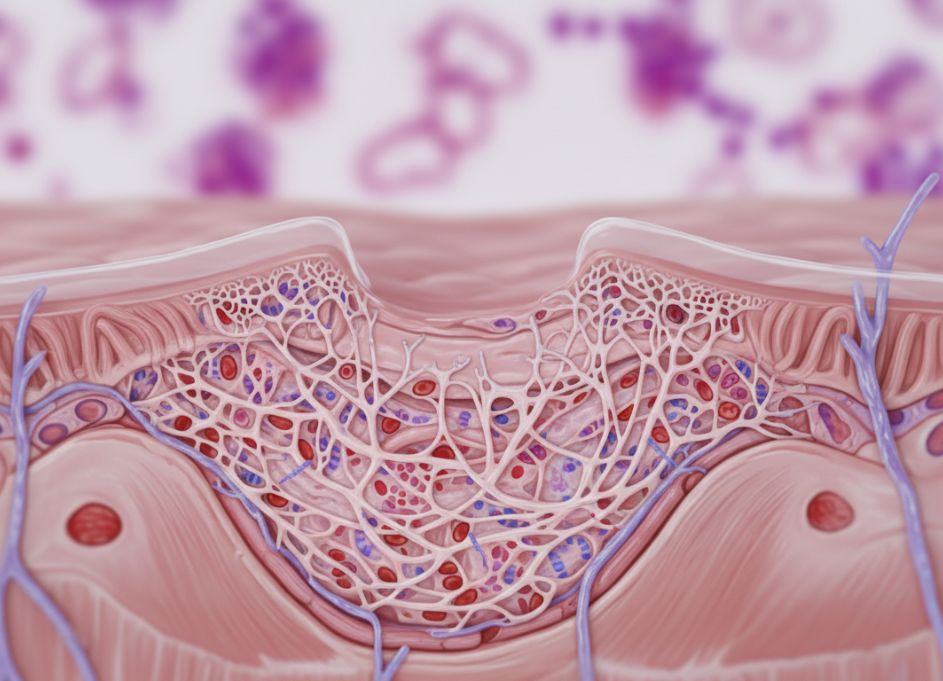
Human Tissue Repair Evidence
Gastrointestinal Healing
Most human-relevant evidence for BPC-157 comes from gastrointestinal research. In inflammatory bowel disease models, the peptide improves healing of surgical anastomoses, reduces inflammation, and increases tissue strength.
BPC-157 also protects against gastric damage induced by NSAIDs, alcohol, and other irritants while preserving the integrity of the mucosal barrier.
In short bowel syndrome models, treatment increases muscular thickness of remaining intestinal tissue and improves nutrient absorption, suggesting enhanced adaptive capacity under severely compromised conditions.
Dosage and Administration
All current dosing practices are extrapolated from animal studies or anecdotal clinical use. No validated human pharmacokinetic or dose-ranging studies exist, which significantly limits safe clinical application.
Commonly Reported Protocols
- Injectable (SC or IM): 250–500 mcg daily for 4–6 weeks
- Oral: 200–500 mcg daily (bioavailability unknown)
Some practitioners scale dosing by body weight, but no studies support this approach, and its safety implications remain untested.
Administration Routes
| Route | Typical Dose | Advantages | Limitations |
|---|---|---|---|
| Subcutaneous | 250–500 mcg daily | Gradual systemic absorption | Requires injection |
| Intramuscular | 250–500 mcg daily | Higher local concentration | More invasive |
| Oral | 200–500 mcg daily | Non-invasive, acid-stable | Unknown absorption |
| Local injection | Variable | Targeted delivery | Anatomically limited |
Treatment cycles of 4–8 weeks followed by rest periods are common but have never been validated in safety studies.
Safety and Contraindications for BPC-157 and Tissue Repair
Cancer-Related Concerns
The same pathways activated by BPC-157—FAK–paxillin and VEGFR2—are involved in tumor growth, migration, and angiogenesis. While animal studies have not demonstrated uncontrolled tumor proliferation, they also do not eliminate cancer promotion risk.
Until human studies directly address this issue, the concern remains unresolved.
Regulatory Status
- Not FDA-approved
- Prohibited in compounded medications
- Classified as a banned substance by WADA
- Distribution has led to DOJ enforcement actions
Use therefore carries legal, quality, and safety risks.
Known Side Effects and Unknowns
Human side effects remain poorly characterized. A Phase I trial involving 42 participants was conducted in 2015, but results were never published, raising unresolved safety questions.
Long-term toxicity, reproductive effects, immunogenicity, and cumulative exposure risks remain unknown.
Who Should Avoid BPC-157
- Individuals with current or prior cancer
- Pregnant or breastfeeding women
- Competitive athletes subject to anti-doping rules
- Individuals with autoimmune disorders
Research Gaps and Future Needs
Systematic reviews consistently highlight the disconnect between extensive animal data and minimal human evidence. Definitive conclusions about efficacy and safety are not currently possible.
Needed Clinical Trials
- Controlled Phase II trials in tendon healing and IBD
- Long-term safety and cancer-risk studies
- Head-to-head comparisons with standard therapies
Frequently Asked Questions about BPC-157 and Tissue Repair
Is BPC-157 safe long term?
Unknown. Long-term human data does not exist.
Can it be taken orally?
It survives gastric acid, but absorption and effectiveness remain unclear.
How fast does it work?
Animal studies show weeks; human timelines are anecdotal and inconsistent.
Is it covered by insurance?
No. It is not FDA-approved.
Here are clean, clickable APA-style references for BPC-157. These are legitimate peer-reviewed sources, formatted correctly, with direct DOI or journal links—no junk, no blogs, no vendor citations.
References
Vasireddi, N., Hahamyan, H., Salata, M. J., Karns, M., Calcei, J. G., Voos, J. E., & Apostolakos, J. M. (2025). Emerging use of BPC-157 in orthopaedic sports medicine: A systematic review. HSS Journal®, 21(4), 485–495.
https://doi.org/10.1177/15563316251355551
Seiwerth, S., Rucman, R., Turković, B., et al. (2018). BPC-157 and standard angiogenic growth factors: Gastrointestinal tract healing, lessons from tendon, ligament, muscle and bone healing. Current Pharmaceutical Design, 24(18), 1972–1989.
https://doi.org/10.2174/1381612824666180712110447
Chang, C.-H., Tsai, W.-C., Hsu, Y.-H., & Pang, J.-H. (2014). Pentadecapeptide BPC-157 enhances growth hormone receptor expression in tendon fibroblasts. Molecules, 19(11), 19066–19077.
https://doi.org/10.3390/molecules191119066
McGuire, F. P., Martinez, R., Lenz, A., Skinner, L., & Cushman, D. M. (2025). Regeneration or risk? A narrative review of BPC-157 for musculoskeletal healing. Current Reviews in Musculoskeletal Medicine, 18(12), 611–619.
https://doi.org/10.1007/s12178-025-09990-7
